After what seems like a very long, hot summer, we’re finally breaking into my favourite time of year: autumn.
This year’s heat has meant fewer long hikes than usual for me and Elvis, our Goldendoodle. Neither of us enjoys walking for hours when it’s roasting, so cooler mornings are very welcome.
Autumn has always been the season I look forward to most. The obvious reason is the colour: trees going from green through yellow, orange and red, leaves covering paths and woodland floors, mist hanging across the fields, sunlight glistening off early morning dew and those grey overcast days where everything seems slightly quieter.
But that raises an obvious question for someone who photographs exclusively in black and white.
What happens to autumn when you take the colour away?
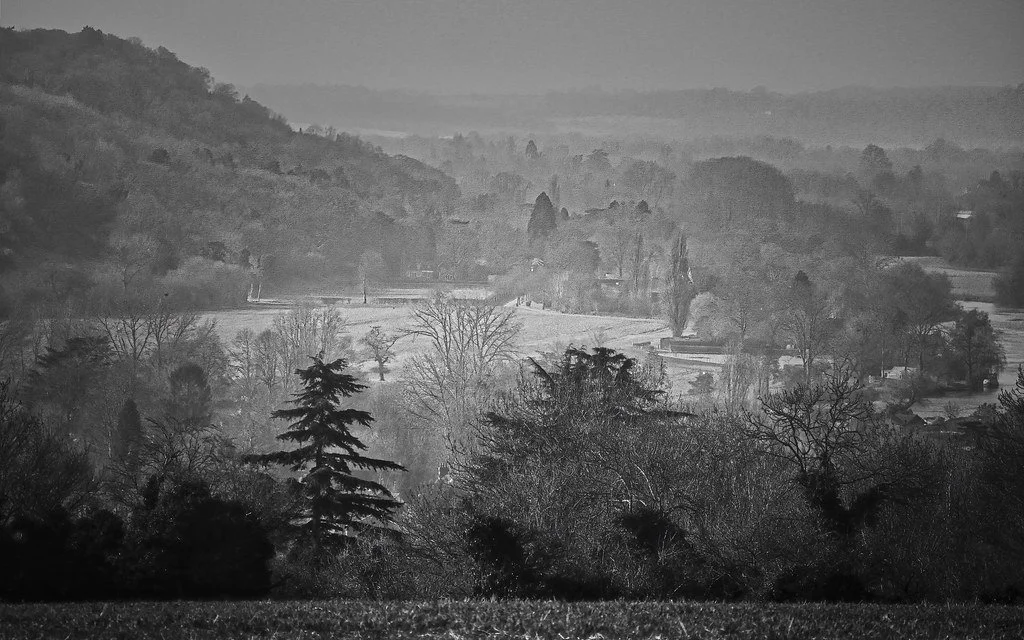
The season everyone associates with colour
Mention autumn photography and most people immediately think of colour.
That’s hardly surprising. For a few weeks every year the countryside changes completely. Woodland that has spent months looking predominantly green becomes a mixture of yellow, orange, brown and red. Photographers wait for it, tourism boards sell it and social media fills up with brightly coloured trees.
I can appreciate that appeal, even though I have no interest in making colour photographs myself.
But take the colour away and autumn doesn’t stop being autumn. You just start noticing different things.
Instead of seeing an orange leaf against a green background, you begin looking at how light or dark that leaf is compared with everything around it. Instead of being drawn towards colour, you notice its shape, the veins running through it, the curled edges and the way it sits against wet ground.
The photograph has to work without the colour doing the heavy lifting. That’s one of the things I enjoy most about black and white anyway. It forces me to look beyond the obvious.
Autumn changes the light
The biggest change for me isn’t really the leaves. It’s the light.
As the sun gets lower, the harsh overhead light of summer disappears. Shadows get longer and the light cuts across the landscape rather than falling directly onto it.
That can change somewhere you’ve photographed dozens of times. A wall that looked fairly flat in summer can pick up shadows through every crack and uneven stone. Tree trunks show more texture. Fences, branches and buildings throw long shadows across paths and roads.
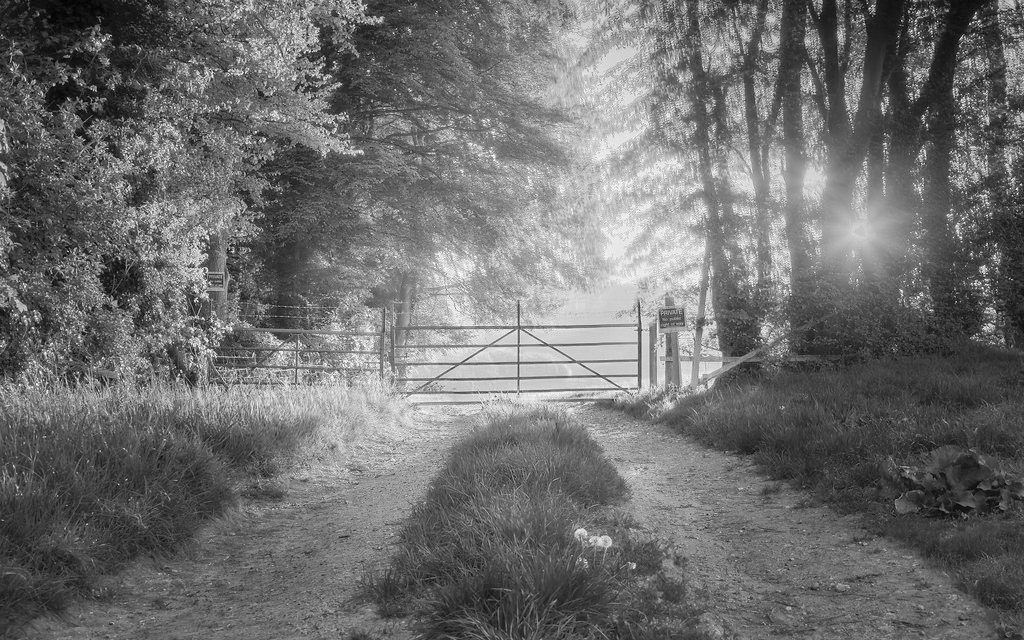
Early mornings also become much more practical. In midsummer, genuinely early light means being out at ridiculous hours. By autumn, sunrise starts coming back towards something resembling a civilised time.
Not that Elvis seems particularly bothered what time we go out.
The other advantage is that autumn light changes incredibly quickly. You can leave home under grey skies and an hour later have sunlight breaking through gaps in the cloud. Ten minutes after that it can be raining.
For photography, that unpredictability isn’t necessarily a bad thing.
Mist is almost made for black and white
One of the things I wait for every autumn is the first proper misty morning.
Mist simplifies everything. Trees disappear gradually into the distance. Buildings lose some of their detail. Fields become layers of different greys. Familiar places can look entirely different.
Black and white suits that perfectly. You don’t need deep blacks and bright whites in every photograph. Sometimes an image works because almost everything sits somewhere in the middle.
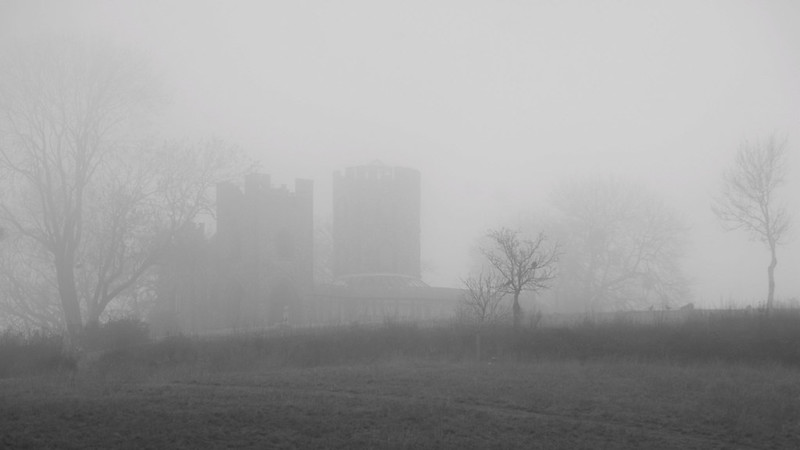
I like the way objects fade as they get further away. A line of trees might start almost black close to the camera and slowly dissolve until the last ones are barely visible.
Streetlights, empty roads, bus stops, church towers and houses all take on a different feel when visibility drops.
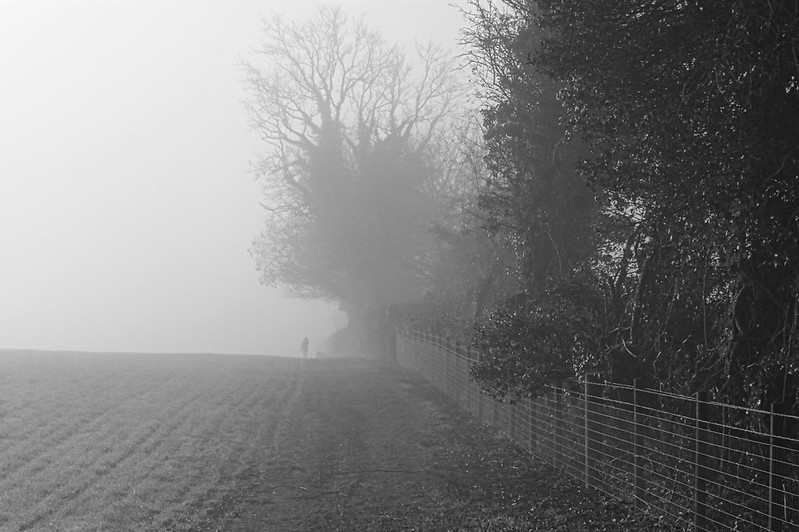
It also fits the sort of photography I already make. I’m interested in quiet places and ordinary scenes rather than dramatic viewpoints, and mist removes even more of the clutter.
Rain helps as well
Rain gets treated as the enemy surprisingly often in photography.
Obviously I don’t fancy spending four hours getting soaked, and there’s a limit to how much rain I’m prepared to subject a camera to. But the period just after rain can be brilliant.
Wet roads go darker. Pavements start reflecting light. Fallen leaves stick to paths rather than blowing around. Brick, stone and timber all get richer in tone. Even a normal village street can have patches of reflected light that weren’t there an hour earlier.
That works especially well for urban observation photography. A wet bench, an empty bus stop or a row of parked cars might not sound exciting, but add a shiny road, a few fallen leaves and low autumn light and there’s much more going on.
That’s the attraction for me: the photograph starts to rely on light, surface and contrast rather than colour.
Texture becomes much more important
Autumn is one of the best times of year for texture.
Leaves start curling and breaking down. Bark becomes more noticeable as trees thin out. Moss is wet. Stone walls darken after rain. Wooden gates go slick with water.
I’ve always liked photographing smaller details alongside wider landscapes, and autumn gives you endless excuses to point the camera down rather than straight ahead.
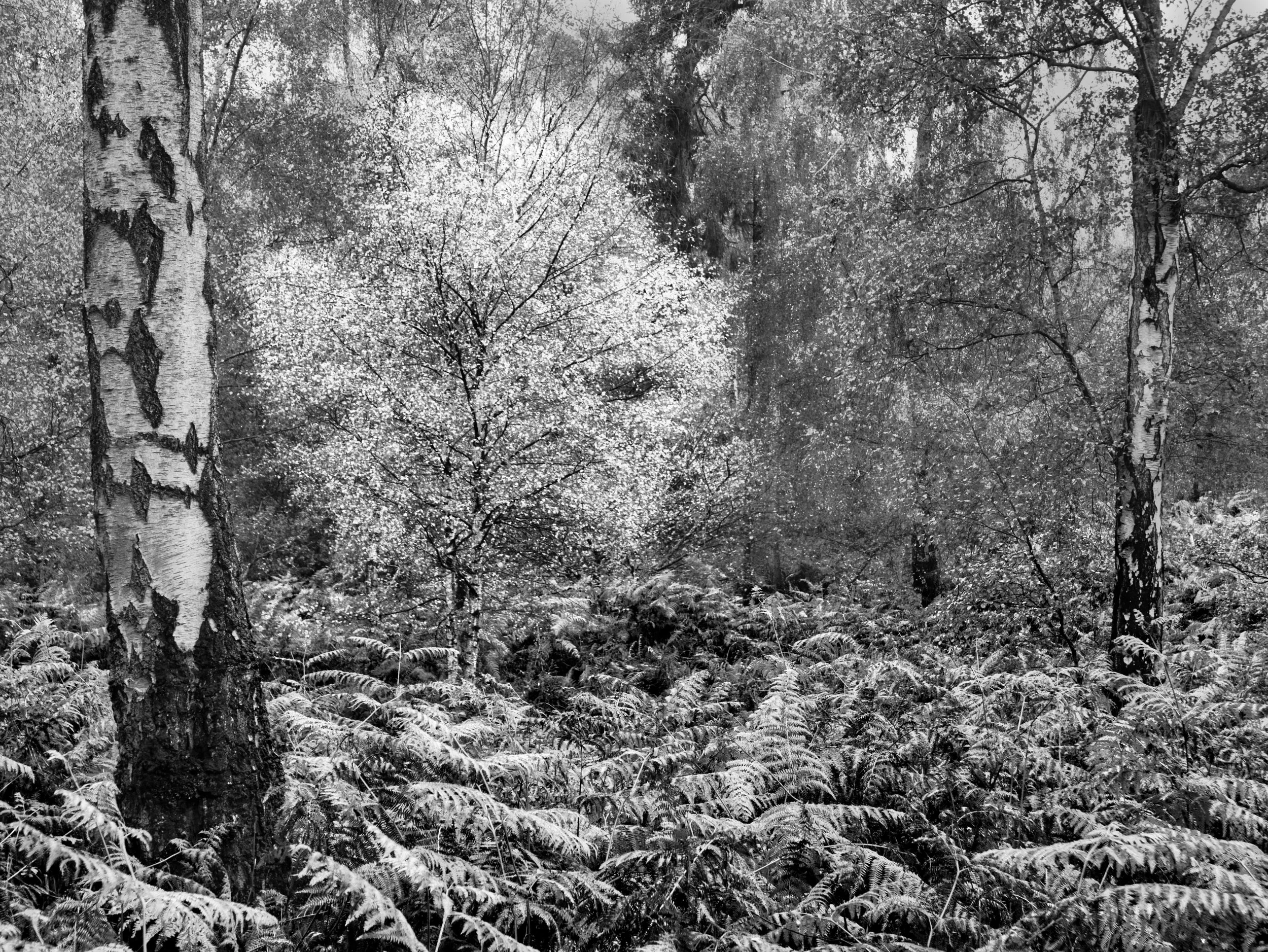
It might be a single leaf against dark tarmac, bark on an old tree or dozens of leaves caught against the edge of a path. These often work well in monochrome because there’s nothing else fighting for attention.
A photograph of a leaf doesn’t need to tell you whether it was red or yellow. The shape can be enough.
Look up as well as down
As autumn progresses, trees gradually reveal themselves. In summer, dense foliage hides most of the structure. By late autumn, branches that have been invisible for months start appearing again.
A bare or nearly bare tree against an overcast sky can become almost graphic. Thick branches divide into smaller branches and eventually into tiny lines against a pale background. Sometimes the photograph becomes less about the tree and more about the pattern.
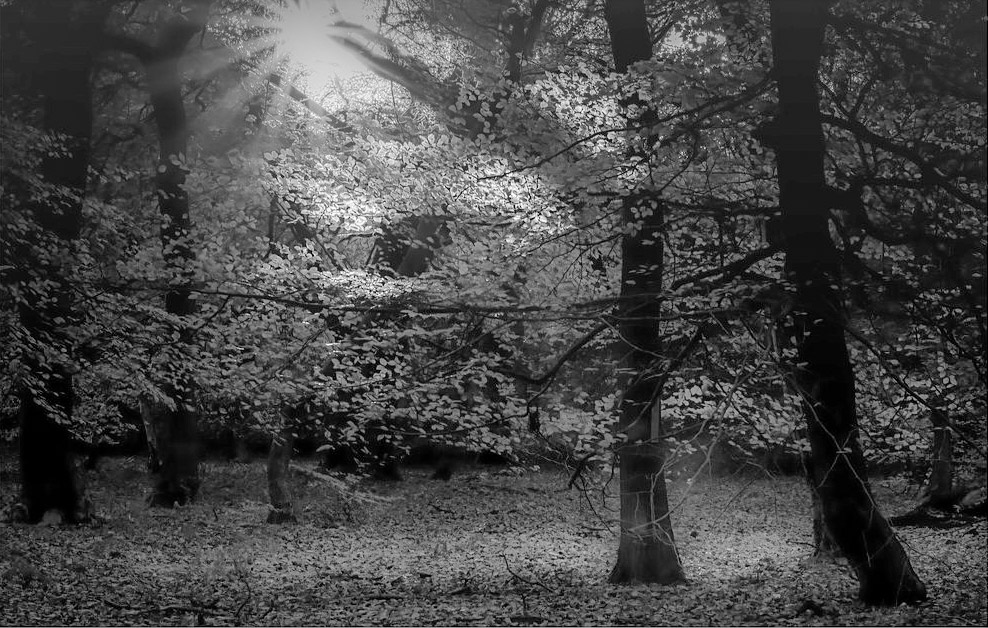
A blank pale sky can give exactly the empty background needed to separate a complicated network of branches.
You just have to stop expecting every sky to contain dramatic clouds.
Autumn suits old buildings
Churches, cottages, old walls and period properties often look better to me once summer starts disappearing.
Part of that is the light, but some of it is the surroundings. Trees thin out and reveal parts of buildings that have been hidden all summer. Fallen leaves gather around entrances and pathways. Damp stone goes darker. Timber, brick and old render show more variation.
An old church surrounded by bare branches on a misty morning feels completely different from the same building under bright summer sunshine. Neither is necessarily better. They’re just different versions of the same place.
That’s one reason I like returning to locations throughout the year. You can photograph the same building repeatedly without making the same photograph. The season changes it for you.
I don’t convert photographs to black and white later
There’s another difference in how I approach all this.
I photograph in black and white from the start.
I’m not looking at an autumn scene in colour and wondering whether it might work as monochrome when I get home. The camera is already showing me the scene without colour.
Two leaves that look completely different because one is yellow and the other red might end up looking almost identical once colour disappears. A bright-looking scene can turn into a mass of very similar greys.
So you have to start looking at separation: where’s the light, what’s darker, what’s brighter, and does the subject actually stand out from the background?
That way of seeing becomes fairly automatic after a while. It’s probably why I don’t feel as though I’m missing anything by not photographing autumn in colour. I’m not constantly comparing the monochrome image with a colour version.
There isn’t one.
Overcast weather isn’t bad weather
Flat light is incredibly useful, especially in woodland or around buildings where strong sunlight creates awkward patches of bright highlight and deep shadow. On an overcast day you can see detail in tree trunks, stonework, leaves and paths without half the scene disappearing into hard shadow.
Not every image needs to shout.
And if the weather turns properly miserable, that can sometimes be even better. Mist, drizzle and low cloud all change the atmosphere of a place.
The trick is deciding when “atmosphere” has turned into “I’m freezing and the dog wants to go home.”
Autumn is a good excuse to slow down
Perhaps that’s the thing I like most about this time of year. Everything slows down.
The days get shorter. The temperature drops. Paths get quieter. People stop treating every patch of grass like a festival site.
Walking becomes enjoyable again. For me and Elvis, that means getting back to the longer walks that went missing during the hottest part of summer. And longer walks generally mean more photographs, not because I set out to photograph something specific, but because the longer you spend walking, the more you notice.
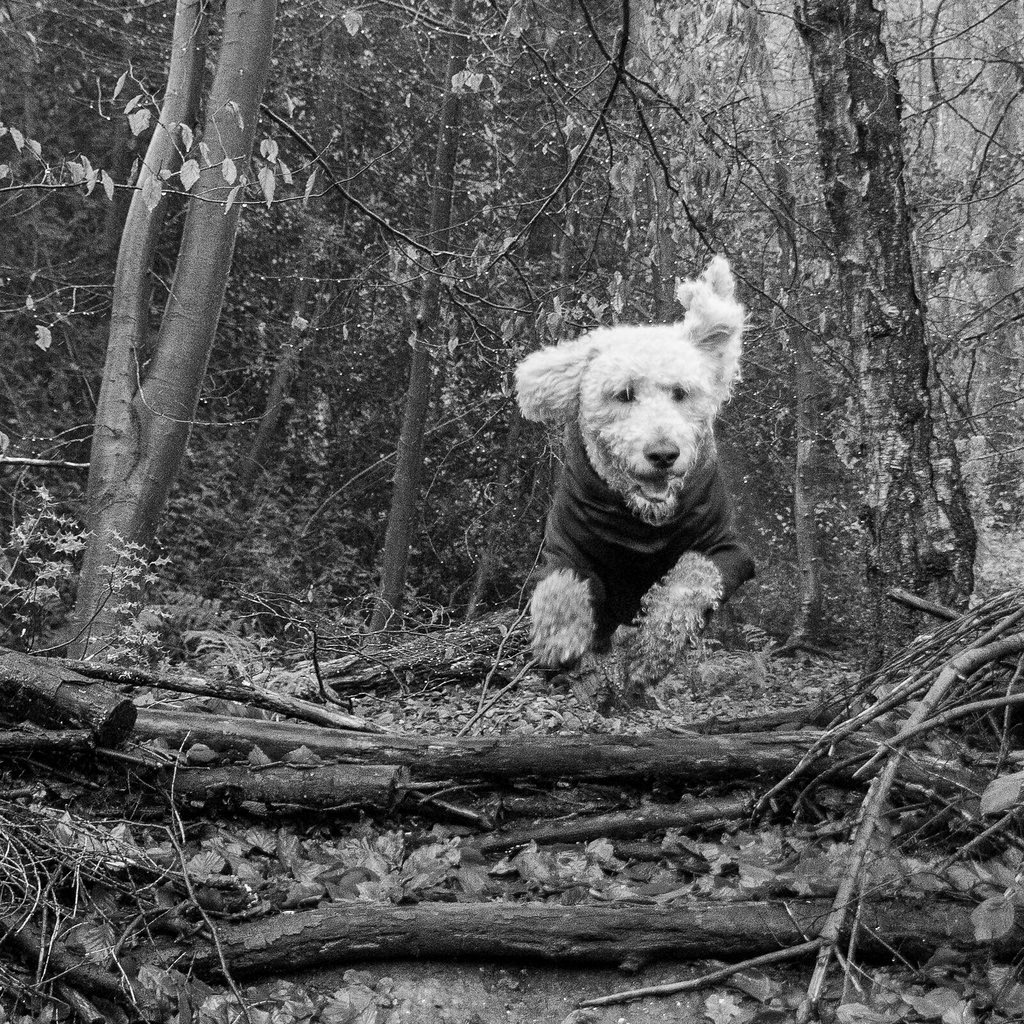
A lot of my photography has always worked like that. I don’t enjoy racing from one recognised viewpoint to another. I’d rather walk somewhere slowly and see what turns up.
Autumn rewards that. You notice the first leaves falling, then realise a week later that half the trees have changed. A familiar path is covered in leaves. A field disappears behind mist. The light that used to reach one side of a building now falls somewhere else.
None of it lasts very long, and that’s probably part of the appeal.
Autumn without the autumn colours
So does photographing exclusively in black and white mean losing the best part of autumn?
I don’t think so. It just changes what autumn is about.
Instead of red, orange and yellow, I get light and shadow. Instead of colour contrast, I look for tonal separation.
Fallen leaves become shape and texture. Mist becomes layers. Rain becomes reflections. Bare branches become lines. Old buildings become studies of stone, brick, timber and shadow.
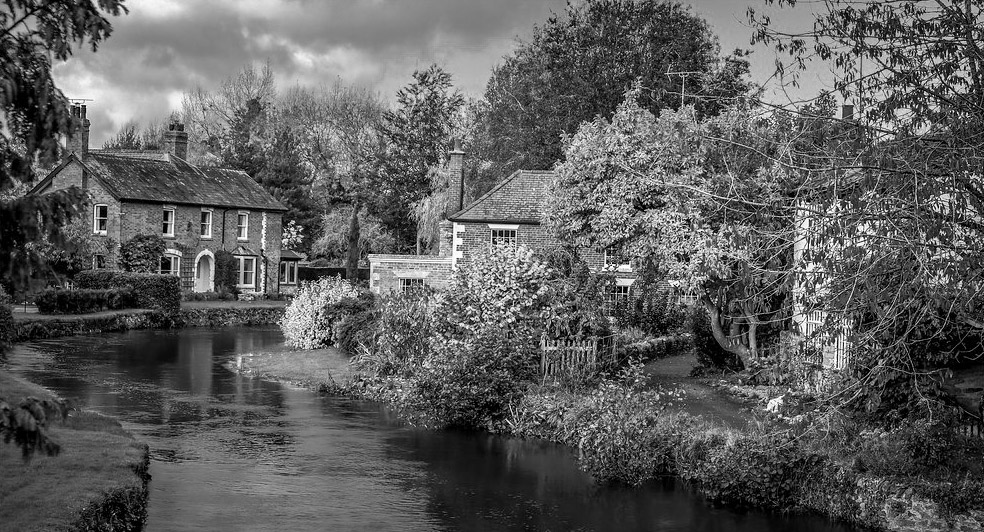
And familiar places change enough to make me want to photograph them again.
Summer has felt long this year. I’m ready for cold mornings, muddy boots, damp woodland, mist hanging across fields and the sound of leaves underfoot.
And I’m pleased because the landscape is changing.
And despite autumn being the season most famous for colour, I’ve got absolutely no intention of photographing any of it in anything other than black and white.