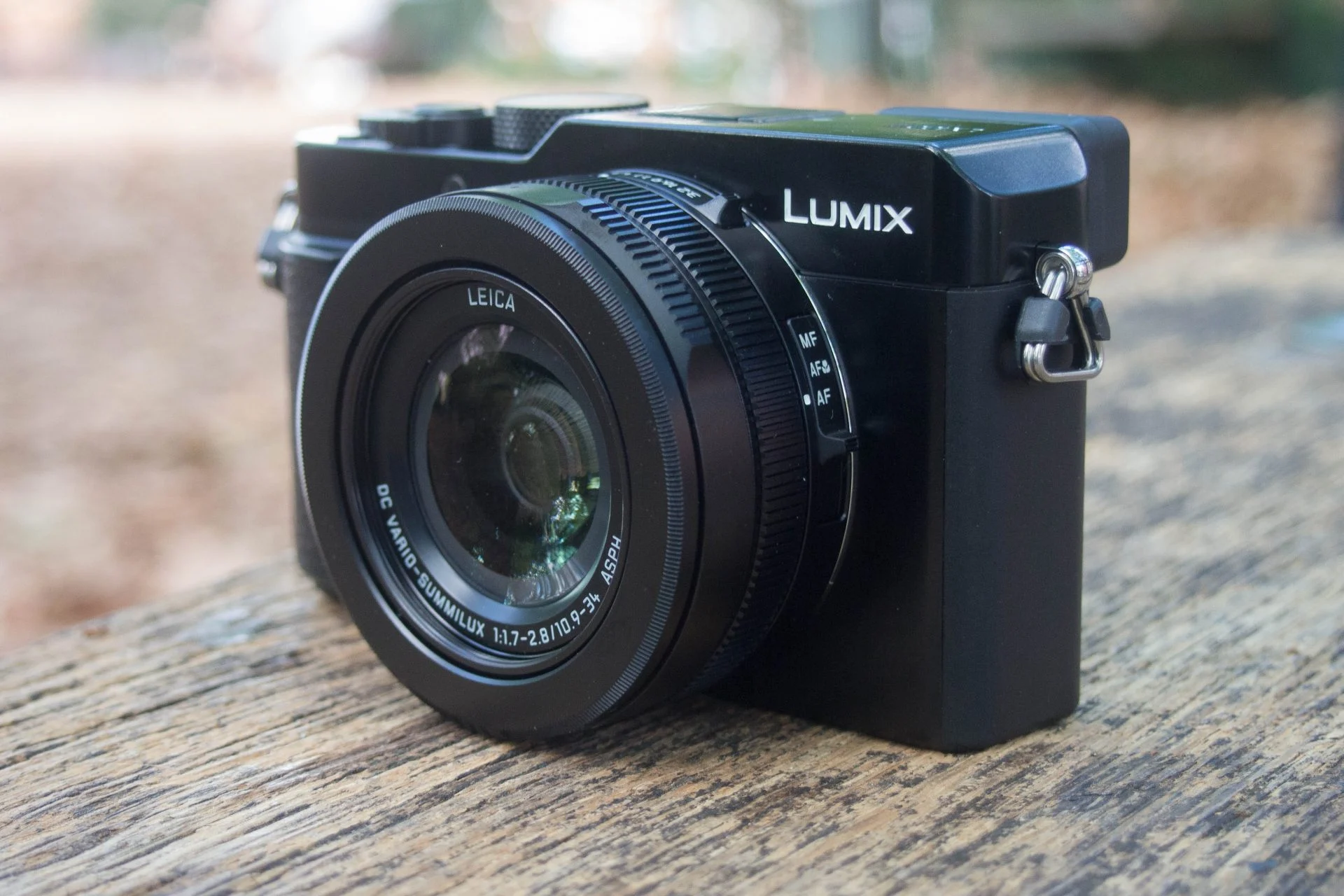
I have owned both the original Panasonic Lumix LX100 and the later LX100 II, although perhaps slightly unusually I owned them in reverse order. The LX100 II came first. I owned one some time ago, enjoyed using it and regarded it as a very capable compact camera. Several years later I bought an original LX100, and that was when things became slightly more interesting.
Instead of making me miss the newer camera, the original LX100 made me question why I had spent considerably more money on the Mark II in the first place. That does not mean the LX100 II is a bad camera. Far from it. It is technically the better camera in several areas, with a higher-resolution sensor, touchscreen, Bluetooth, USB charging and various additional shooting features. But specifications and photography are not always the same thing, and for the way I actually take photographs, I found remarkably little separating the two.
With used prices today putting the original LX100 at roughly £300–£400 and the LX100 II more commonly around £500–£650, that raises a fairly obvious question. Is the LX100 II really worth the extra money?
Two cameras that feel almost identical
Put the two cameras next to each other and there is very little between them physically. Both are fairly chunky for compact cameras, and neither is something I would describe as genuinely pocketable unless you happen to have extremely generous coat pockets. But I actually like that. There are smaller compact cameras available, but the LX100 never feels like somebody has shrunk a camera until it becomes awkward to use. There is enough body to hold properly, enough weight to make it feel substantial and enough space for proper physical controls.
The original weighs around 393g with battery and card, while the Mark II is essentially the same at around 392g. Width and height are almost identical, although the Mark II is slightly deeper. In normal use, however, they feel like the same basic camera. Both have a pleasant heft without becoming heavy, and both feel reassuringly solid in the hand. I found the build quality good on both cameras.
They are compact cameras, but they actually feel like cameras. That distinction probably sounds ridiculous, but anyone who enjoys physical controls will understand what I mean.
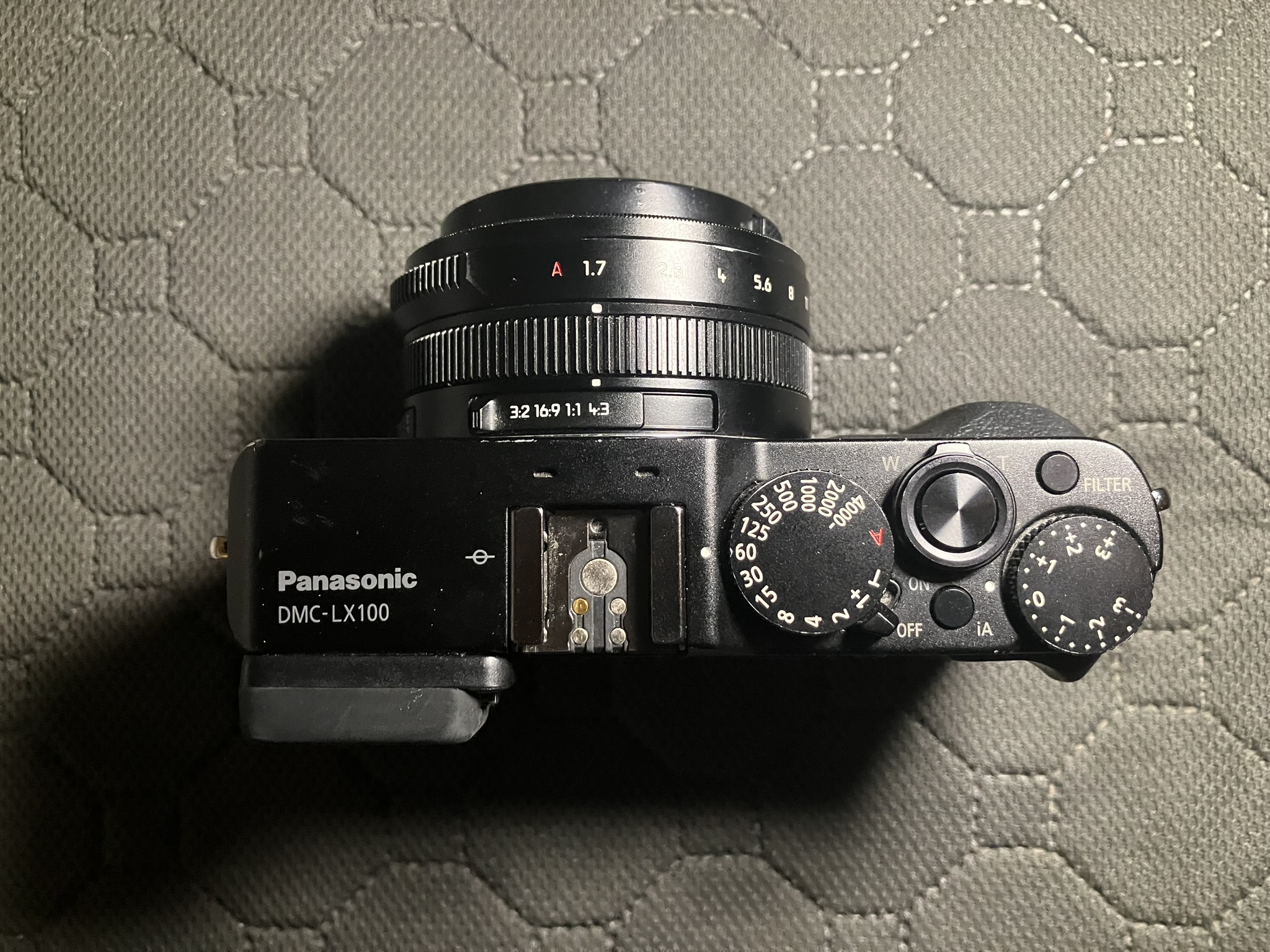
The controls are one of the best things about them
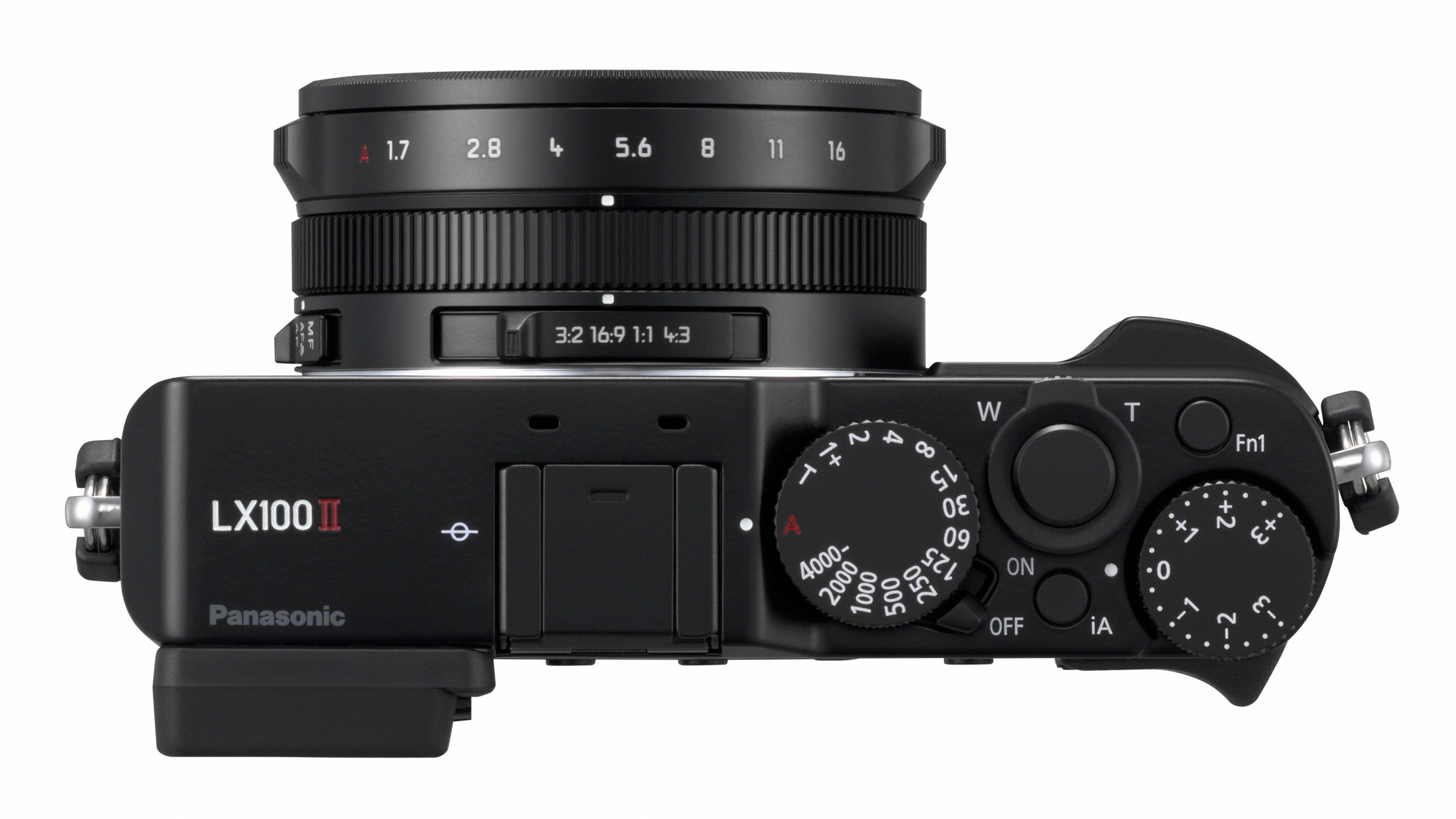
I am a very tactile photographer. I like switches, I like dials, and I like being able to change something without digging through three pages of menus or tapping a screen. Both LX100 models suit that style of photography extremely well.
You get a proper shutter-speed dial on top, an exposure-compensation dial, an aperture ring around the lens, a focus control on the lens barrel and a physical aspect-ratio selector. The original LX100 also allows the control ring around the lens to be configured for functions including stepped focal lengths, ISO or white balance. It feels like Panasonic designed the camera for somebody who actually wants to operate it rather than simply point it at something.
That was probably one of the things I liked most about both versions. The LX100 II adds more customisable controls and a touchscreen, but the basic shooting experience is largely inherited from the original. The fundamental design was already very good, so Panasonic wisely did not radically change it.
The touchscreen I immediately turned off
One of the obvious differences between the cameras is the rear screen. Both have a fixed 3-inch display, but the LX100 II increases the resolution from around 921k dots to approximately 1.24 million dots and adds touch control. For some photographers that will be a worthwhile improvement. For me it wasn't.
I generally turn touchscreen functionality off on cameras, and I did exactly that with the LX100 II. I have done the same on pretty much every touchscreen-equipped camera I have owned. There is nothing wrong with Panasonic's touchscreen implementation; I simply prefer buttons and dials. Given the choice between touching a screen and turning a physical control, I will turn the control every time.
So one of the Mark II's headline improvements was effectively irrelevant to me from the moment I bought it. The more useful change, in my opinion, would probably have been a tilting screen. For street photography, low-angle work or photographs taken above your head, that would have added something genuinely practical without changing the way the camera otherwise operates.
The lens is the real star of both cameras
More important to me than either screen is the lens. Both cameras use essentially the same Leica DC Vario-Summilux 24–75mm equivalent f/1.7–2.8 zoom, and it is a very good lens.
You get a useful wide end for landscape, architecture and general photography, while 75mm provides enough reach for details and tighter compositions without turning the camera into a superzoom. More importantly, it is fast. An f/1.7 aperture at the wide end and f/2.8 at the long end is useful in poor light and also allows more control over depth of field than you might expect from a compact camera. Both cameras also include optical image stabilisation.
That sensor-and-lens combination is really what makes the LX100 series interesting. There are plenty of compact cameras with longer zooms and plenty with higher headline megapixel figures, but the LX100 manages to combine a relatively large sensor, genuinely fast lens and traditional physical controls in one fairly small body.
That is probably why both cameras have remained interesting long after their release dates.
12.8 megapixels versus 17 megapixels
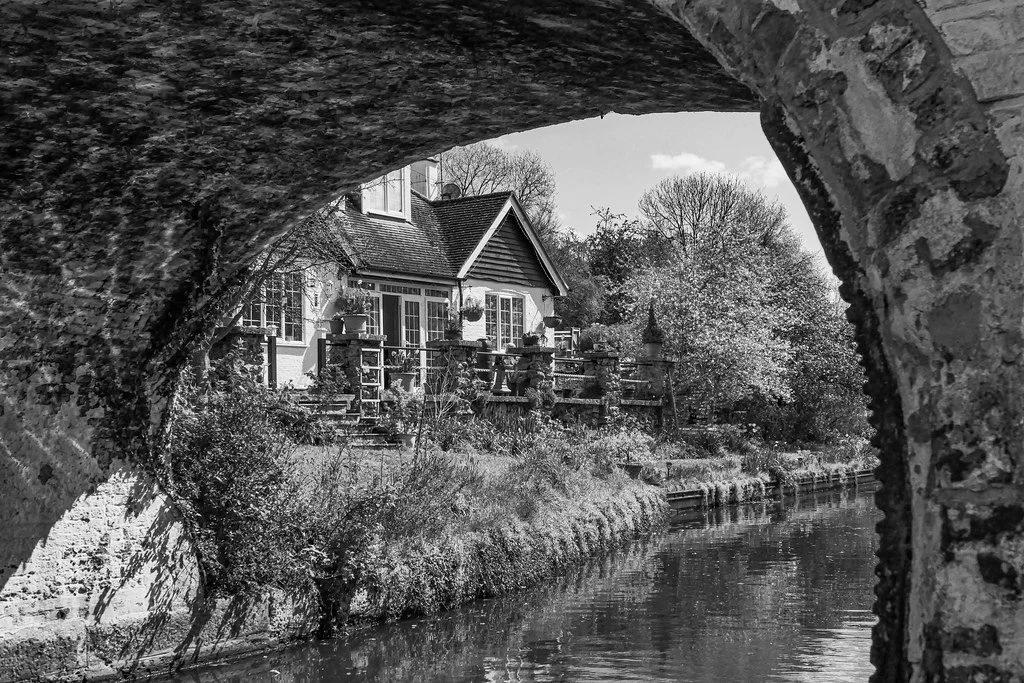
The biggest technical difference is the sensor. The original LX100 uses a Four Thirds sensor but does not use the entire sensor area for each photograph. Its multi-aspect design produces a maximum image of around 12.8 megapixels. The LX100 II uses a newer 20MP Four Thirds sensor, again in a multi-aspect arrangement, resulting in approximately 17MP at its highest resolution.
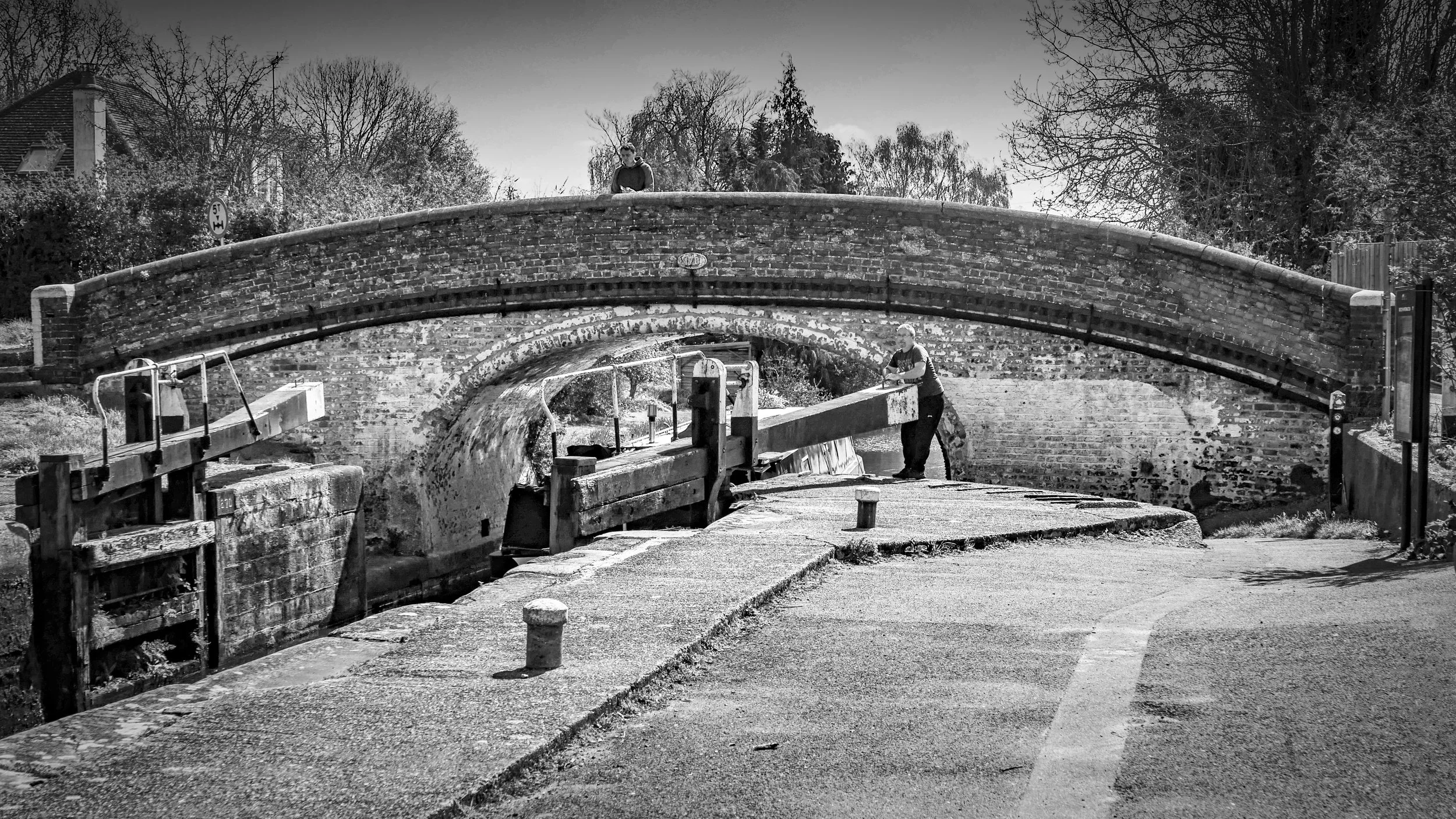
So yes, the Mark II gives you more pixels, and that is useful. You have more scope for cropping and a little more resolution for larger prints, but I would not personally regard the difference as transformational. The original's 4112 × 3088 files are not tiny, and the Mark II's increase to roughly 4736 × 3552 is useful rather than revolutionary.
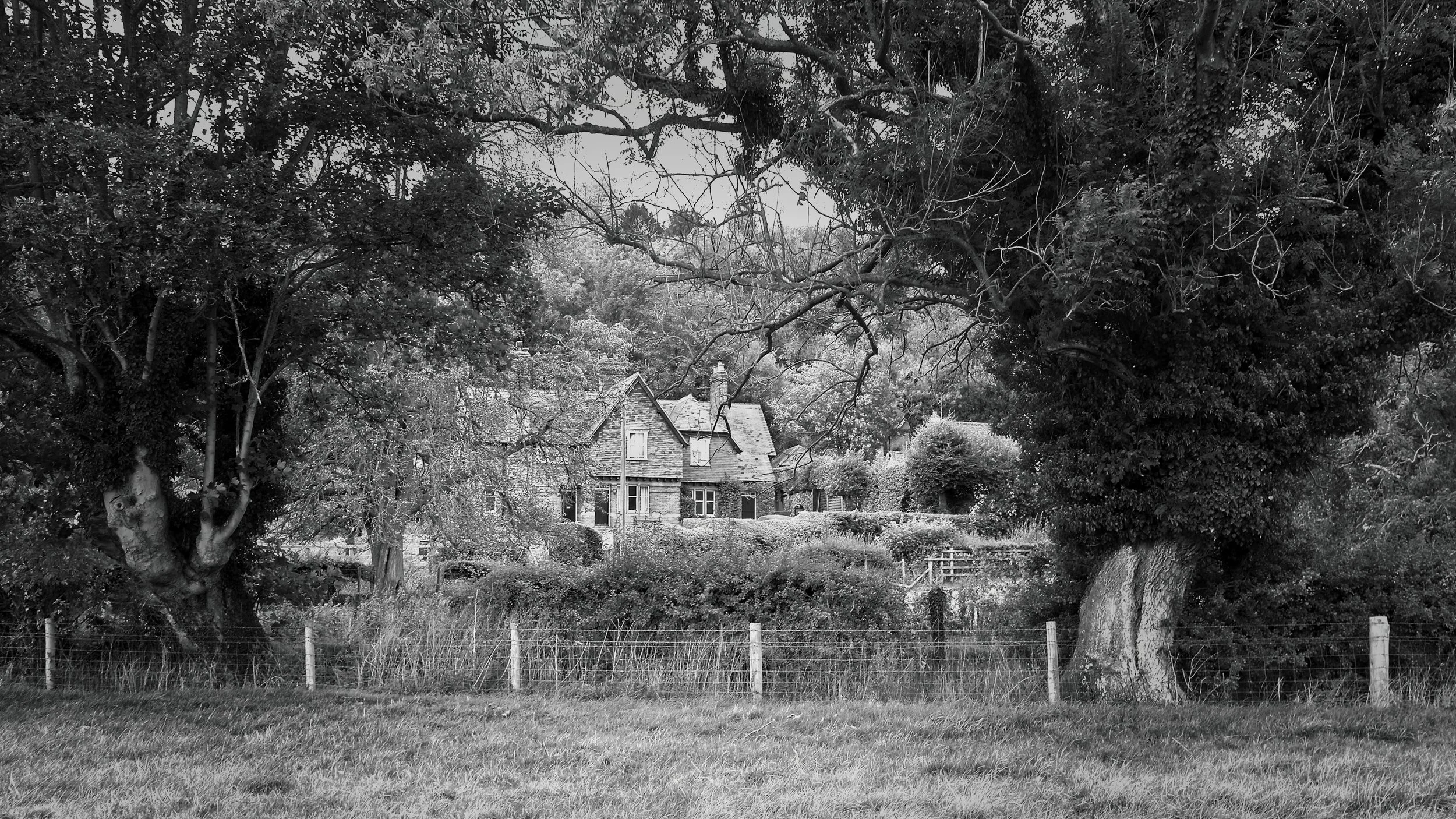
My own experience was much simpler. I got decent image quality from both cameras, and I never found myself using the original LX100 and thinking, "I really wish this was the Mark II." For my photography, the camera was capable of producing perfectly good photographs, and I cared far more about that than knowing one file contained a few million additional pixels.
The multi-aspect sensor is genuinely useful
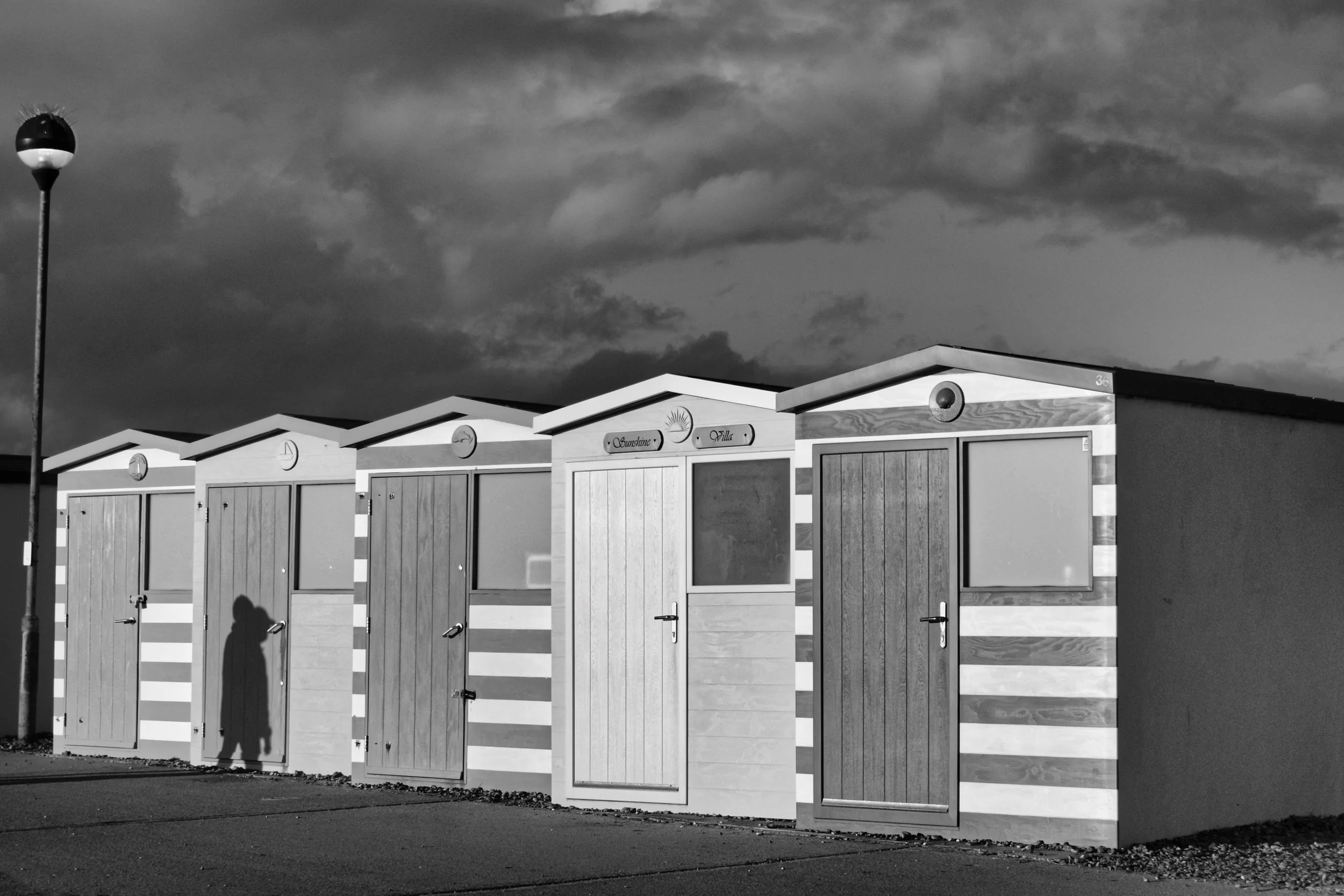
One unusual feature shared by both cameras is the physical aspect-ratio selector on the lens. You can choose 4:3, 3:2, 16:9 or 1:1, and this is not simply the normal approach of taking one sensor image and heavily cropping it afterwards. The LX100 design uses different areas of the sensor to preserve a similar diagonal angle of view across several aspect ratios.
It is an interesting system and one that encourages you to think about the shape of the photograph while taking it rather than afterwards. For somebody like me who shoots JPEG and prefers making decisions at the camera, that approach makes sense.
It is another example of the LX100 being designed primarily around photography rather than simply filling a specification sheet.
The Mark II adds more, but how much do you actually need?
This is probably where the biggest difference between the two cameras sits. The LX100 II adds Bluetooth alongside Wi-Fi, USB charging, more customisable function controls, Post Focus, focus bracketing, in-camera focus stacking and some expanded 4K-based photography functions. It also gives you Panasonic's later monochrome JPEG options, including L.Monochrome and L.Monochrome D.
There is therefore no question that the Mark II is the more feature-rich camera. If you like digging into camera features, customising controls and using some of Panasonic's more advanced software functions, there is more to play with. But I did not really buy either camera for that. I tend to set a camera up, find the controls I actually need and then leave most of the rest alone.
Focus stacking, Post Focus and Bluetooth connectivity might be genuinely useful to somebody else, but they were not things I particularly needed. And the original LX100 was hardly lacking. It already offered RAW and JPEG shooting, Wi-Fi, focus peaking, manual focus assistance, 4K video, 4K Photo, time-lapse, multiple exposure, fast electronic shutter speeds and a good selection of physical photographic controls.
So although the Mark II adds more, the original already gives you an awful lot.
Video? I haven't got a clue
Both cameras shoot video, including 4K. That is about as much as I can tell you from personal experience because I never used the video function on either camera. I bought them to take photographs.
If video is important to you, there are plenty of technical reviews that go into frame rates, crops, bit rates and recording options in far more detail than I ever could. I can't tell you whether one is noticeably better for video because I simply never used them that way, and I would rather say that than pretend I spent months shooting cinematic masterpieces on the things.
The electronic viewfinder
Both models include a built-in electronic viewfinder of roughly 2.76 million dots, and that was important to me because I strongly prefer photographing through a viewfinder rather than holding a camera at arm's length.
The EVF is perfectly usable, although it is not the strongest feature of the camera. Both use essentially the same field-sequential design, and some users notice colour tearing or rainbow effects when moving their eye or panning. The effective finder area also becomes smaller when using narrower aspect ratios.
Personally, I still much prefer having it to not having a viewfinder at all. For a relatively compact camera, having the EVF built in rather than requiring an accessory is a major positive, and it was one of the features that made both cameras attractive to me in the first place.
And then there is the dust problem
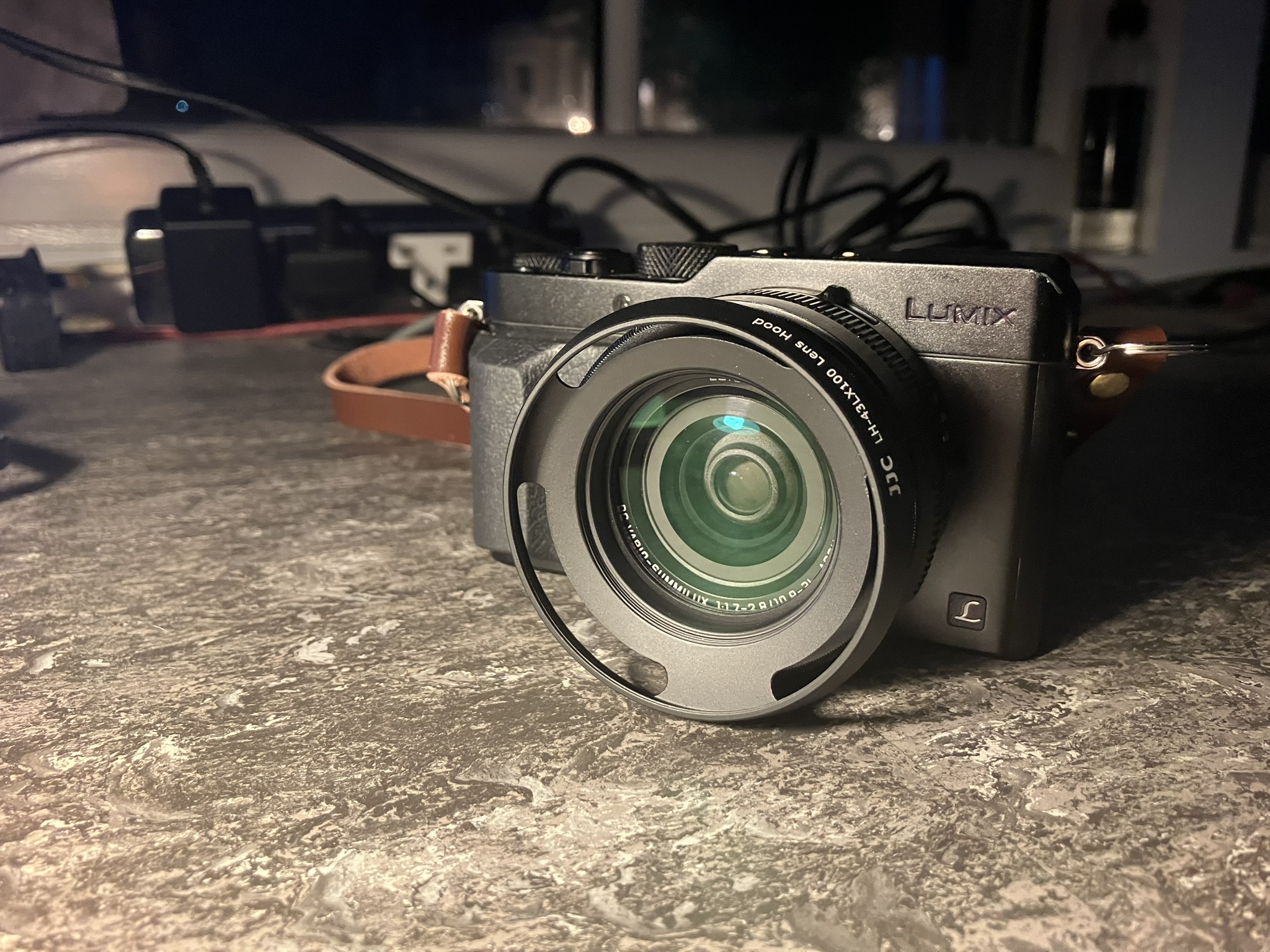
Unfortunately there is one issue worth knowing about before buying either version: dust.
Fixed-lens cameras are sometimes treated as though sensor dust cannot be a problem because you never remove the lens, but that isn't necessarily true. The LX100 lens extends and retracts as the camera powers up and zooms, and that movement can pull air — and potentially dust — into the camera.
My LX100 II developed an annoying dust spot that appeared in certain photographs and had to be removed afterwards. Unfortunately this problem is not unheard of with the LX100 series. There have been claims that changes were made around the Mark II lens assembly to reduce the problem, but my own Mark II still suffered from it, so I certainly would not assume the newer model is immune.
Testing for dust is simple. Photograph a plain, evenly lit white wall, sheet of paper or similar surface at a narrow aperture — something around f/11 or smaller — and deliberately throw the surface slightly out of focus. Then examine the photograph closely. Sensor dust normally appears as darker grey or black marks, and if you are buying one of these cameras used, it is a test well worth doing before parting with your money.
The unfortunate part is that unlike an interchangeable-lens camera, you cannot simply take the lens off and use a blower. There are various home-made methods discussed online involving suction around the lens barrel, but personally I would be extremely careful about trying anything like that on an expensive compact camera. Professional cleaning or repair is the safer option.
If I were buying either LX100 used today, checking for sensor dust would be one of the first things I would do.
So what happened when I bought the original?
This is probably the most important part of the comparison. I owned the LX100 II first and liked it. Later, I bought the original LX100, and I liked that just as much.
In fact, owning the older camera made me question whether I had really needed to spend the additional money on the Mark II when I owned it. The original suited my shooting style perfectly. It had the physical controls I liked, the same excellent lens, the electronic viewfinder and perfectly respectable image quality. Almost everything the Mark II added was something I could happily live without.
That will not be true for everybody. If you regularly use touch autofocus, crop heavily, want the higher-resolution files, use Bluetooth, focus bracketing or Panasonic's later software features, then the Mark II is unquestionably the better-equipped camera. But specifications only have value if you use them.
At current used prices, that is where the decision becomes interesting. A good original LX100 can still be found around £300–£400, while the LX100 II often sits closer to £500–£650. If the prices were close, I would obviously take the Mark II. But with £200 or £300 between them, I would think carefully about what I was actually gaining.
For my own photography, I would be very tempted by a clean original LX100 and keep the difference in my pocket. The LX100 II is the better camera on paper, but I'm just not convinced everybody needs the better camera. Sometimes the older one already does everything you actually want.
And having owned both, that is probably the biggest thing the original LX100 taught me.
I had already owned the upgrade.
I just wasn't entirely sure I needed it.
Looking for one now? Check current used Panasonic LX100 and LX100 II prices on eBay.
This page contains affiliate links. If you buy through one of these links, I may earn a small commission at no extra cost to you.