Historic buildings are photographed for all sorts of reasons.
A country house might need photographs to attract wedding bookings. A hotel may want to show landscaped grounds on a summer afternoon. An estate may need new website imagery. A church or heritage organisation might be documenting architecture that has stood for hundreds of years. A conservation project may need a record of a building before restoration begins. A museum, archive or local-history group might want photographs that will still have a purpose long after the latest marketing campaign has disappeared.
The building may be the same, but the purpose of the photographs can be completely different.
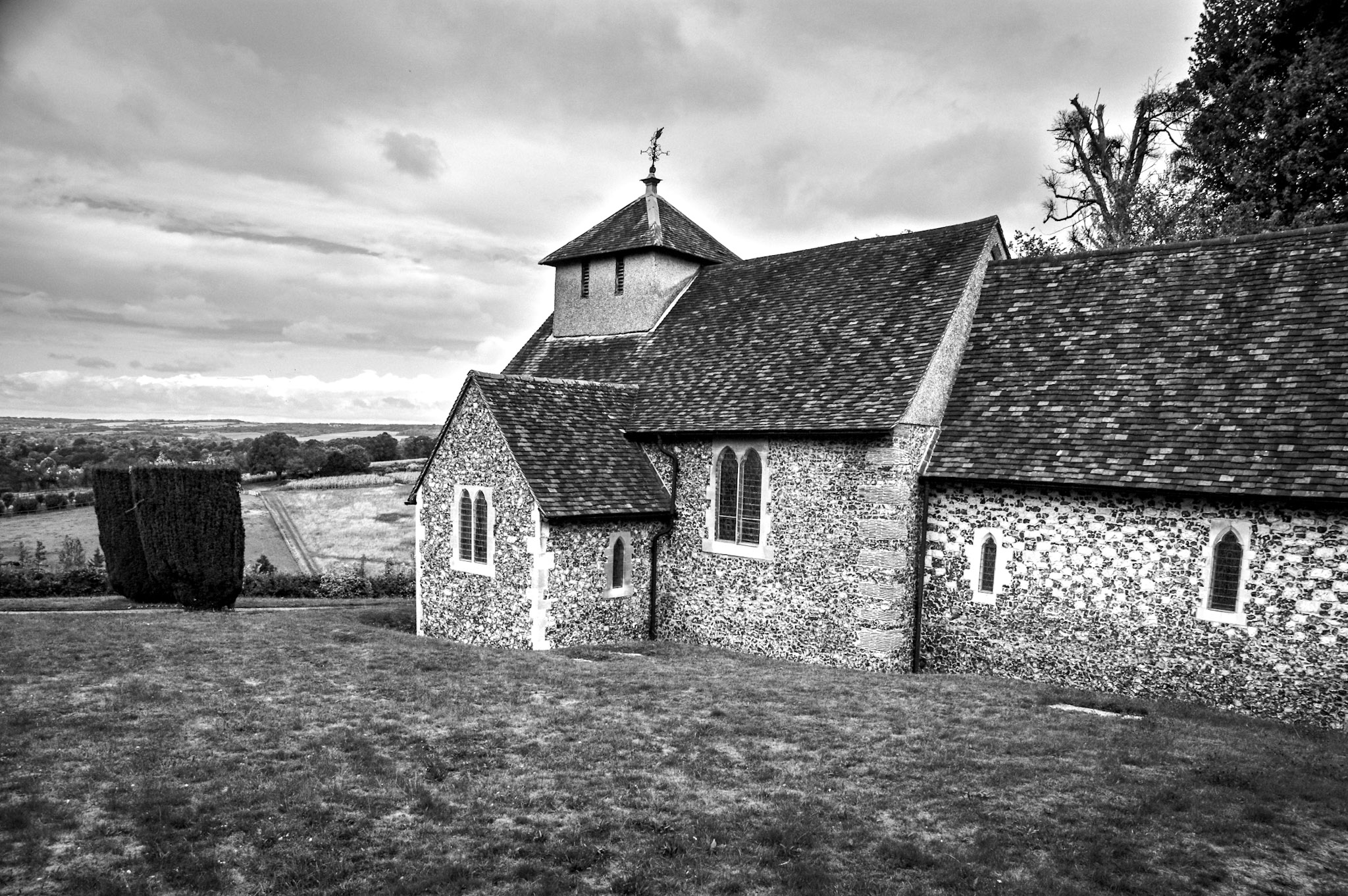
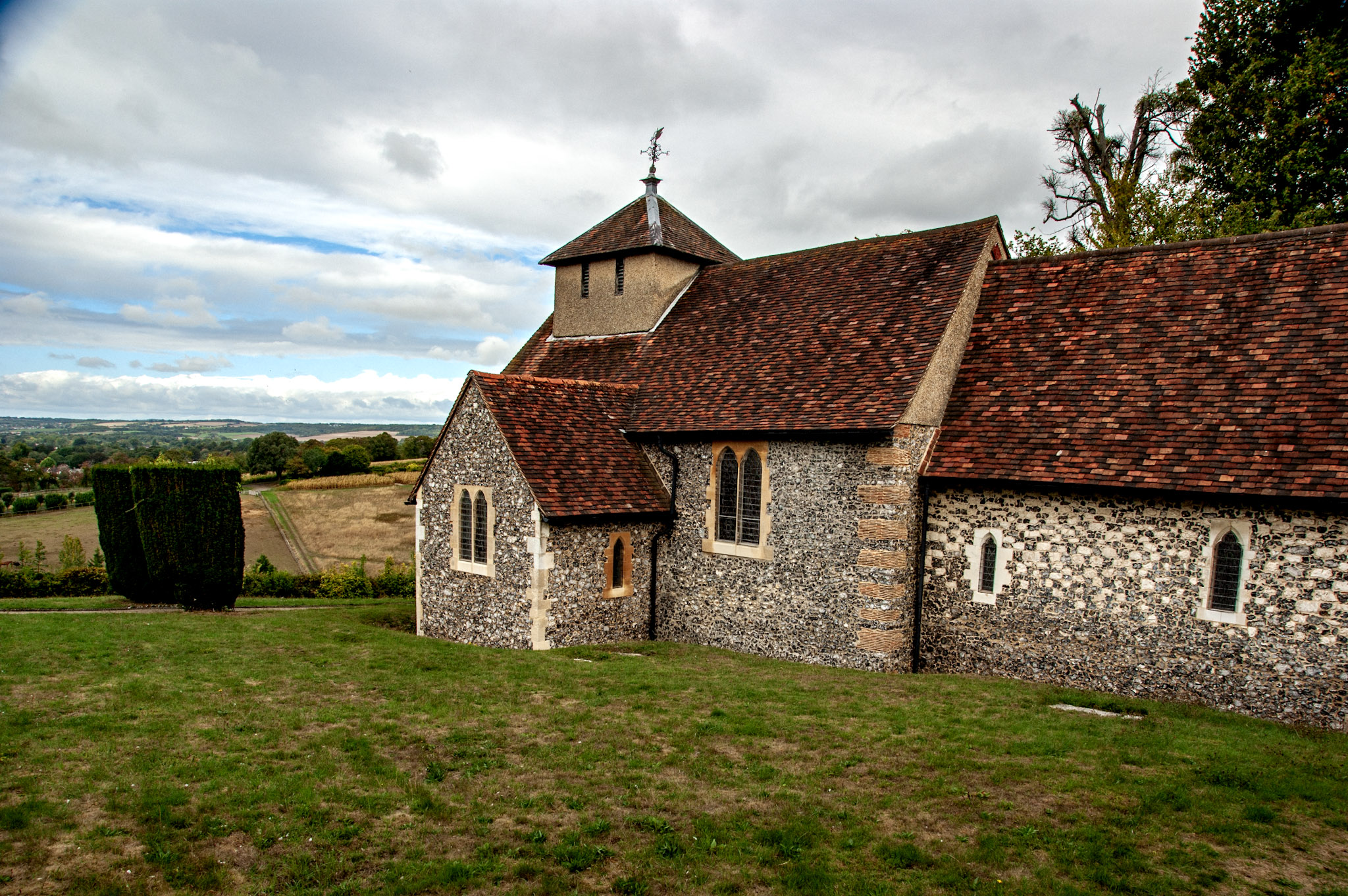
That became particularly obvious to me recently when I photographed Hedsor Church in Buckinghamshire using both colour and black and white.
I normally work exclusively in black and white. This time I deliberately recorded colour versions as well, giving me something I rarely have: photographs of exactly the same subject, from the same position, at essentially the same moment, but presented in two very different ways.
Looking at the finished photographs side by side reinforced something I already suspected.
Colour and black and white do not simply give you two different versions of the same photograph.
They can change what the photograph is actually about.
What does colour bring to a historic building?
There are very good reasons why most commercial property photography is produced in colour.
Look at a historic house surrounded by lawns, mature trees and landscaped gardens on a clear summer day. Colour immediately gives you green grass, blue sky, warm brick, stone, flowers and seasonal foliage.
That can be exactly what the photograph needs.
If the property is a wedding venue, hotel, spa or events location, the job of the photograph may be to make somebody imagine themselves there.
You are not necessarily selling the age of the stonework or the construction of a doorway. You may be selling a summer wedding on the lawn, drinks on a terrace, an overnight stay or a weekend in attractive surroundings.
Colour is extremely good at that.
The wider view of Hedsor Church shows this clearly. The colour photograph is immediately attractive because of the lawn, trees, roof tiles and sky. Those elements help sell the setting as a pleasant place to be.
For a wedding venue or hospitality business, that quality has obvious value.
The same applies to historic gardens and estates. If an important part of the visitor experience is seasonal planting, autumn colour, spring flowers or acres of green parkland, removing colour also removes part of the information.
Colour can communicate season, warmth and atmosphere very quickly.
That is not something black and white should pretend to replace.
So what changes in black and white?
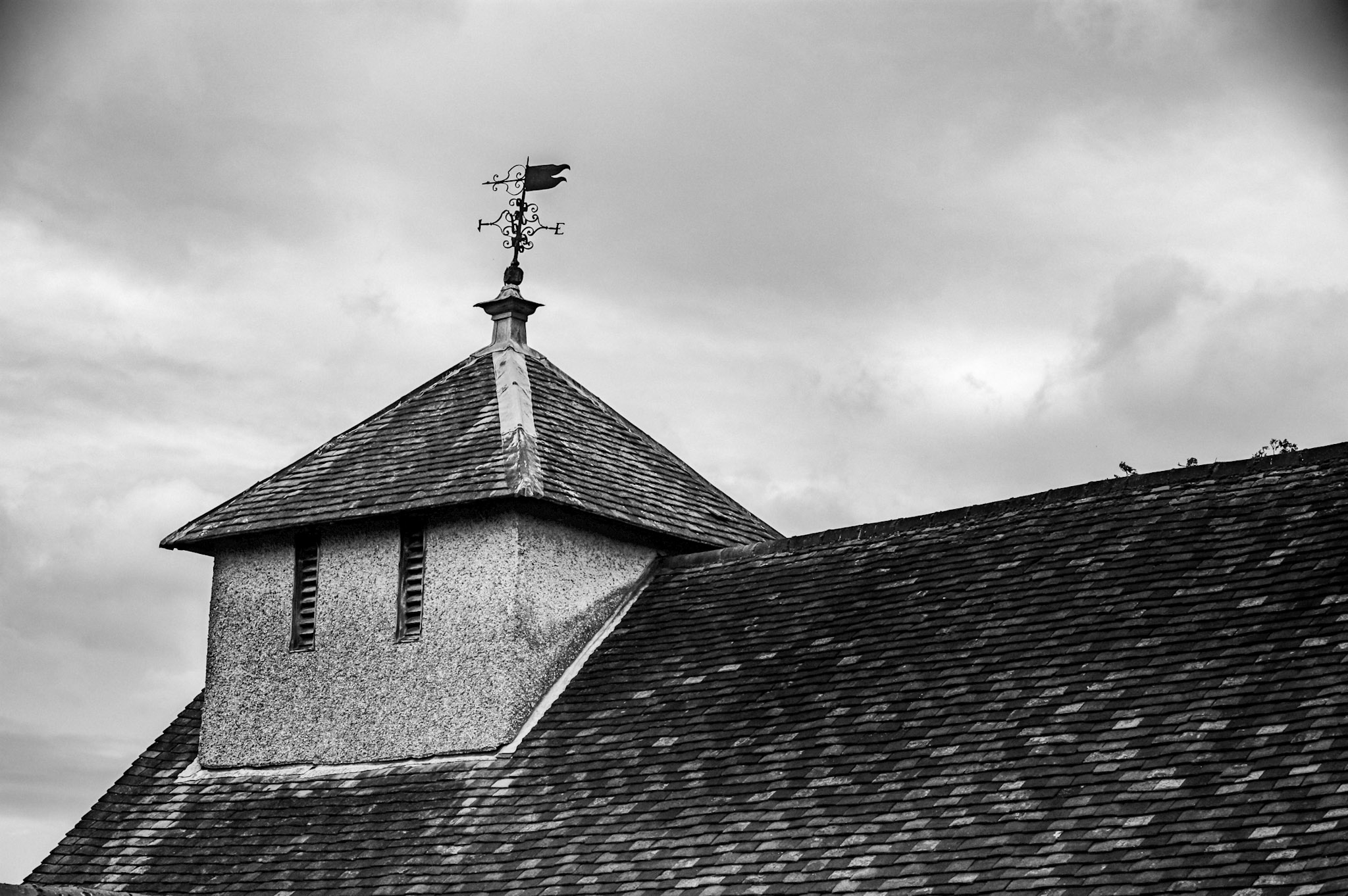
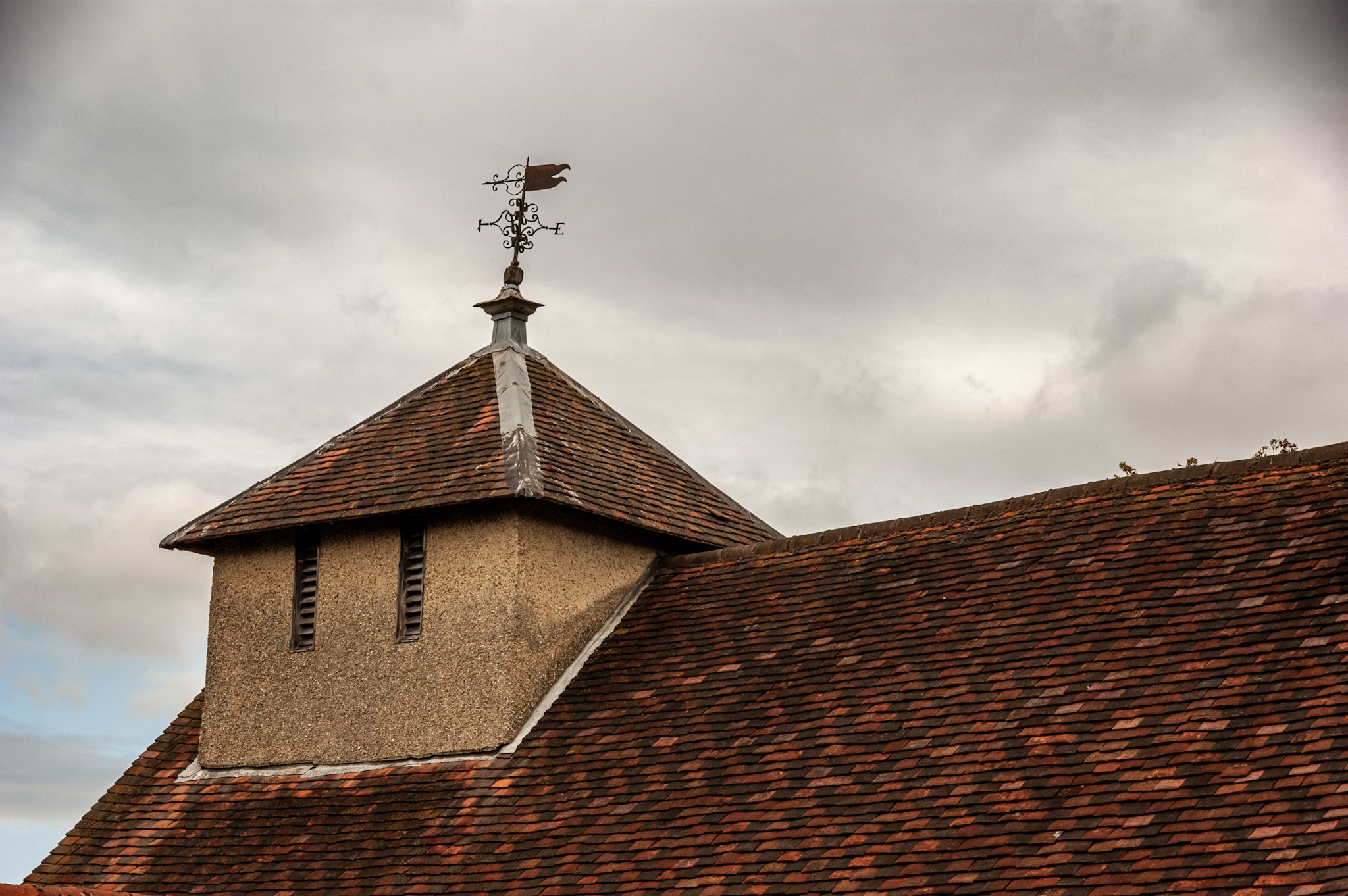
Once the colour is removed, attention starts moving elsewhere.
The green lawn stops demanding so much notice. The roof tiles no longer stand out because of their warmth. The blue sky loses its pull.
What remains is the shape of the building, the arrangement of the windows, the different materials in the walls, the flint, the stonework and the way the church sits within the surrounding landscape.
The building itself becomes more prominent.
That shift is one of the reasons black and white suits the way I photograph historic places.
It simplifies the scene, but it does not necessarily make it simpler.
Instead, it can make other things more visible.
Architecture, age and detail
Historic properties are made from materials that have often survived for decades or centuries.
Flint, brick, timber, slate, tiles, iron, stone and weathered plaster all accumulate marks.
Edges soften. Stone becomes stained. Timber develops texture. Repairs appear alongside original construction. New materials sit beside old ones.
Those details are part of a building's history.
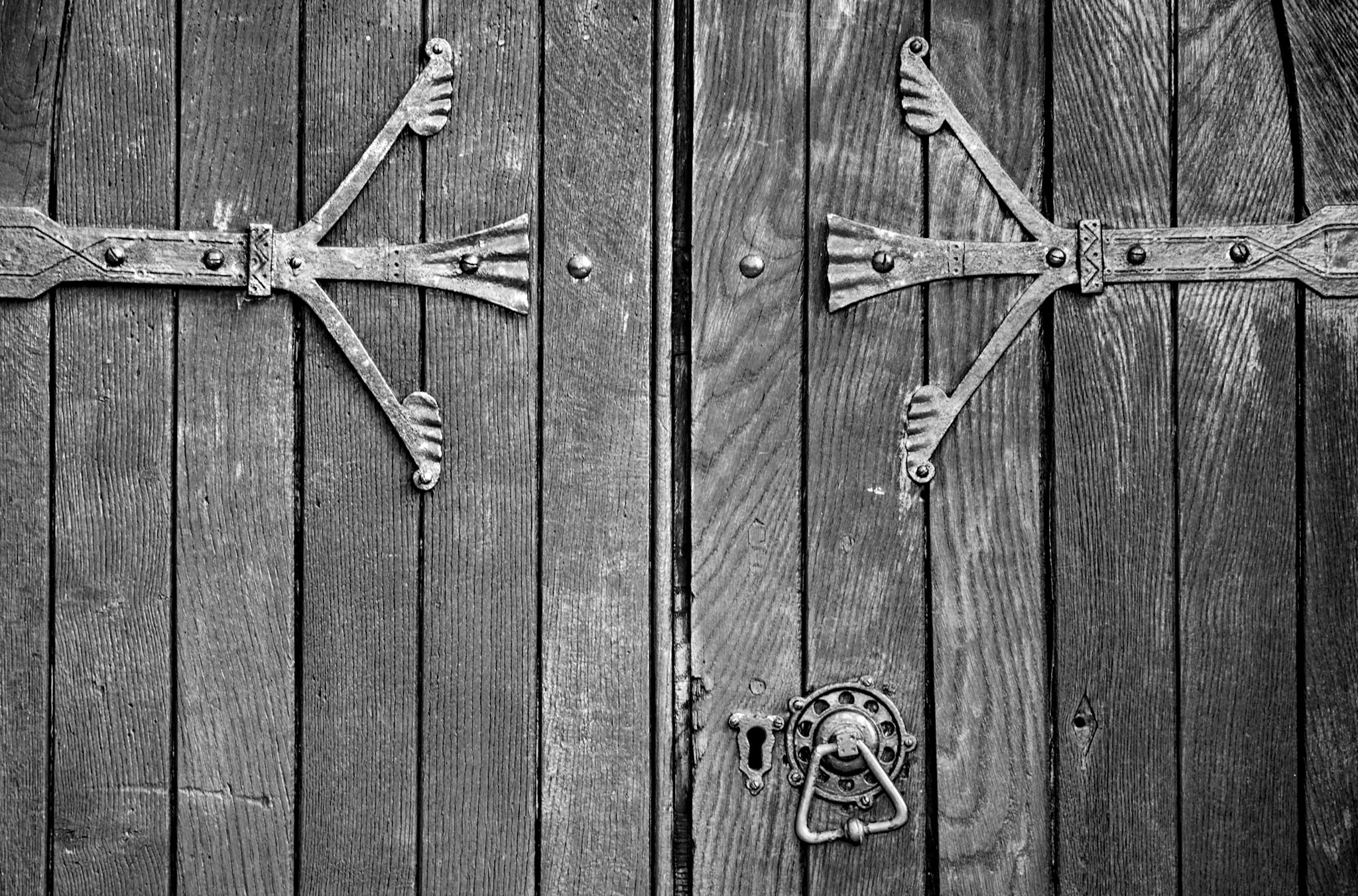
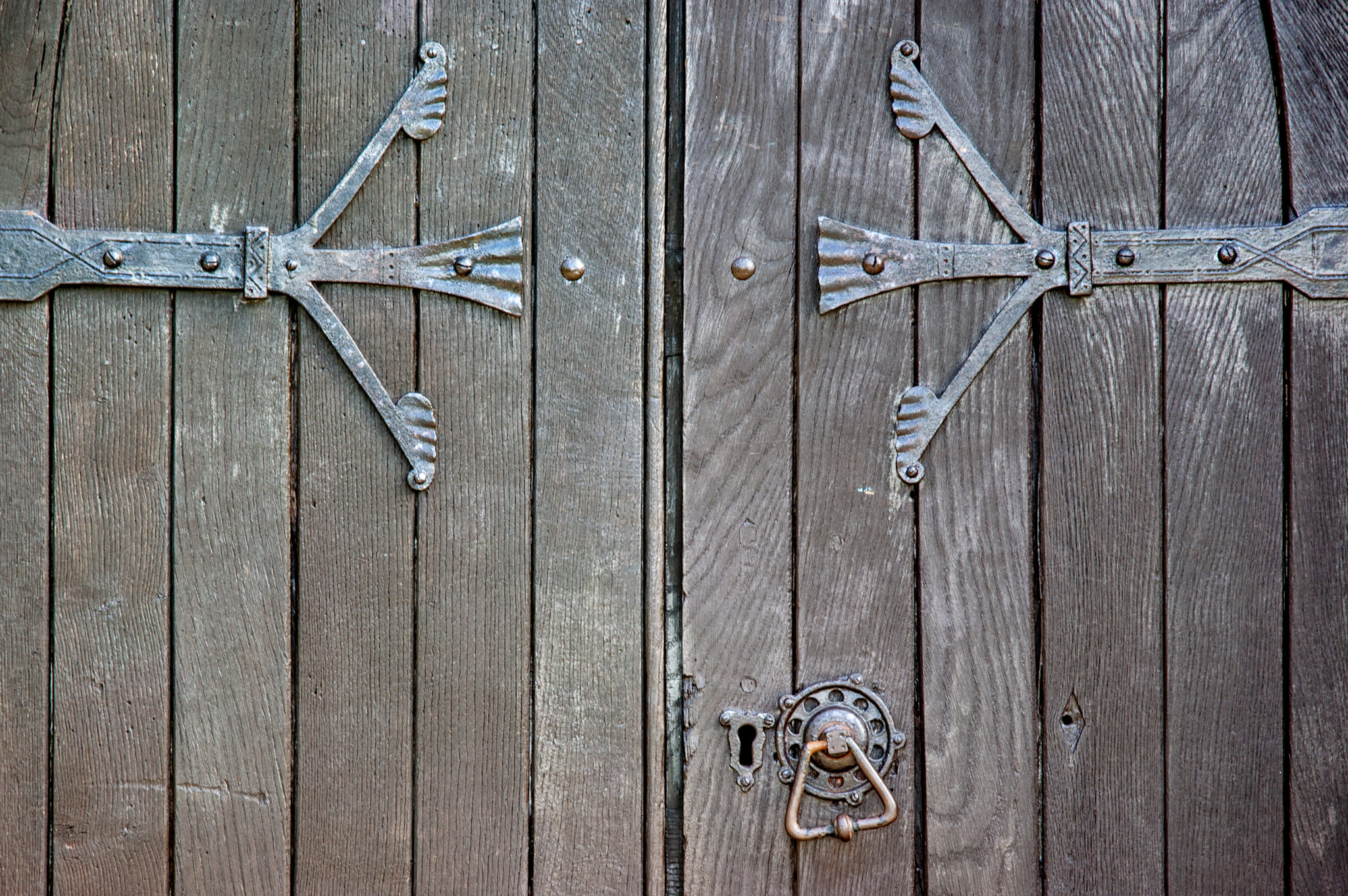
I photographed an old wooden door at Hedsor with large iron hinges and fittings. The colour version immediately draws attention to the contrast between the warm timber and the cooler metalwork.
Remove the colour, though, and the photograph shifts.
The grain in the timber becomes stronger. The hinges feel heavier. Rivets, scratches, wear and age begin to dominate.
The subject has not changed.
What I notice about it has.
That difference is important to the way I work because I am not only looking for the grand view of a property.
I am equally drawn to what surrounds it: gates, paths, outbuildings, walls, doors, windows, roofs, architectural details, overgrown corners and signs of how the place has developed over time.
Those smaller details help build a more complete picture of the property as a place rather than simply as a building.
When structure becomes the subject
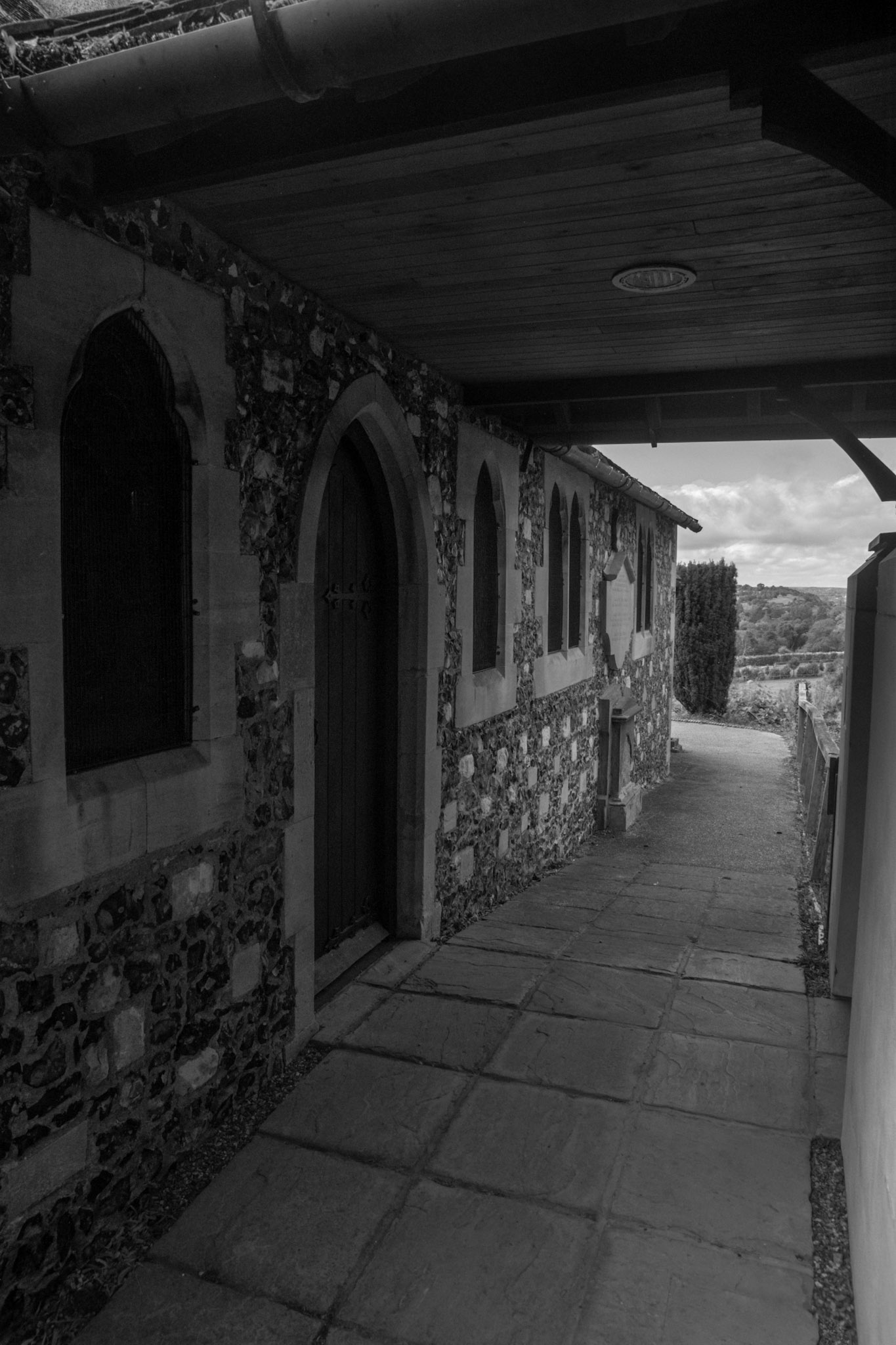
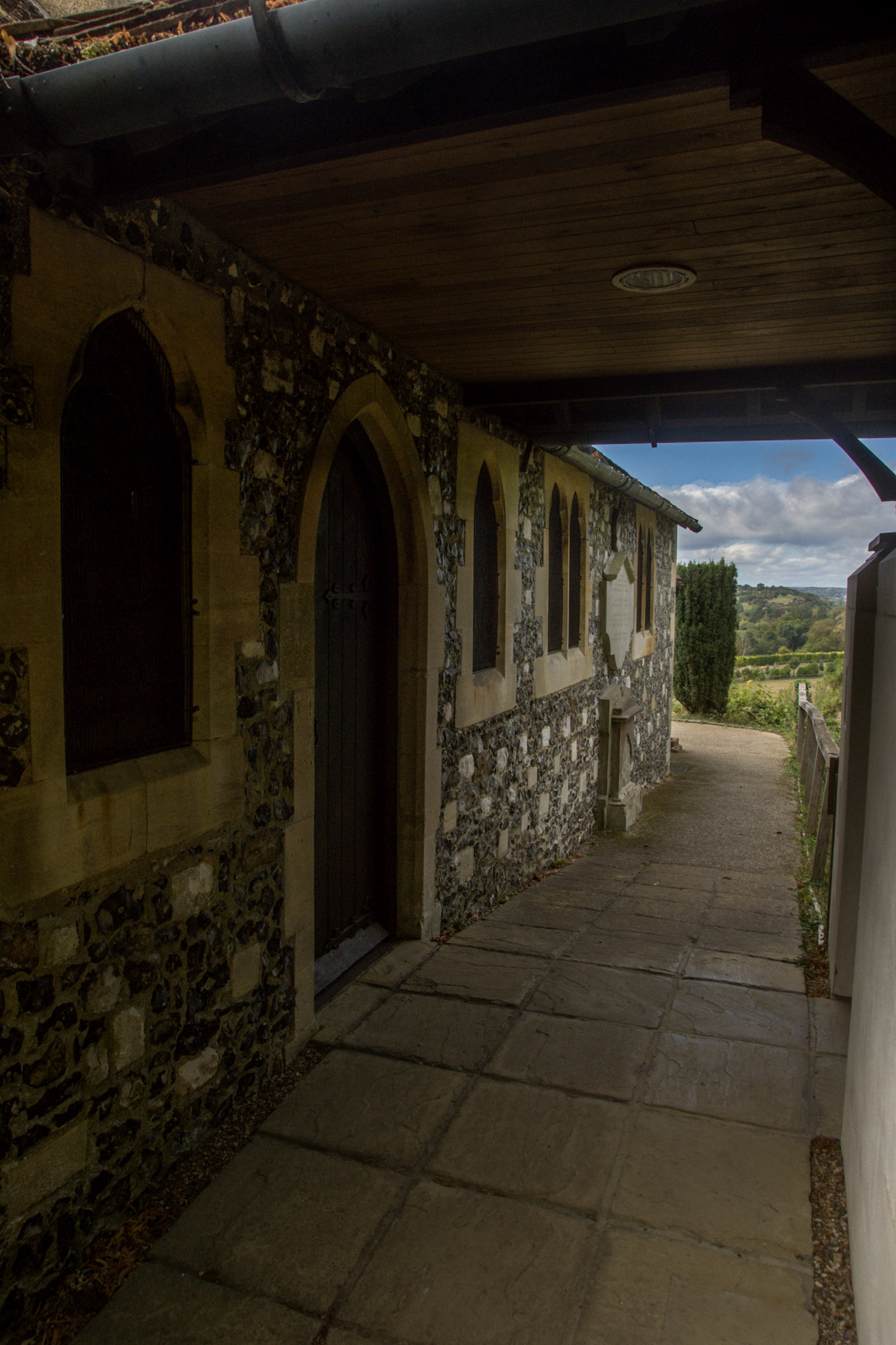
The covered walkway at Hedsor works differently again.
In the colour image, the eye is naturally pulled through the arches towards the landscape beyond. The green outside and the brighter sky become part of the visual reward at the end of the passage.
Once the colour is removed, the structure itself takes over.
The flint walls, paving, repeating arches and contrast between the darker interior and bright opening become the main elements.
The photograph starts to feel less like a pleasant view through a building and more like a study of the building itself.
That is one of the qualities I value most in black-and-white photography.
It can change the hierarchy of a scene.
Things that were previously supporting elements can become the subject.
Different photographs for different purposes
This is also why I do not think the argument should simply be colour versus black and white, with one declared the winner.
The more useful question is: what are the photographs for?
A venue trying to fill its summer wedding calendar may quite reasonably want bright colour photography showing gardens at their best.
A hotel may need colour photographs that accurately communicate its interiors, rooms and surroundings.
An estate promoting an event may want images that feel immediate, attractive and contemporary.
Those are perfectly sensible uses for colour.
But historic buildings also have another life.
They have an architectural history, a social history and often a continuing story of repair, alteration and conservation.
Photography can record that too.
Black-and-white images can be used for publications, editorial work, exhibitions, interpretation displays, estate histories and archives. They can document a building at a particular point in time or record a site before, during and after restoration or change.
They can also sit comfortably within older photographic collections where a property already has an established archive.
That does not make black and white automatically more historically important. A colour photograph can obviously be an extremely valuable record.
The difference is in the visual language.
Black and white often feels less tied to a particular season or contemporary colour palette. It pushes attention towards form, material, condition and structure.
For documentary and archival work, those qualities can be useful.
Recording places as they change
This documentary side of photography is becoming a bigger part of my own work.
A great deal of my personal photography is concerned with places changing over time.
Villages change. Towns change. Buildings are altered, restored, repurposed or demolished. Businesses disappear. Signs are replaced. Landscapes are redesigned.
Historic properties are not frozen in time either.
An estate today may look very different in twenty years. A building may undergo major restoration. An outbuilding may be converted to another use. Gardens mature. Trees disappear. Walls are repaired. Original features may be preserved while others are adapted for modern life.
A photographic commission can therefore have more than one purpose.
The images may be useful immediately for a website, publication or campaign, while also becoming part of the long-term visual record of the property.
That has more value to me than simply producing a collection of attractive exterior photographs.
I want to photograph the impressive view, certainly.
Then I want to keep looking.
Why I still choose black and white
Seeing these Hedsor photographs in both colour and black and white has not convinced me that colour is unnecessary.
Quite the opposite.
It has made the strengths of colour much clearer.
Some of the colour photographs are extremely attractive. For certain commercial uses, particularly weddings, hospitality and lifestyle marketing, I can completely understand why they might be preferred.
But they have also confirmed why I choose to work differently.
I am less interested in making a historic property look as colourful, bright or aspirational as possible.
I am interested in character.
I want to see the architecture, the materials, the relationship between the building and its setting, and the details that reveal age and use.
The aim is not simply to show what a property looks like.
It is to show what it feels like.
Black and white suits that approach because it removes one layer of information and forces me to work with everything that remains: light, shadow, shape, texture, composition and tone.
It also encourages me to look beyond the obvious photograph.
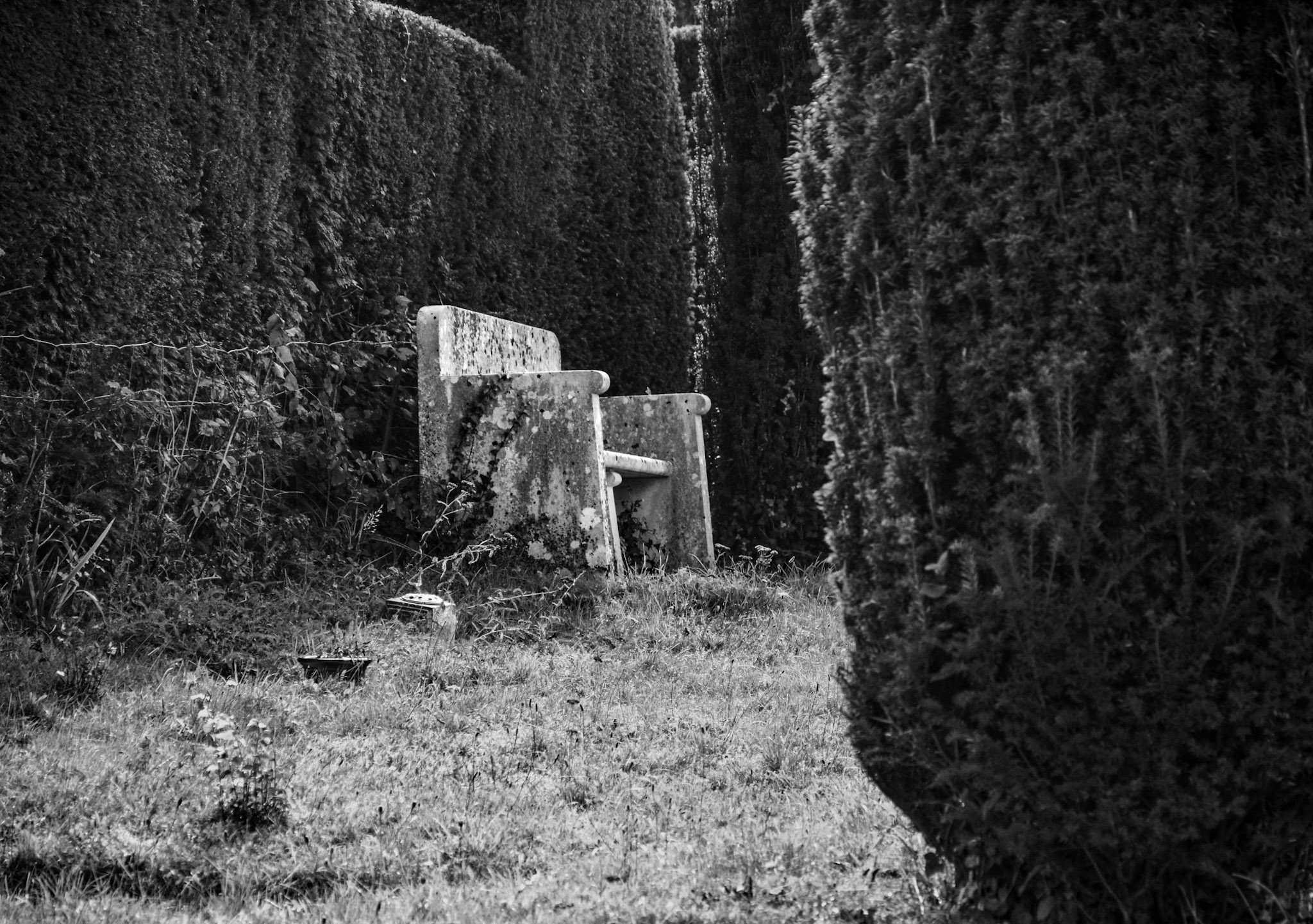
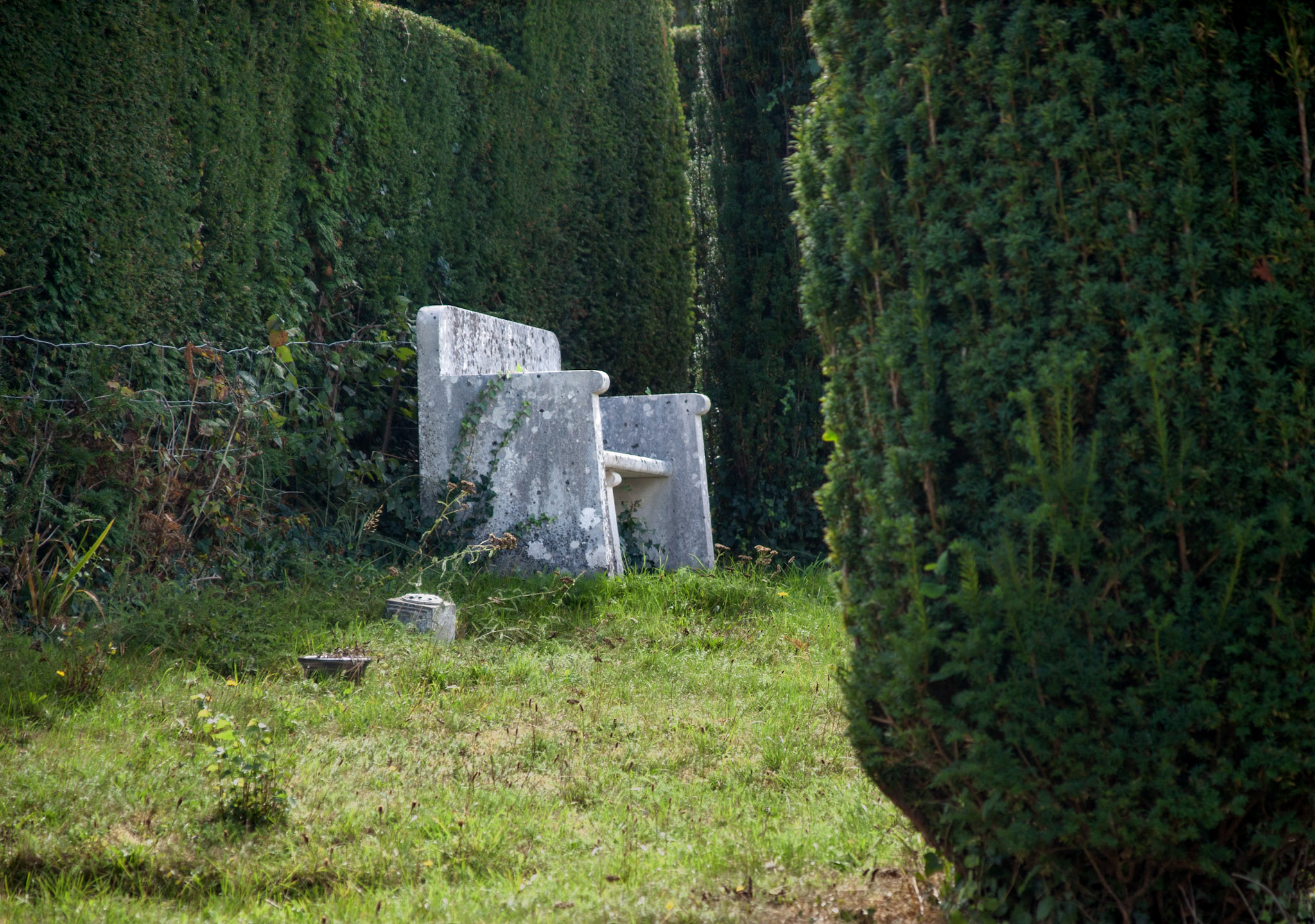
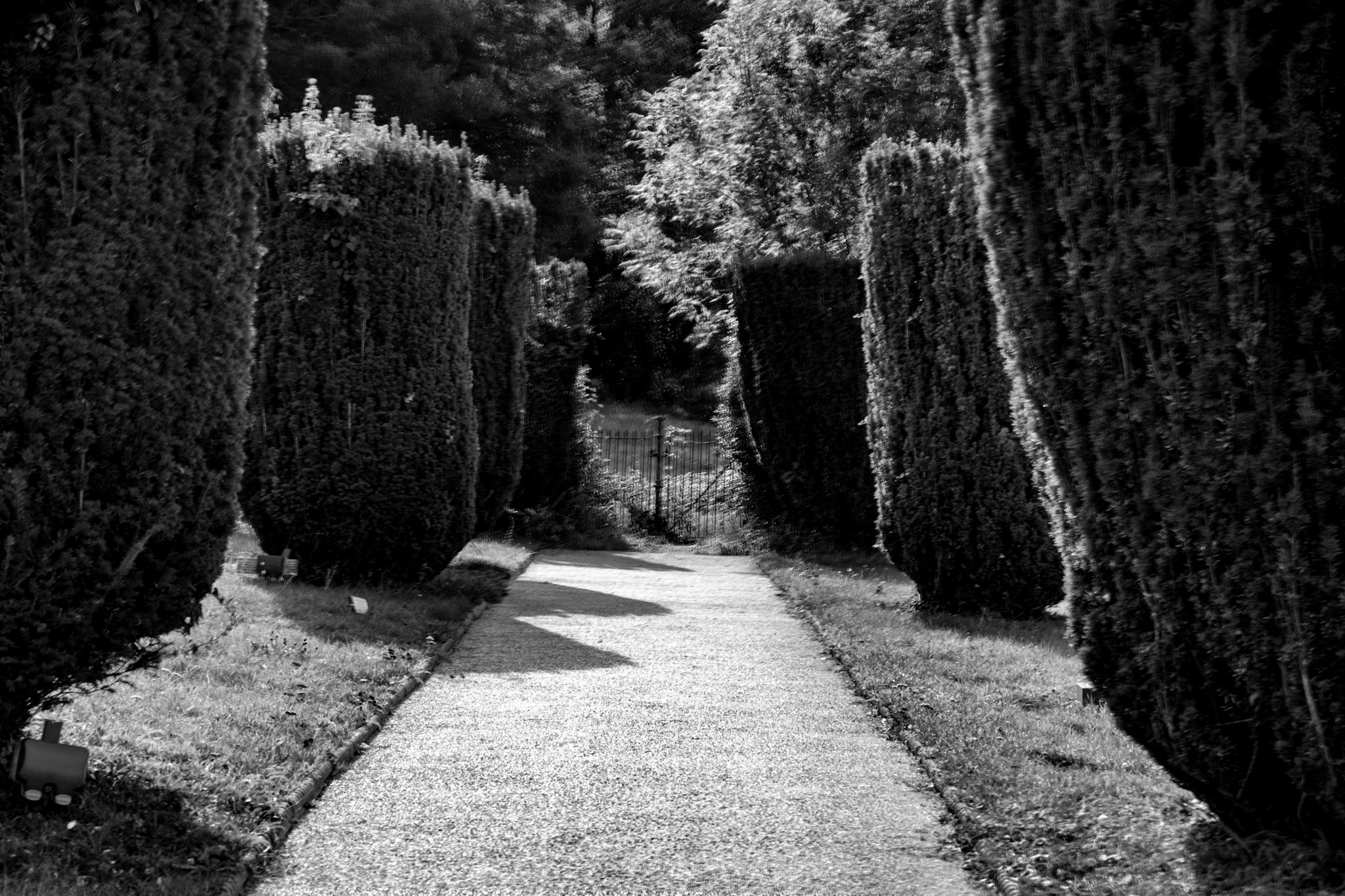
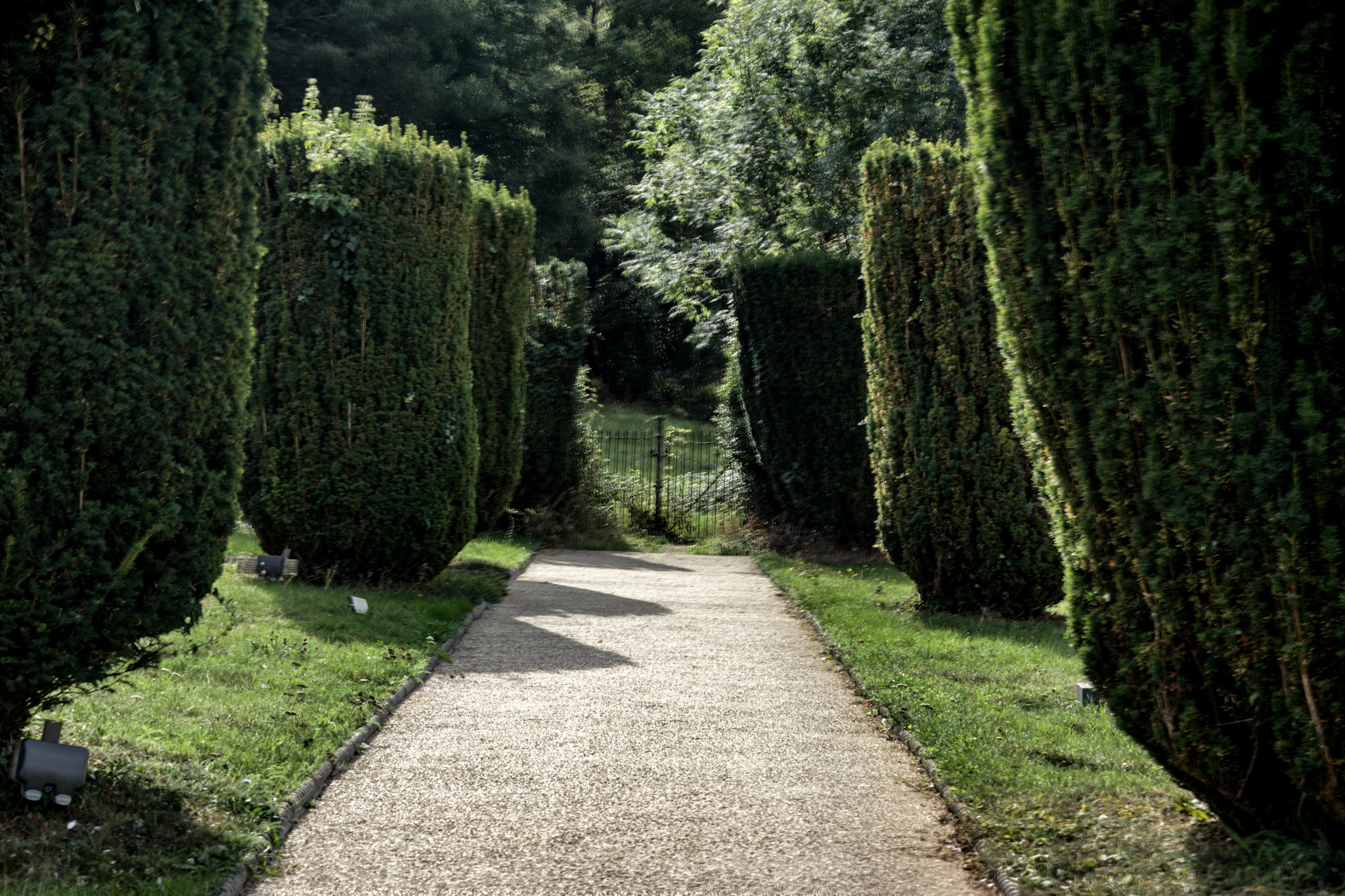
A weathered door can be as important as the front elevation. A path disappearing between hedges can say something about the estate around it. An archway, roofline, gate or worn piece of stone can become part of the overall portrait of a place.
Taken together, those photographs begin to describe more than architecture.
They create a record of character.
The same place, seen differently
The Hedsor photographs have given me a useful reminder that photography is not neutral.
The decisions a photographer makes affect what the viewer notices.
Colour can emphasise season, warmth, decoration and natural beauty.
Black and white can redirect attention towards form, age, material and structure.
Neither interpretation cancels out the other.
They simply serve different purposes.
For the type of historic-property and heritage photography I am developing through Walking With Pics, I know which direction feels right for me.
I want to create photographs that work commercially today but also have value beyond the immediate campaign: images suited to publications, archives, exhibitions, interpretation and the longer story of a property or site.
Historic places already contain layers of history.
My job is not to add artificial nostalgia to them.
It is to notice what is already there.