In the last blog I went looking for a definition of street photography and ended up questioning most of what the internet thinks it knows about the genre. The short version: the term has been around since 1858, the actual definition is broad, honest, and surprisingly open — and yet somewhere along the way the internet replaced all of that with a very specific visual aesthetic. Crushed blacks, blown highlights, lone silhouettes in dramatic archways, manufactured atmosphere passed off as candid observation. A look, not a philosophy.
And at the end of all that, I asked the question I'd been avoiding the whole time. Where does my own work fit into this?
I promised you a clue. The answer involves admitting something I probably should have said much sooner.
Let's Start With the Honest Bit
I am not a street photographer.
I'm also not a landscape photographer. Or a travel photographer. Or a documentary photographer, though elements of all of those things turn up in what I do at various points. I don't really have a set category, and I've wasted more time than I should have worrying about it.
What I am is a black and white photographer who likes walking and exploring, and points his camera at whatever catches his eye. The subject is wherever I happen to be. Out in the countryside, I'll shoot the landscape. Walking through a town or village, I'll shoot the streets, the buildings, the people going about their day. The camera doesn't change, the eye doesn't change, the approach doesn't change. The only thing that changes is what's in front of me.
The genre label only becomes a problem when I have to decide what shelf to file some of it on afterwards. And that, it turns out, is a more interesting problem than it sounds.
The Same Eyes Every Time
My approach doesn't change depending on what I'm pointing the camera at. I don't swap out my instincts based on location. I don't put a new set of eyes in just because I fancy shooting something different today.
Whether I'm on a familiar path I've walked a hundred times or down a backstreet I've never seen before, the same things draw my eye. The quiet corner. The bench that's been there long enough to have a story. The light doing something worth recording. A detail that would be easy to walk past without noticing — a texture, a shadow, a moment of ordinary life that isn't performing for anyone. I'm not hunting for drama. I'm not waiting for the geometrically perfect moment. I'm just there, watching, reading the scene and occasionally something presents itself.
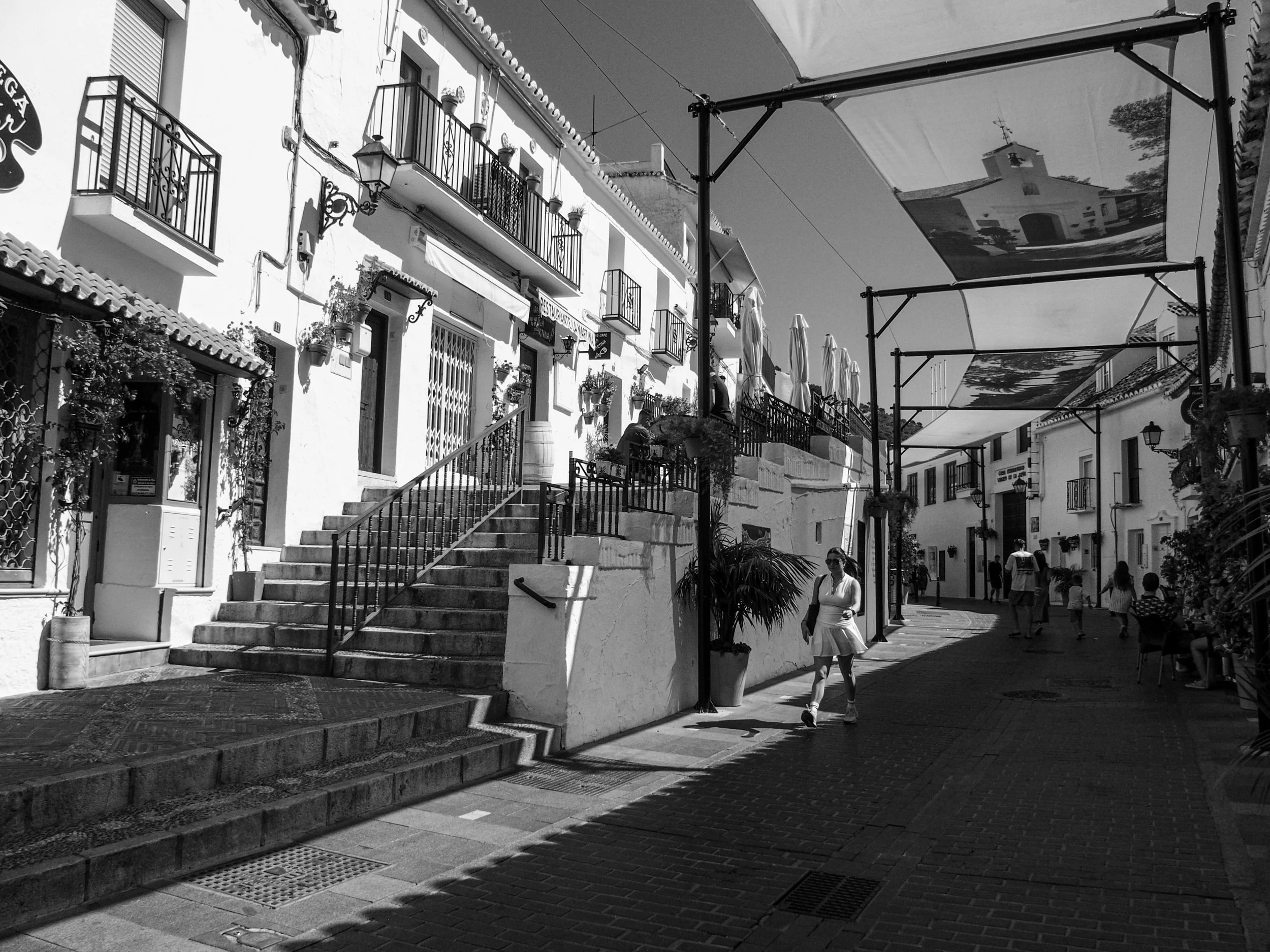
The processing follows the same logic. Minimal. What the camera saw is broadly what you get — adjusted for what the light actually was, nothing more. I'm not building an image in post, I'm recording one in the field. That applies whether I'm shooting a woodland or a backstreet or a building that's been standing long enough to have earned its place in the frame.
Same eye. Same approach. Same photographer. The location is just the location.
So Is It Street Photography or Not?
This is where it gets genuinely complicated.
Some of what I shoot clearly qualifies under any reasonable definition of street photography. People in public spaces, going about their lives, unposed and unaware. Candid, observational, nothing arranged. By the definition we established in the last blog, that work fits.
But a lot of it doesn't, and never tried to. The landscape work is something else entirely. And even within the urban and travel work, plenty of images have no people in them at all. A door. A wall. A shadow falling across a pavement. The way light hits a building at a particular time of day. These are observations, not street scenes.
And yet it all feels like the same body of work, made with the same eye, for the same reasons. It doesn't feel like a different photographer showing up with different intentions depending on the subject. It feels like one person, looking at the world, trying to record something true about it.
The honest answer is that it doesn't fit neatly into any single category, and probably never will. Forcing it into one would mean ignoring half of what the work actually is. And that seems like a worse problem than just accepting that some things resist easy classification.
Which is when I started to realise that the genre label was never really the point.
Why Labels Matter Anyway (Even When They Shouldn't)
I'd love to say that categories are irrelevant and we should all just make work and let it be what it is. And in an ideal world, maybe that's true.
But the practical reality is that the internet runs on categories. Search engines run on categories. If you want your work to be found — and I do, that's half the reason the site exists — you need to use the language people are already searching for. Street photography gets searched. Urban observation doesn't, or at least not nearly as often. So when I tag something, or write an SEO description, or decide how to frame a gallery, I'm making a pragmatic decision about discoverability, not a philosophical statement about the nature of my practice.
The shelf your work gets filed on is not the same thing as what your work actually is. But you still need a shelf.
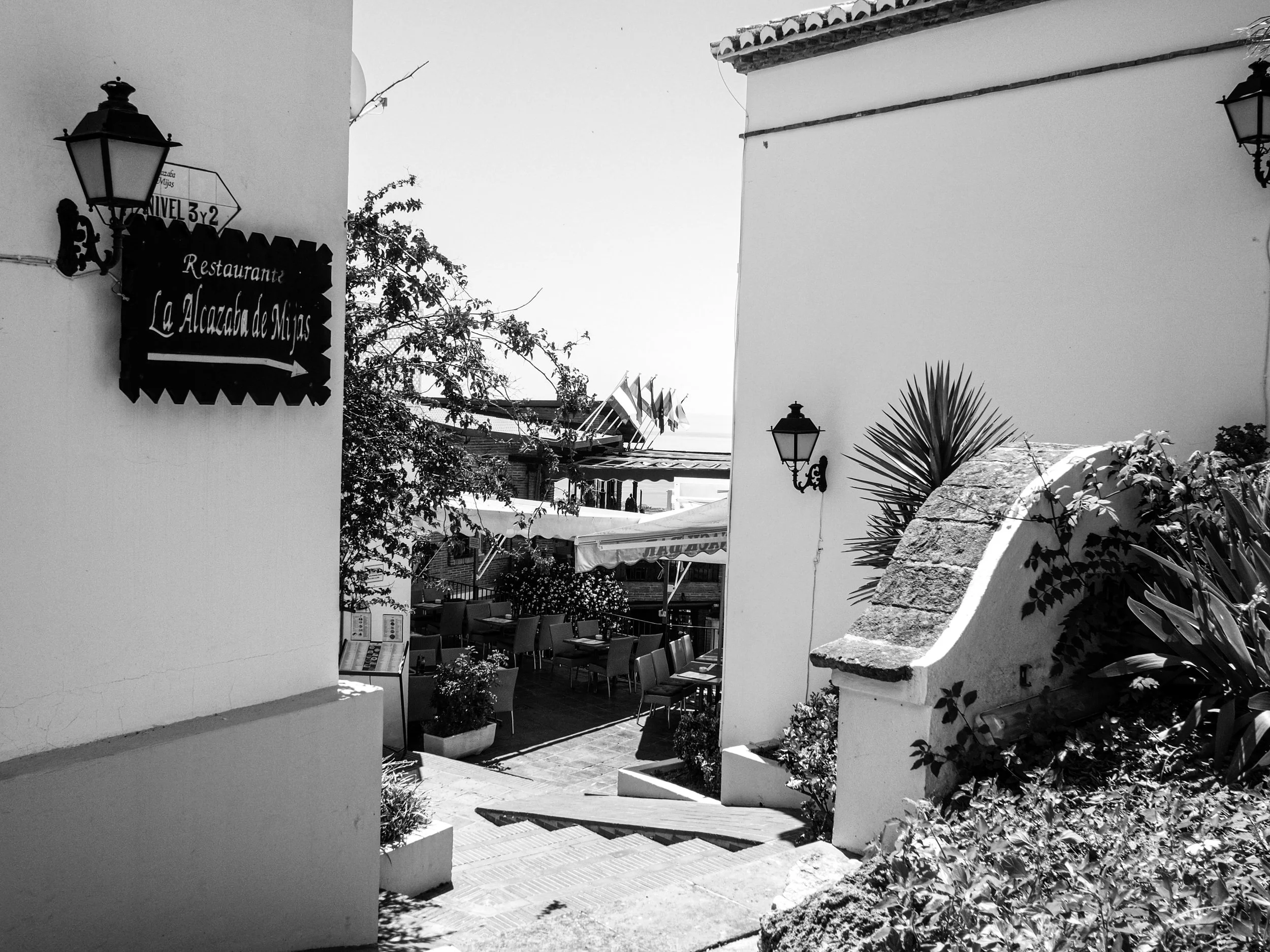
This is something I think a lot of photographers — especially those working outside the dominant genre aesthetics — quietly struggle with. You make work that doesn't look like what the algorithm expects, and then you have to figure out how to get it in front of people who might actually respond to it. The honest answer is you use the available language and hope the work does the rest.
What I try not to do is let the label change the work itself. The moment I start shooting with a genre identity in mind rather than my own instincts, I'll be making someone else's photographs. And there are already more than enough of those.
What I Actually Call It
Urban observation is the closest I've come to a term that feels honest.
It doesn't require a street. It doesn't require drama. It doesn't require a decisive moment or a technically perfect candid shot or a silhouette positioned just so against the light. It requires presence. It requires being somewhere and actually looking at it, rather than looking for shots you've already seen on the internet and decided you want to recreate.
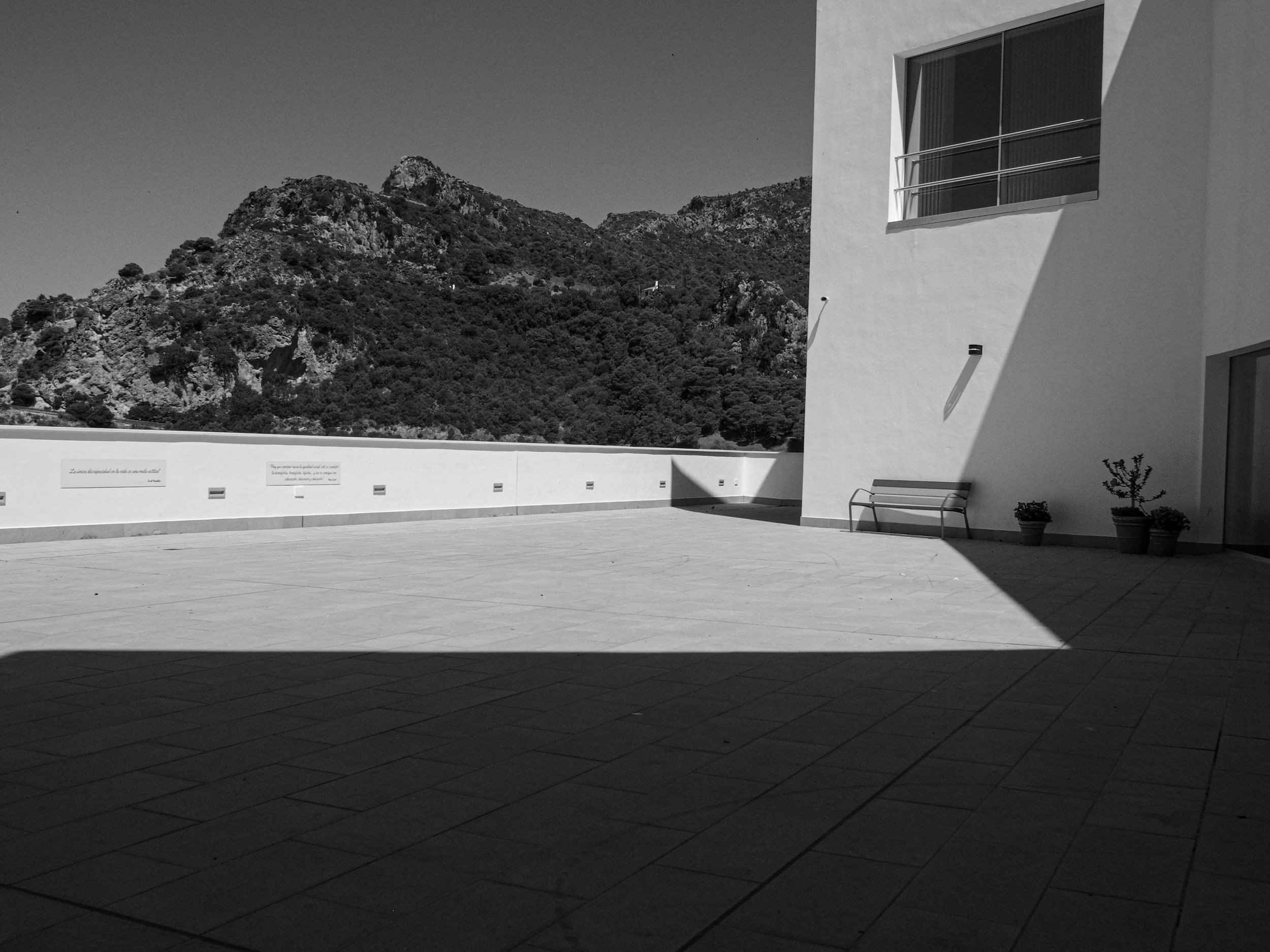
Urban observation is what happens when you walk down a backstreet and notice a door that's been repaired so many times it's become a record of the building's whole life. It's what happens when light comes through at an angle that changes what the shadows mean. It's what happens when everything goes quiet in a particular way and something worth recording presents itself — not because you went looking for it, but because you were actually there and looking.
It's observation. It happens to take place in the built environment as often as the natural one. It happens to be in black and white, always, because that's the visual language I think in. It happens to involve walking, because that's the pace at which things worth noticing tend to reveal themselves.
Is it street photography? Sometimes, technically. Is it landscape photography? Sometimes, technically. Is it travel photography? When I'm somewhere other than home, possibly.
But mostly it's just what happens when I take a camera somewhere and keep my eyes in tune with my surroundings.
Does It Actually Matter?
Probably less than I've made it sound, honestly.
The photographers I most admire didn't spend much time worrying about what genre they belonged to. Fay Godwin walked the landscape and made something that was simultaneously photography, documentary, environmental argument, and personal essay. It didn't have a clean label and it didn't need one. The work made its own case.
That's the standard worth aiming for. Not "does this qualify as street photography by the current internet definition" but "does this image record something true, does it show the world with honesty and attention, does it give the person looking at it a reason to stop."
If it does that, the genre label can sort itself out.
I'm not a street photographer. I'm not a landscape photographer. I'm a black and white photographer with a dog and a decent pair of boots, and I go out and I look at things, and occasionally I get lucky.
That's the whole practice. It doesn't need a more complicated name than that.
This is part of an ongoing series of blogs about photography, walking, and the Chilterns. The previous blog — Street Photography or Urban Observation? — is where this one starts.