Although I like to think of myself as reasonably well-travelled, these days I'm more than happy to stay in the UK, throw the camping gear in the car, and head somewhere quiet with Elvis — the family goldendoodle, for anyone new here. However, with a proper holiday well overdue, a ten day trip to Estepona in Andalusia seemed like the answer. Elvis was dispatched to the daughter-in-law's for safekeeping, and I found myself making do with my other half as a travel companion instead. She's fine. She carries the sun cream and doesn't chew the furniture, which puts her marginally ahead of Elvis on a long trip.
Villa booked, car hire sorted, a bit of loose pre-trip research done, and before long we were touching down at Malaga airport. Car collected, we made the hour or so drive along the coast to the outskirts of Estepona — the villa tucked into a quiet residential area of Benamara, just off the A-7 and a five minute walk from the beach. Not a bad base for ten days.
The backdrop of the Sierra Bermeja Mountains behind us was a reminder that this was a long way from Buckinghamshire. A lot more spectacular and imposing than the couple of hills behind the house at home — not that I'm taking anything away from the Chilterns, they have their own quiet beauty and their own pull. But there's something about a proper mountain range sitting behind you while you drink your morning coffee that recalibrates your sense of scale fairly quickly.
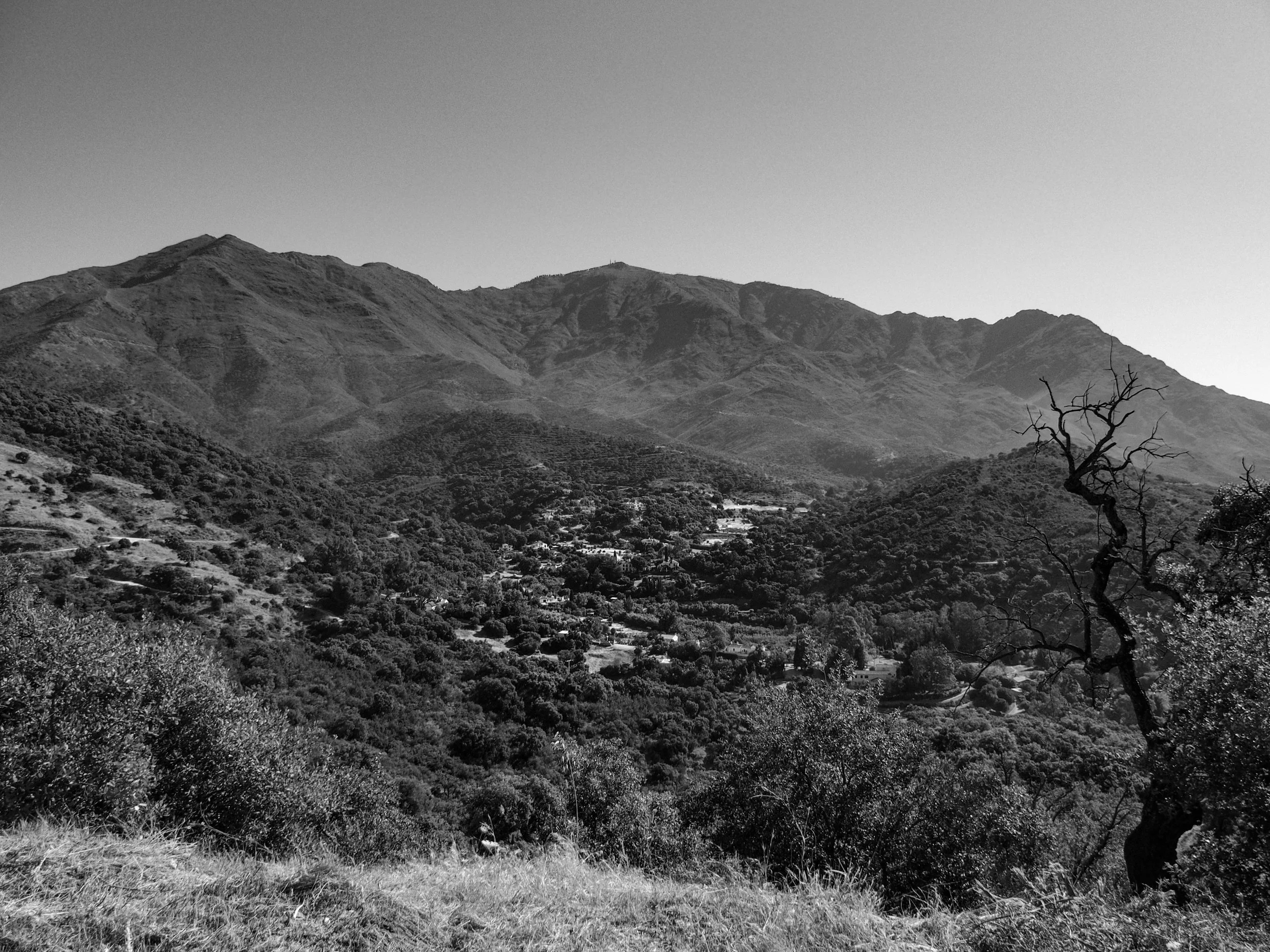
Clear blue skies for the duration and a manageable 25 to 29 degrees meant conditions were about as good as it gets. Beyond that we had no real plans — I had a loose list of places I wanted to visit from a bit of pre-trip research, but past experience has taught me that these lists are largely decorative. You end up somewhere you didn't expect, stay longer than you meant to, and miss half of what you planned. And that's fine. That's usually where the better photographs are anyway.
The Camera and the Approach
We have a sort of mutual understanding when we're away, whether that's somewhere in the UK or further afield like here. Mornings we do something together, then the Mrs settles in for an afternoon siesta or a book, and that's when I get my bit of me time — camera in hand, no agenda, just go and see what's there. Whether it ends up on the website or just stays on the card as something for me, the camera goes everywhere anyway. It's not a conscious decision, it just comes with me.
For this trip I'd settled on the Olympus Stylus 1s — the little compact that's been quietly proving itself as one of the best decisions I've made gear-wise in a while. A proper joy to use. The only settings adjustment I made for the trip was switching to spot highlight metering to protect the highlights in stronger Mediterranean light, with AEL locked to one of the back buttons for quick exposure hold. Everything else stayed as it always is — black and white JPEG, minimal processing, shoot what's there.
Day one was always going to be a gentle one. We couldn't collect the villa keys until four in the afternoon, so we settled for a walk around the local area, got a feel for the neighbourhood, and found somewhere nearby for food. A bacon and mushroom omelette, a local beer, job done. Long travel days don't deserve anything more complicated than that. Camera stayed in the bag. There'd be plenty of time for that tomorrow.
Estepona Old Town
Early mornings around the villa area were good for exploring and picking up bits from the supermarket, but photographically the local streets were a challenge — as attractive as the Spanish villas around us were, most of them were hidden behind high walls and large gates. Very private, very secure, and not particularly interesting with a camera. A couple of images, but it was more about the walk than anything else.
Estepona Old Town was a different matter entirely, and I'd been looking forward to it. Older Spanish architecture is just pleasing on the eye — there's an honesty to it, a sense that buildings were built to be used rather than admired. While the other half disappeared into the shops I disappeared down the nearest backstreet, which is exactly where I want to be. Away from the crowds, away from the hotspots, down the quieter side streets where the locals are just getting on with their day and nobody's performing for anyone. First proper outing with the camera and I came away reasonably happy.
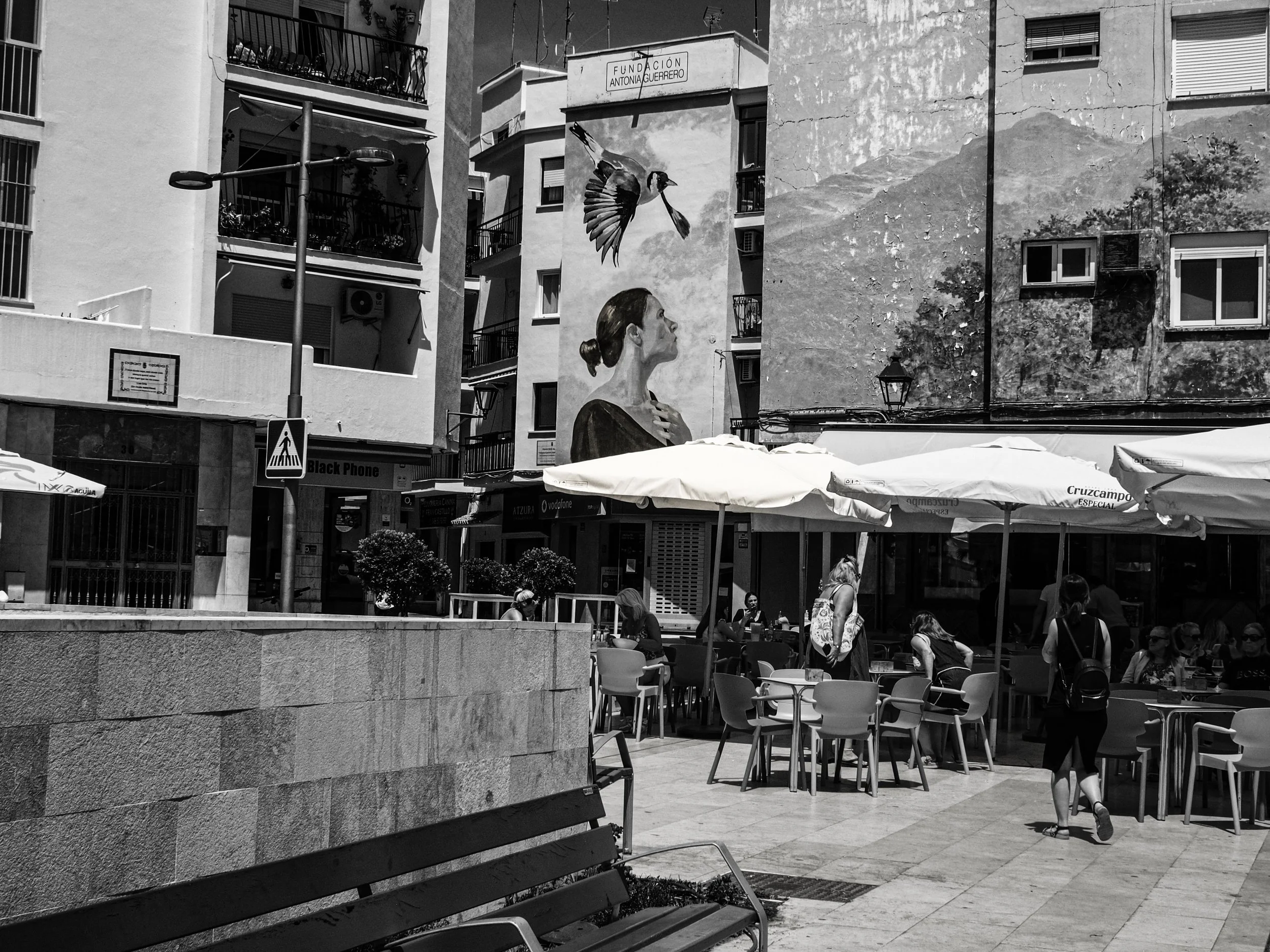
One thing that sets Estepona apart from the other towns we visited is the street art — large scale murals painted on the sides of buildings throughout the old town, each one surprisingly accomplished. If you google ‘Estepona murals’ there is a dedicated website which will tell you about each mural and give you the google map link to each one, I used THIS SITE, which lists around 60 of them, however if you go to the Andalucia.com website, it lists the full 70+ murals.
The Towns and Villages
There are so many lovely little towns and villages scattered around the area that ten days barely scratches the surface. I picked a few, visited some more than once, and accepted that the rest would have to wait for another trip.
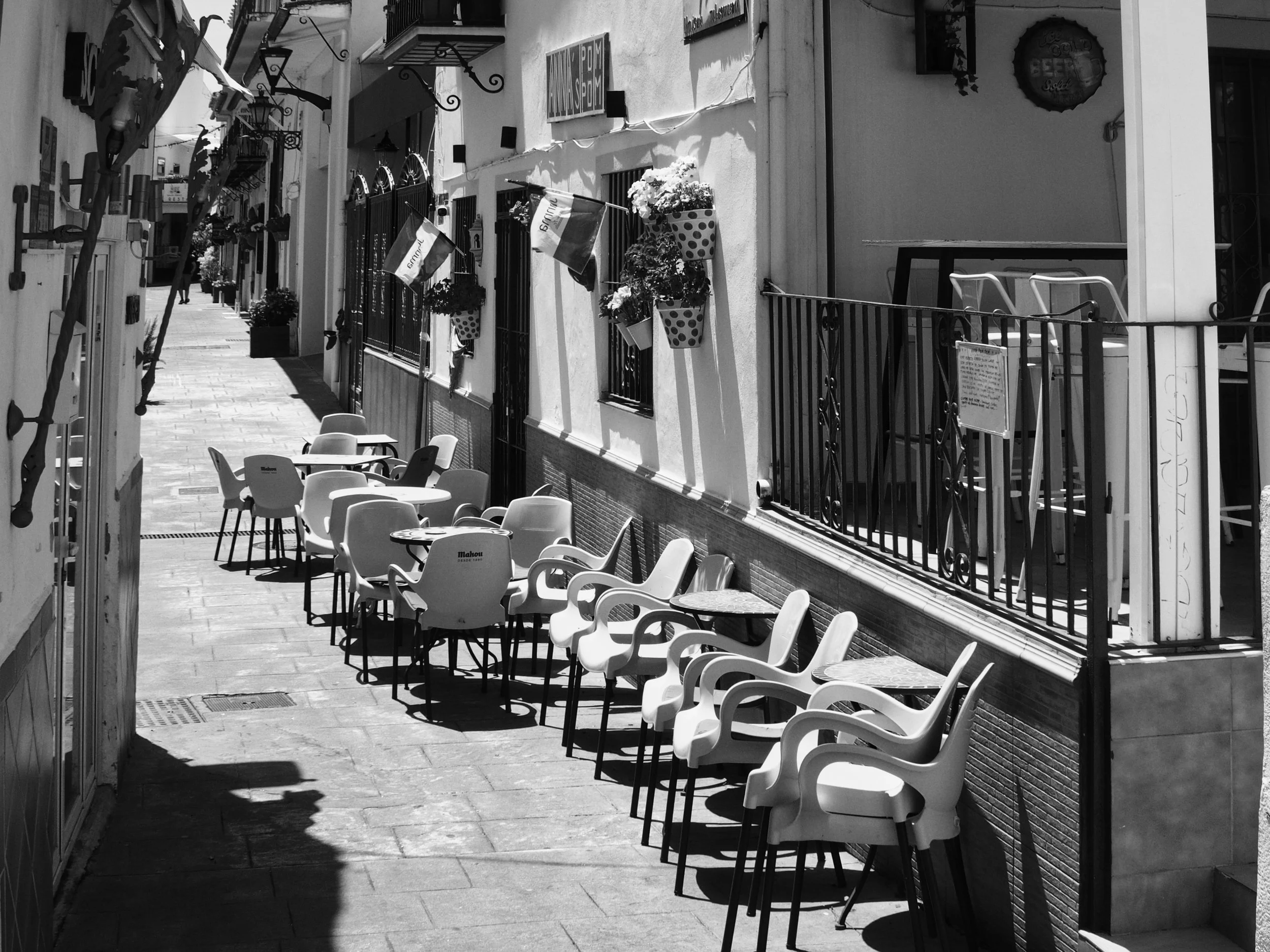
One thing I noticed quickly on the solo outings was the timing. Heading out during siesta — roughly two until five — meant the smaller towns were wonderfully quiet. Almost empty in places. And I found myself increasingly drawn to that emptiness rather than fighting it. Empty chairs outside a restaurant. A bar with nobody in it. A square with just the light for company. It became an unintentional theme that ran through a lot of the trip's photography — the absence of people saying as much as their presence would have.
Benahavis
Benahavis was one I kept coming back to. We first found it because we'd spotted a restaurant we wanted to try — La Escalera De Balthazar — and it turned out to be one of those places you end up returning to more than you planned. Three or four visits over the ten days. The staff were genuinely friendly, the food was excellent, and it just had the right feel to it.
But beyond the restaurant, Benahavis deserved a proper solo visit with the camera. Like most of the mountain towns it's steep in places — some more than others — and that steepness gives the streets a particular character, the kind that rewards wandering aimlessly without a destination in mind. Which is exactly what I did. Just me, the Stylus, and a healthy dose of nosiness.
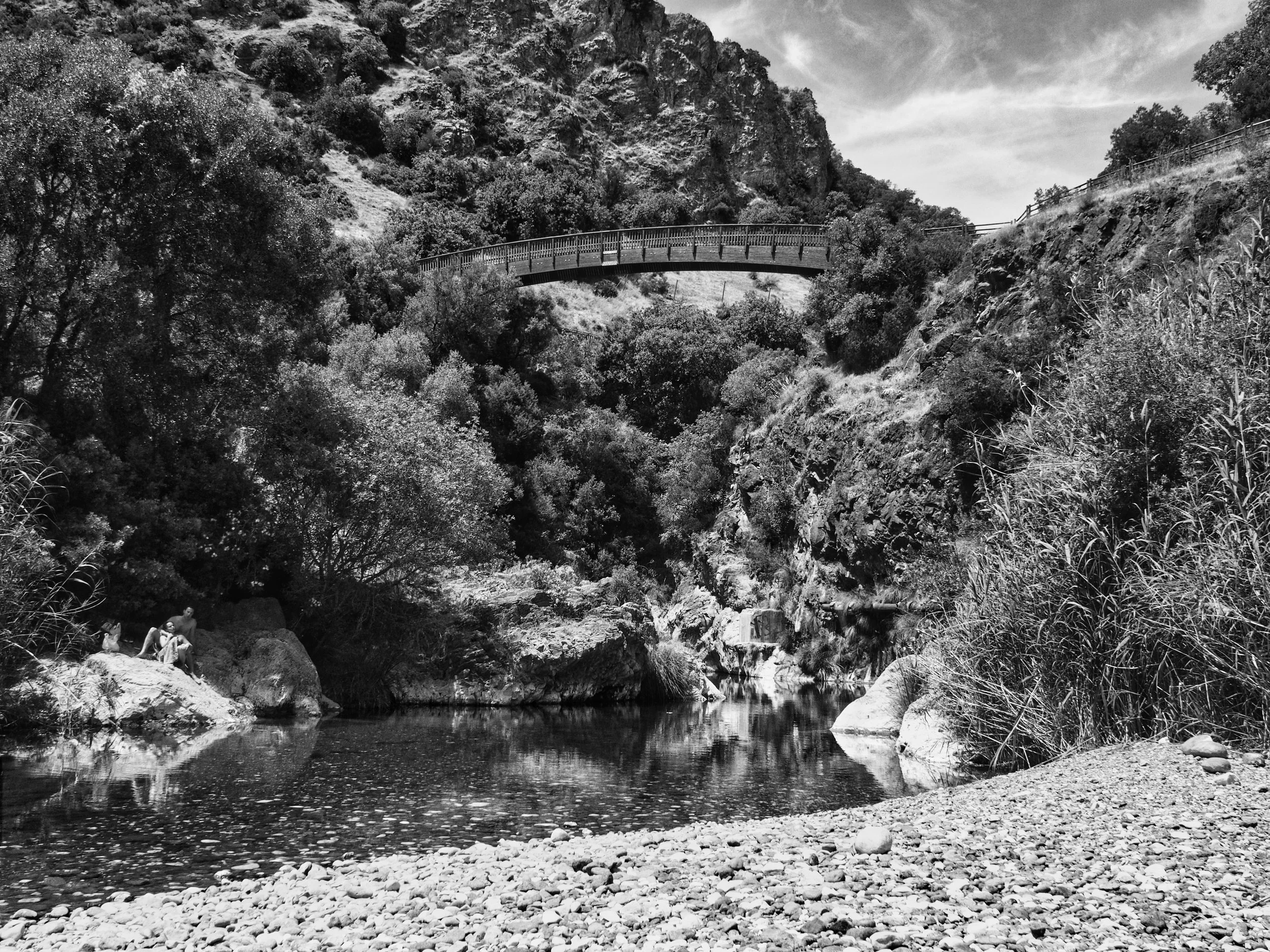
Just below Benahavis there's a large car park that serves as the starting point for the Acequia trail Guadalmina — a 2.8 mile circular hike taking around two hours, with a more strenuous option if you want it. Not having proper hiking gear with me I only walked a short stretch of it, enough to get a few images, but it's worth knowing about if you're in the area with decent footwear.
Ronda
Ronda is one of those places that earns its reputation. The town is divided by the dramatic El Tajo gorge, with the Guadalevín River running far below, and the 18th century Puente Nuevo bridge spanning it is genuinely impressive — not in a postcard way, but in a how did they actually build that way. It's worth standing and looking at it properly for a few minutes rather than just pointing a phone at it and moving on.
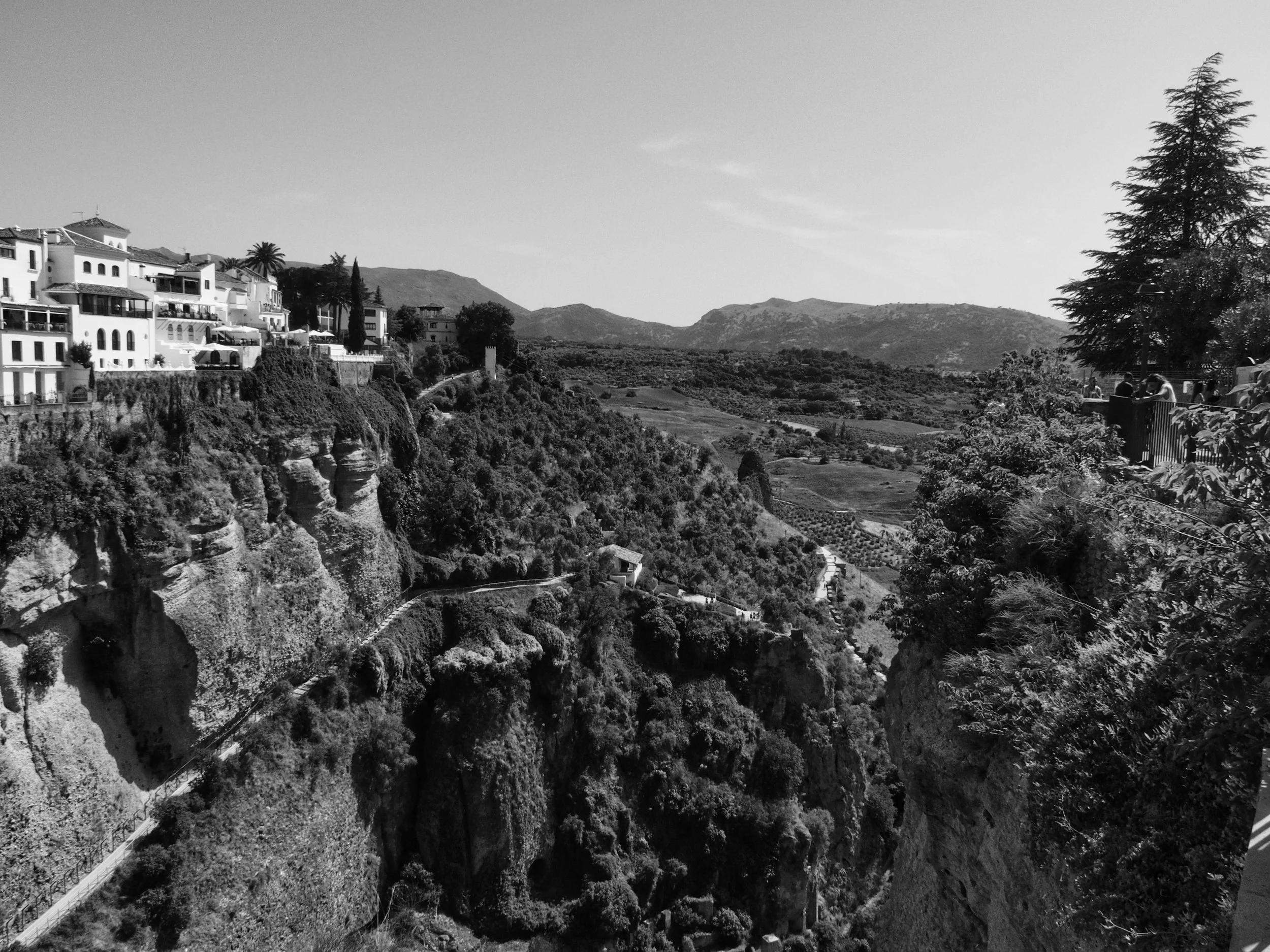
The Jardines de Cuenca are a series of terraced gardens sitting on the ledges of the gorge, running from the Old Bridge up toward the Puente Nuevo, with views across the chasm and both bridges from various points along the way. Free to enter, and because most tourists head straight to the viewpoints on the other side of the gorge, the gardens stay considerably quieter — which suited me perfectly. We followed the path down through the terraces and ended up crossing the Old Bridge at the bottom. The far side had a bar, which settled any debate about whether to turn back immediately.
Photographically Ronda was almost overwhelming in the best possible way. The old town away from the bridge is quieter and less visited, and that's where I spent most of my time with the camera.
Casares
Casares was one for me alone — and probably a good job. It's steep in places, the kind of steep that sorts out who actually wants to explore and who doesn't, and I was more than happy to lose myself there for a few hours.
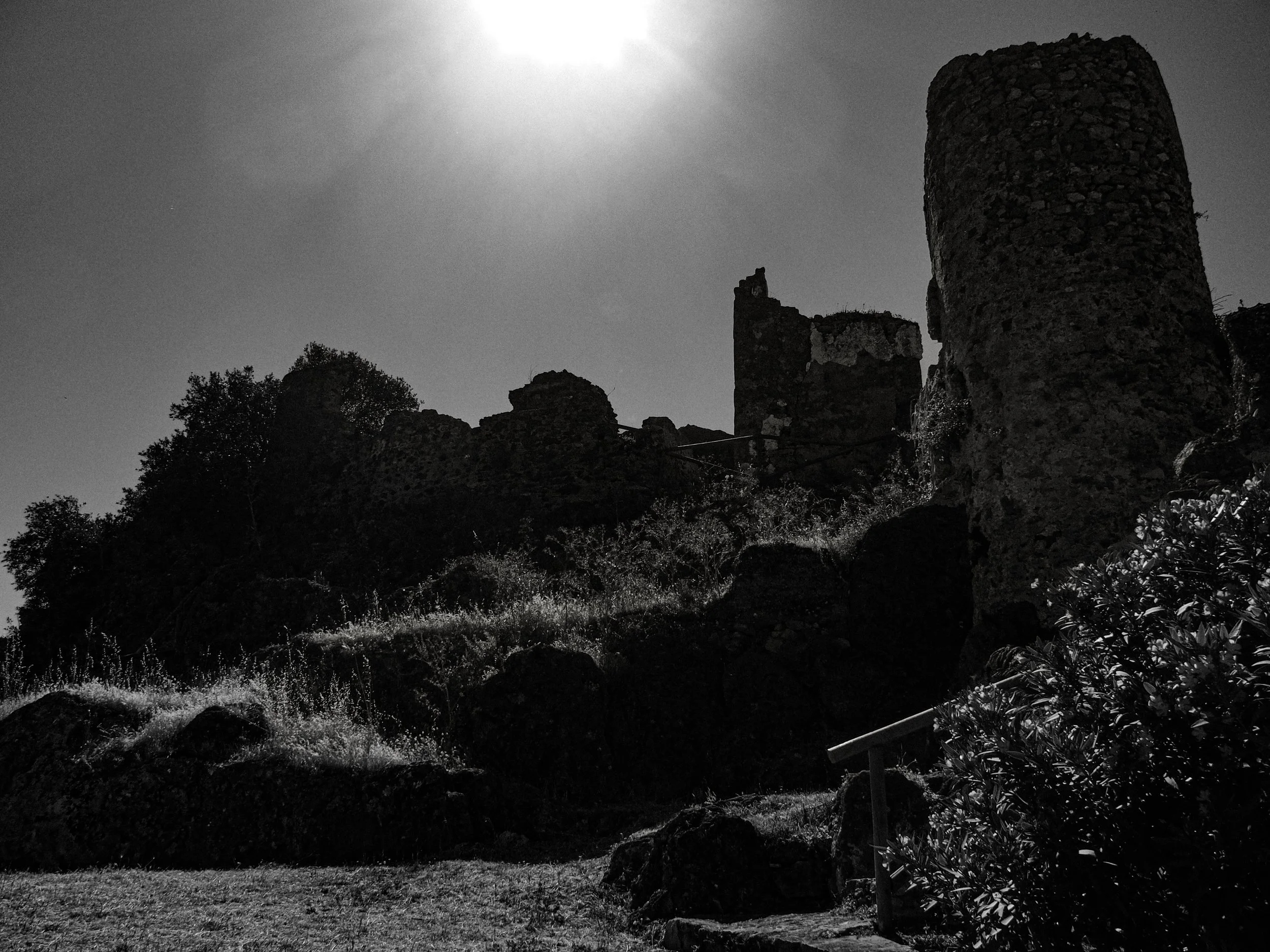
Declared a Village of Historical and Artistic Importance, Casares is considered one of the most beautiful villages in Spain, and it earns that. It sits in a dramatic position on the edge of a cliff, and the approach alone is worth stopping for. The drive there is beautiful too — winding mountain roads with the white village appearing suddenly above you, perched between the Serrania de Ronda, the Costa del Sol and the Campo de Gibraltar region. The history goes deep — its origins are linked to Roman times, with the present day village of Arabic origin, the castle ruins above the town a remnant of the Moorish occupation. Blas Infante, considered the father of Andalusian nationalism, was born here in 1885. There's a statue of him in the main square. I photographed the four old men sitting on a wall casually chatting amongst themselves nearby instead.
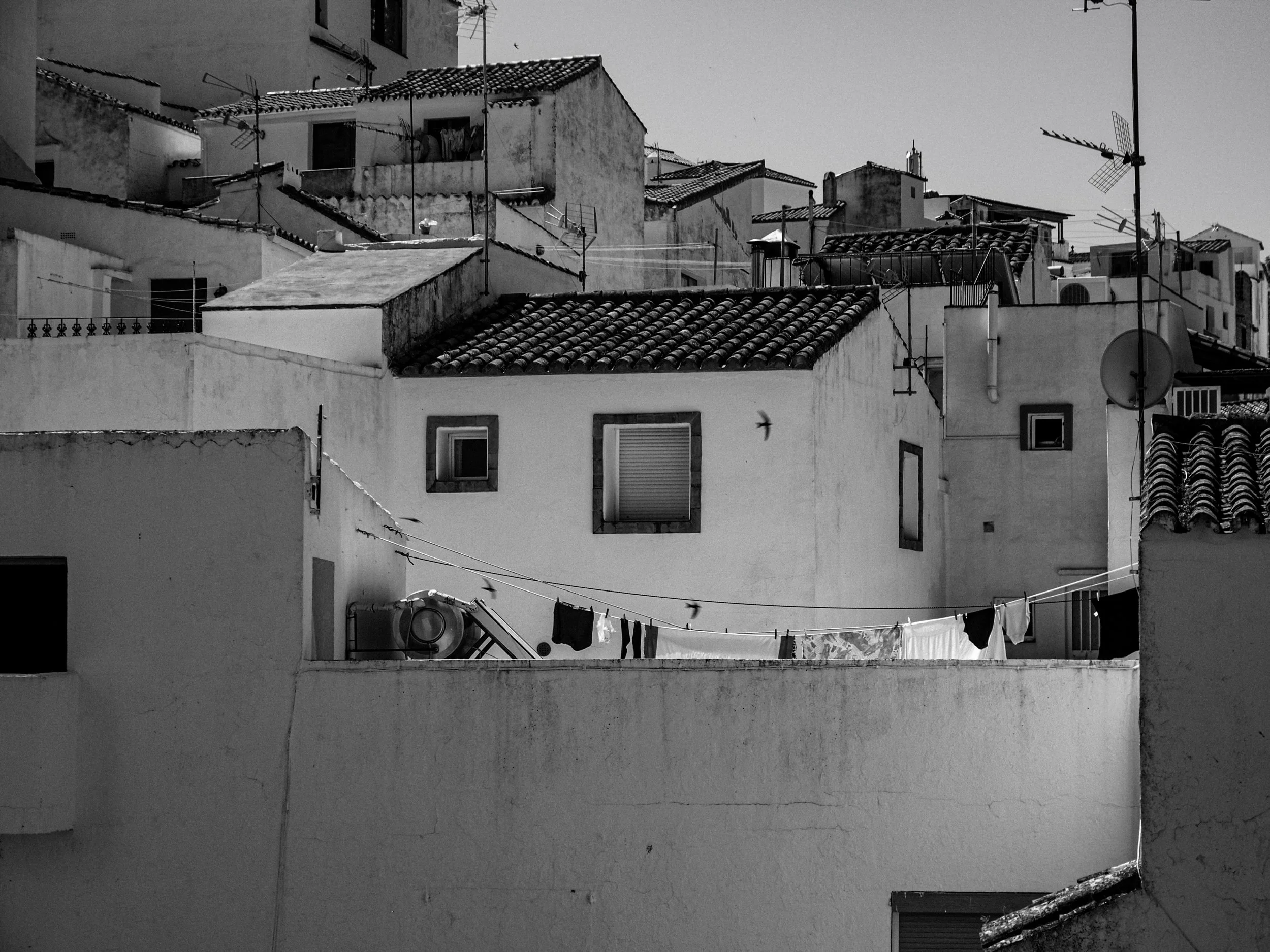
The backstreets were quiet with just enough locals going about their day to give the place a genuine feel rather than a preserved-for-tourists one. And somebody had clearly done a lot of laundry. Washing lines everywhere — hanging across narrow streets, strung between balconies, draped over railings. I must have turned up on laundry day for the whole village. It wasn't what I was looking for but it became an unexpected thread running through the morning's shooting, the kind of thing you can't plan and wouldn't want to.
The streets in places were narrow enough that the wide end of the lens was earning its keep, but it handled it well and got everything I wanted in the frame. I came away with around fifty images, which for a solo morning wander is a good haul. Casares was one of the highlights of the trip photographically.
Mijas
Mijas was one of the last places we visited and it's fair to say it had us slightly underwhelmed at first. Its history stretches back to prehistoric times, with evidence of Iberian and Roman settlements, and it flourished as an agricultural centre during the Moorish period — but you wouldn't necessarily know any of that from the central plaza area, which on the day we visited was doing a roaring trade in leather bags, belts, and every variety of tourist tat known to man. If you need a new handbag, Mijas has got you covered.
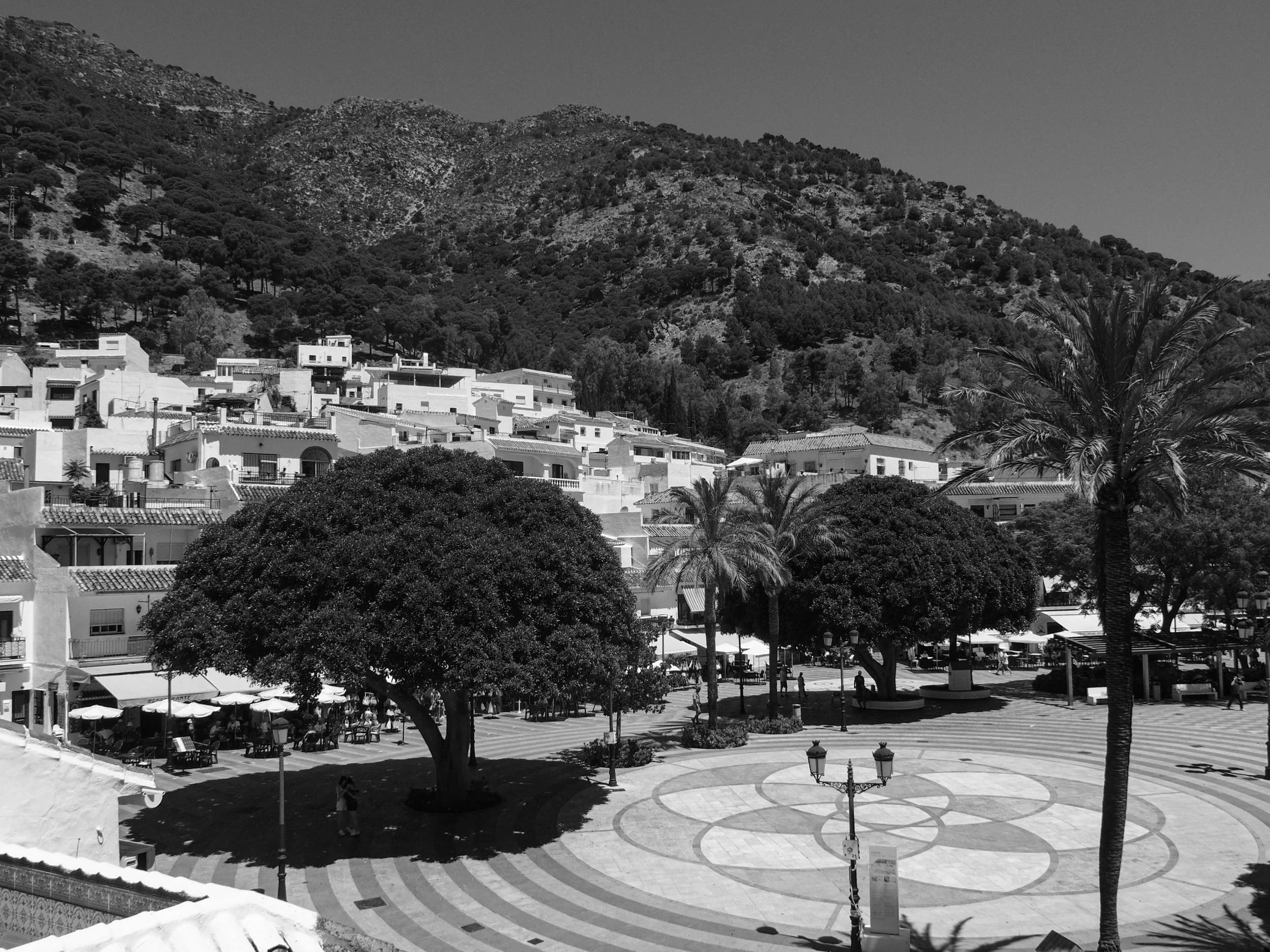
But Mijas rewards the curious. While the Mrs disappeared into a dress shop I spotted a set of steps winding upward through the buildings and followed them on instinct. Worth every step — they opened up into a completely different side of the town, a maze of quiet backstreets that had none of the souvenir shop energy of the plaza below. That's when Mijas made sense.
We regrouped, stopped at The Lemon Tree — a friendly little English-run cafe that I'd happily recommend — had a bite to eat and a couple of drinks, and then headed up properly to have a good look around. The bullring at Mijas is one of the town's principal landmarks and the viewing area up there is worth making the effort for — the views out across the valley and right down to the Mediterranean are vast. Also worth seeking out is the hermitage of the Virgen de la Peña, built into a rocky outcrop in 1520, tucked away in a corner of the village overlooking the valley. Easy to miss if you stick to the main routes.
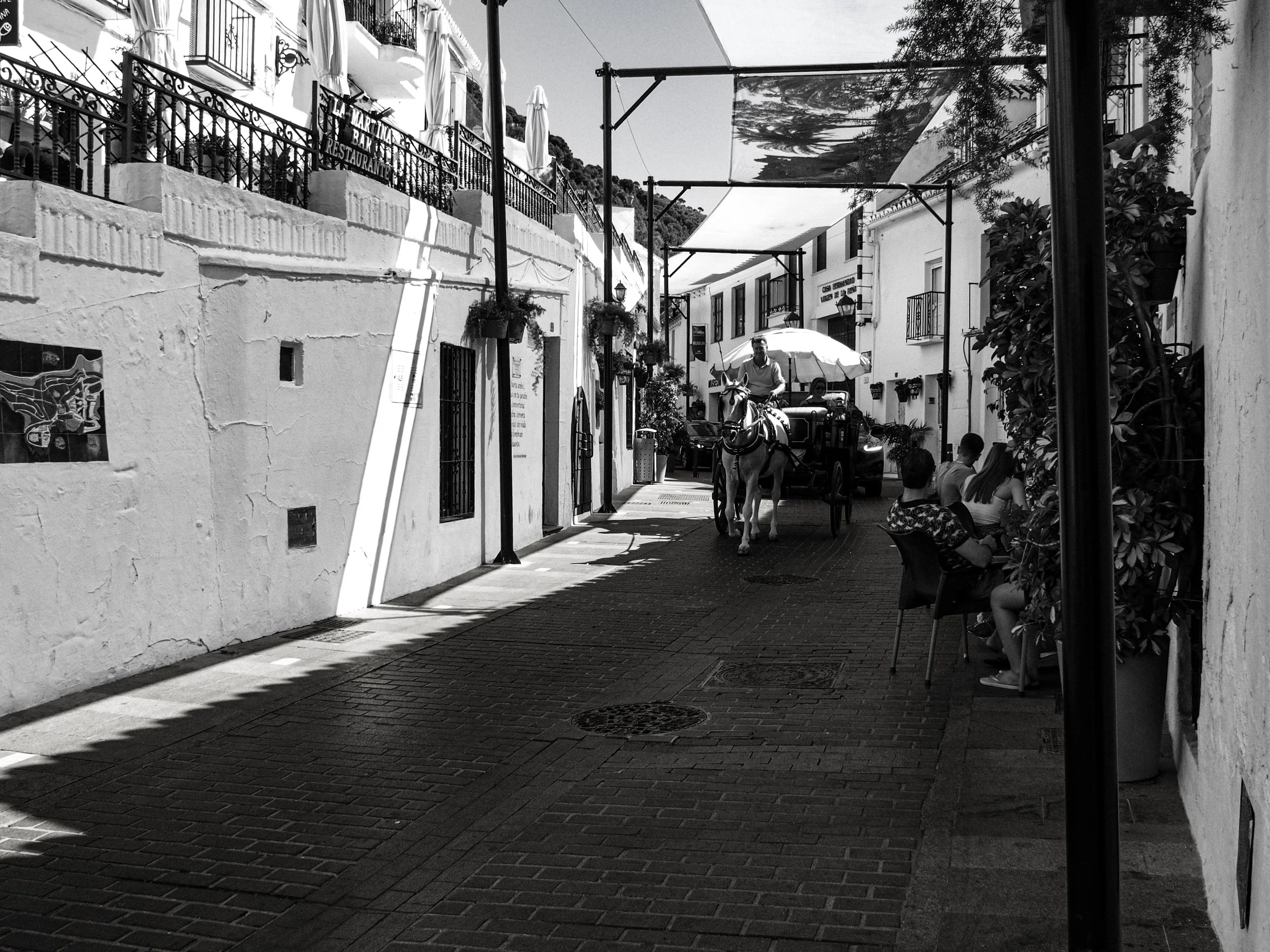
I came away with some good images but with the feeling that Mijas had more to give than we'd managed to find in the time. It's one that deserves a solo return visit with the camera and no agenda — which is usually when a place reveals itself properly.
Final Thoughts
All in all the Andalusia region is stunning, and in ten days we barely scratched the surface. There's so much to see that any trip here is going to involve making peace with what you're leaving out. For what it's worth, two places didn't particularly do it for us — Marbella and Puerto Banús, which is why neither has appeared in this blog until now. But that's just us. We're all different, and you don't know until you try.
Over the ten days I came away with somewhere around 250 to 300 images. Not all keepers — they never are — but a good number I'm genuinely happy with, which for a trip like this is exactly what you want.
The Olympus Stylus 1s handled everything brilliantly. I took three batteries and used one. The 28-300mm equivalent lens gave me everything I needed from wide street scenes to picking out detail at distance, and the spot highlight metering kept the Spanish sun in check throughout. As for the 1/1.7 inch sensor — who cares. I'm not a full frame fanatic, never have been, and the images speak for themselves. Small camera, big results, and a genuine pleasure to carry around for ten days without once wishing I'd brought something bigger.
Andalusia will get another visit. There's too much still to see, and too many backstreets I haven't been down yet.
To see more images from Andalucia click here.