As I always do, I took Elvis out this morning for his walk. It was quite warm, sunny with a few clouds — the kind of morning that makes you glad you're not stuck behind a desk. We went on one of our local longer loops, which takes around one and a half to two hours depending on how often we stop — Elvis for a good long sniff at whatever it is he finds interesting, and me looking for images. After seven years of walking together we're used to the routine and patient of each other's little quirks. It works.
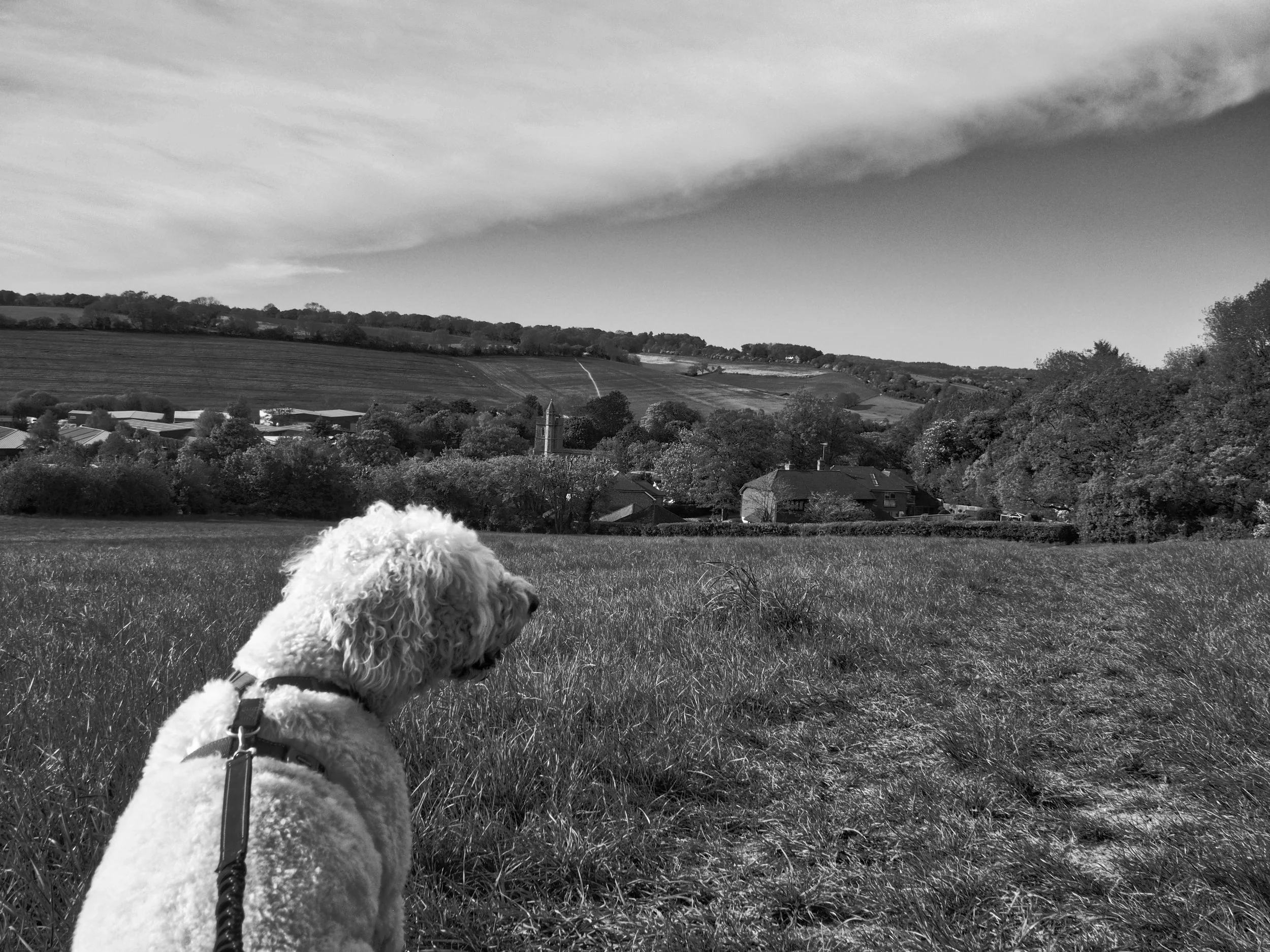
To say we've walked this route several times is an understatement. We've done it in every season, every kind of weather, in mist and frost and summer heat. So there comes a point — and any photographer who walks regularly will know this feeling — where you start thinking: is there anything left on this walk to photograph? Have I not already taken everything there is to take here?
I knew there was some old farm machinery left in a field, mostly overgrown, that I always stop for. I've always felt I could improve on what I'd already captured of it, get closer, find a better angle, wait for better light. But beyond that — what else was left? What hadn't I noticed yet? Surely I'd practically drained this walk of images by now.
As it turned out, I hadn't. Not quite.
The Gate That Finally Said Something
About halfway round there's a little wooded track, which brings us out by Hedsor Church and Lord Boston's Folly — two places I've photographed many times before. Reaching the lane, there's an old crumpled farm gate. I've walked past it countless times without giving it a second thought. It's just been there, part of the scenery, background noise.
But today it looked different. The sun was hitting it at an angle that made the metal glint, while the little copse behind it was cast into deep shadow with shafts of light coming through the leaf canopy. It stopped me in my tracks. The same gate I'd walked past dozens of times had suddenly decided to make itself known.
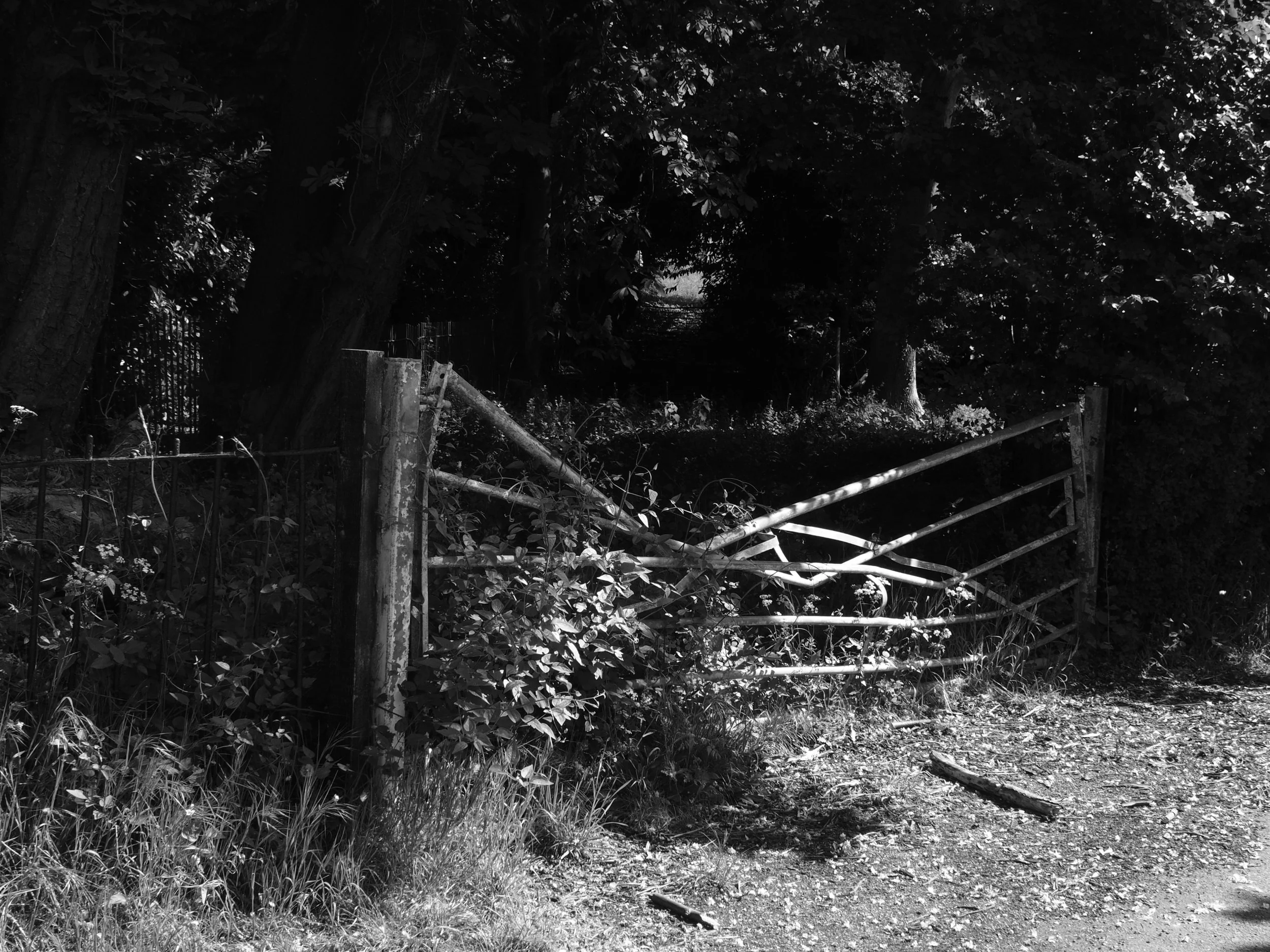
That's the thing about light. It doesn't change the subject — the gate was the same collapsed, half-forgotten gate it always was — but it changes everything about how you see it. The shadows behind it created depth that wasn't there on a flat overcast day. The glint on the metal gave it an edge. The whole thing looked like it had been waiting for this exact morning to show itself properly.
Happy with what I'd got, I walked no further than a few metres and there was an old disused kissing gate — another subject entirely. Then another not far from that. So today's walk turned into gate day. Not because I'd never noticed them before, but because the conditions were right to make them stand out and say — look at me.
Finding the Shot You Almost Missed
This is something that happens more often than people talk about. You walk the same ground repeatedly, and familiarity starts to work against you. You stop really looking. You think you know what's there, so your eyes stop searching. The walk becomes routine — enjoyable, yes, but photographically on autopilot.
The honest truth is that no walk is ever exhausted as a photographic subject. What changes isn't the landscape — it's the light, the season, the time of day, your own state of mind, and whether or not conditions conspire to reveal something that was always there but hiding in plain sight.
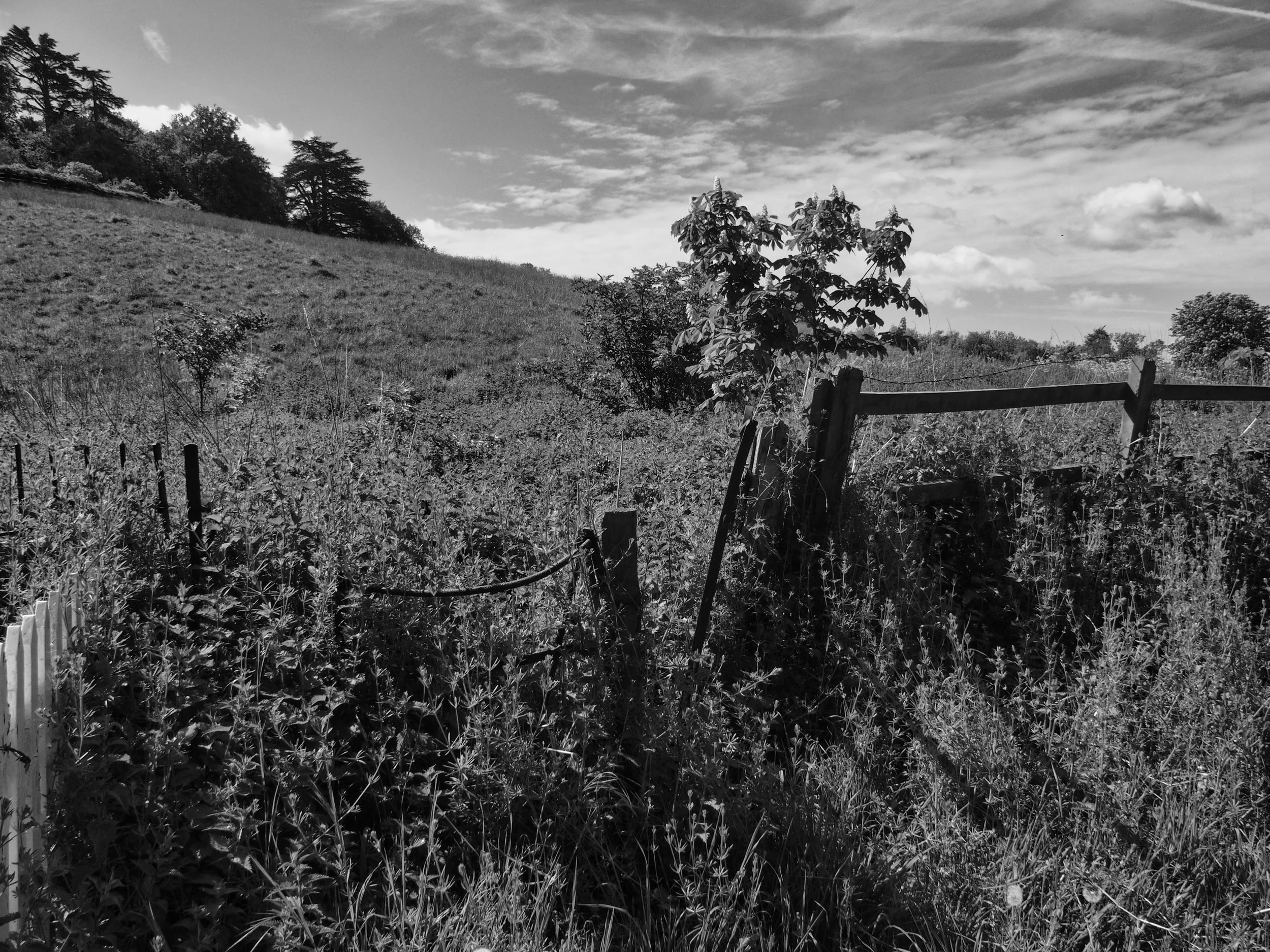
I could walk that same route tomorrow and photograph something completely different. Not because anything has changed, but because the light will be different, the shadows will fall in different directions, something that was in full sun today will be in shade, and something I walked past without registering will suddenly catch my eye.
This is what keeps walking and photography so deeply connected for me. Neither one of them ever gets old. The walk keeps offering something new, and the camera keeps rewarding you for paying attention.
The Machinery
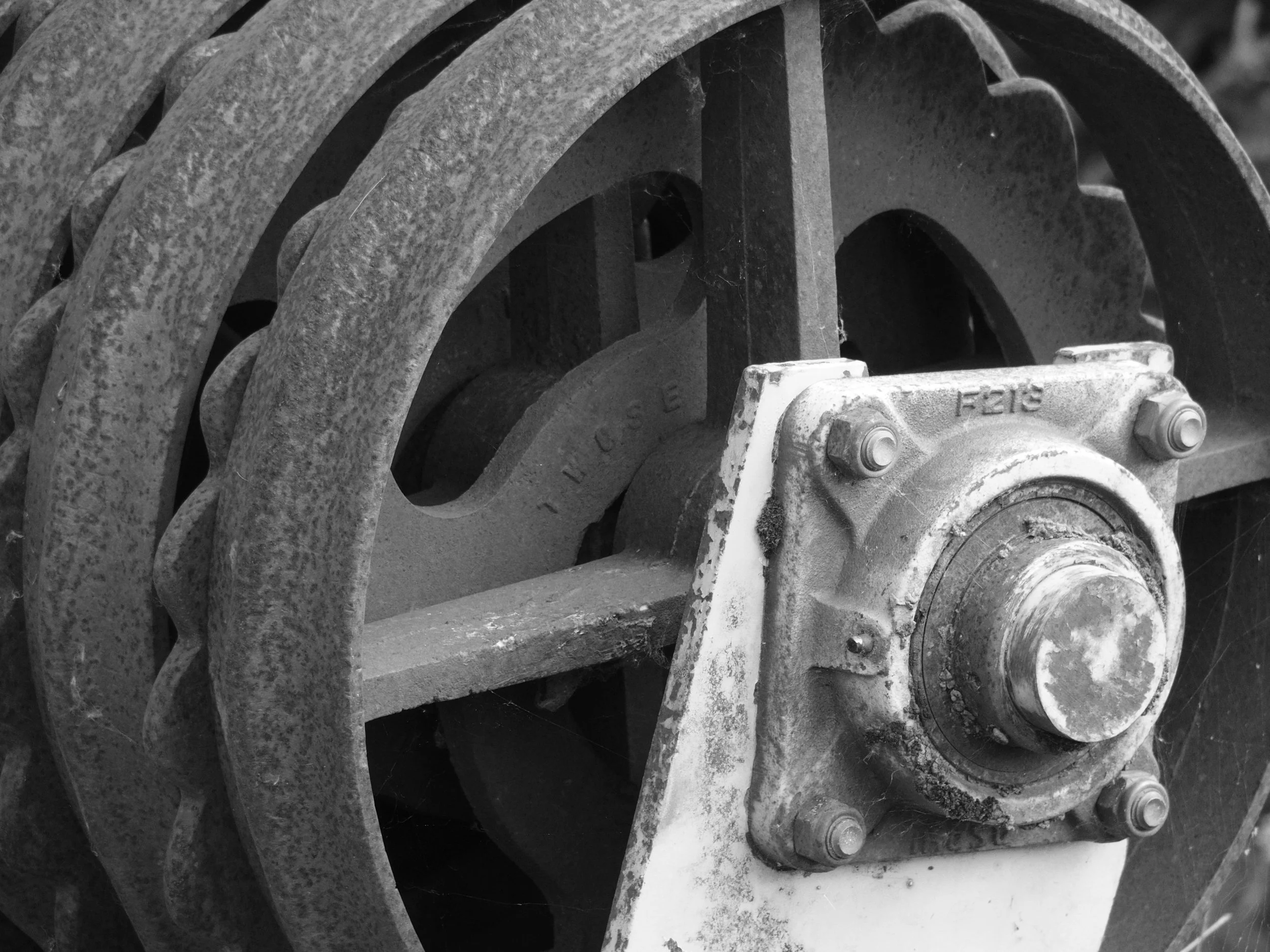
The farm machinery I'd been back to photograph before was there as expected — a Twose roller, mostly overgrown, slowly being reclaimed by nettles and ivy at the edge of a field. I've shot it before but I've never quite got what I wanted from it, and today I think I got closer.
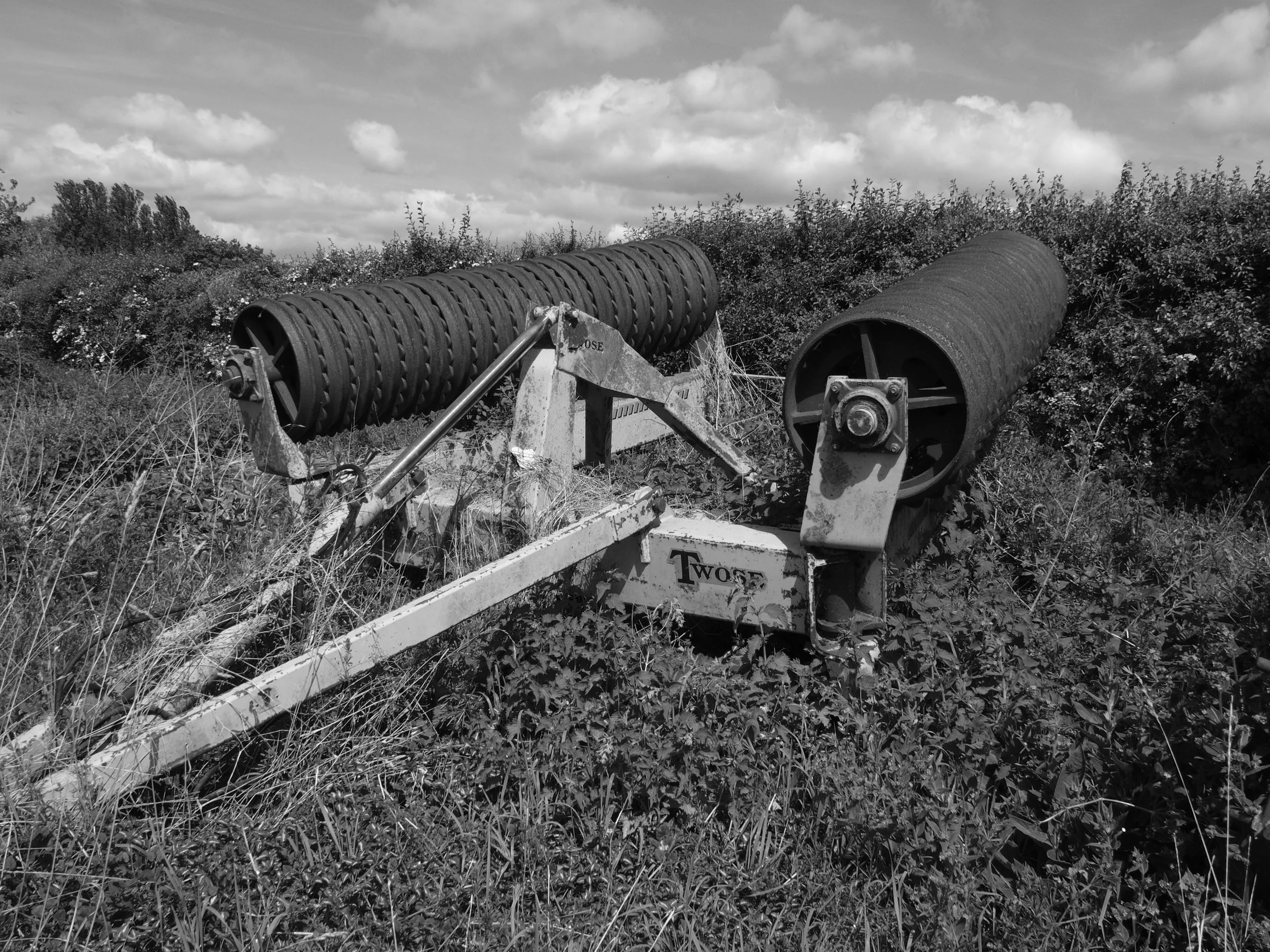
There's something compelling about old machinery left to rust in the landscape. It's not abandoned in a neglected, forgotten way — it's just finished its working life and been left where it last stopped. The land carries on around it. The hedgerow grows up through it. Nature has no particular urgency about the whole thing. It's a slow, patient reclamation.
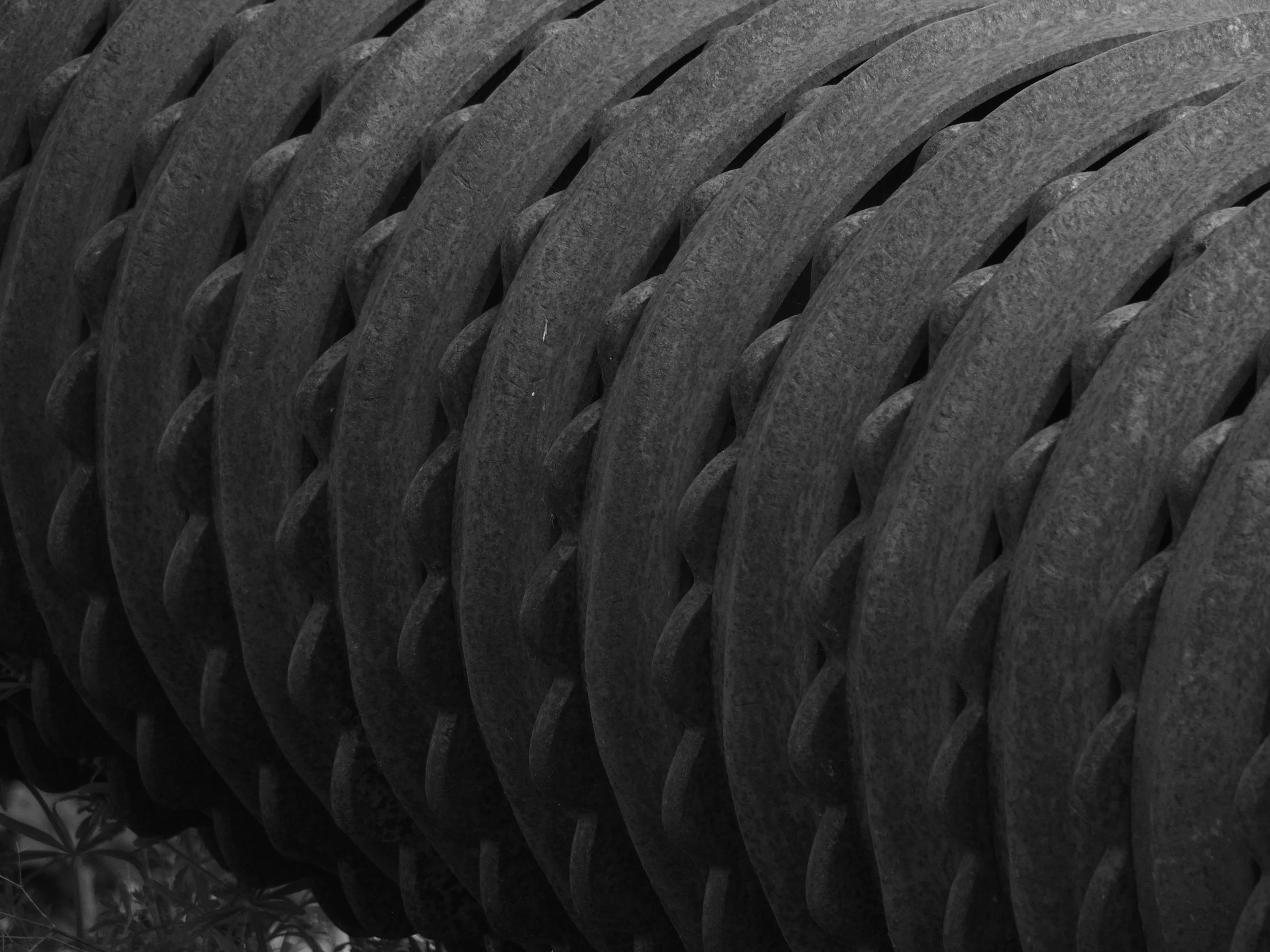
In black and white the textures come alive in a way that colour simply can't match. The rust, the peeling paint, the cast iron surfaces, the mud and cobwebs and dried grass trapped in the mechanisms — all of it rendered in tones of grey that give the whole scene a timeless quality. You lose the context of when. It could be ten years abandoned or fifty. It doesn't matter. The image asks different questions.
The wheel on the Twose was the standout shot for me. Cast iron, patterned with the manufacturer's name pressed into the metal itself, bolted to a white painted bracket that was itself streaked with rust. The kind of detail that nobody notices when they walk past, but that rewards close attention with a camera in your hand.
Old Gates and What They've Seen
The kissing gates that lead up the hill to Hedsor Church are old, rusting, and falling apart. The hinges are failing, the metalwork is bent and corroded, the paint — whatever colour it once was — has long since gone. They're not the kind of thing that appears on tourist photographs or walking guides. They're just there, doing their job, keeping walkers on the path and livestock in the fields.
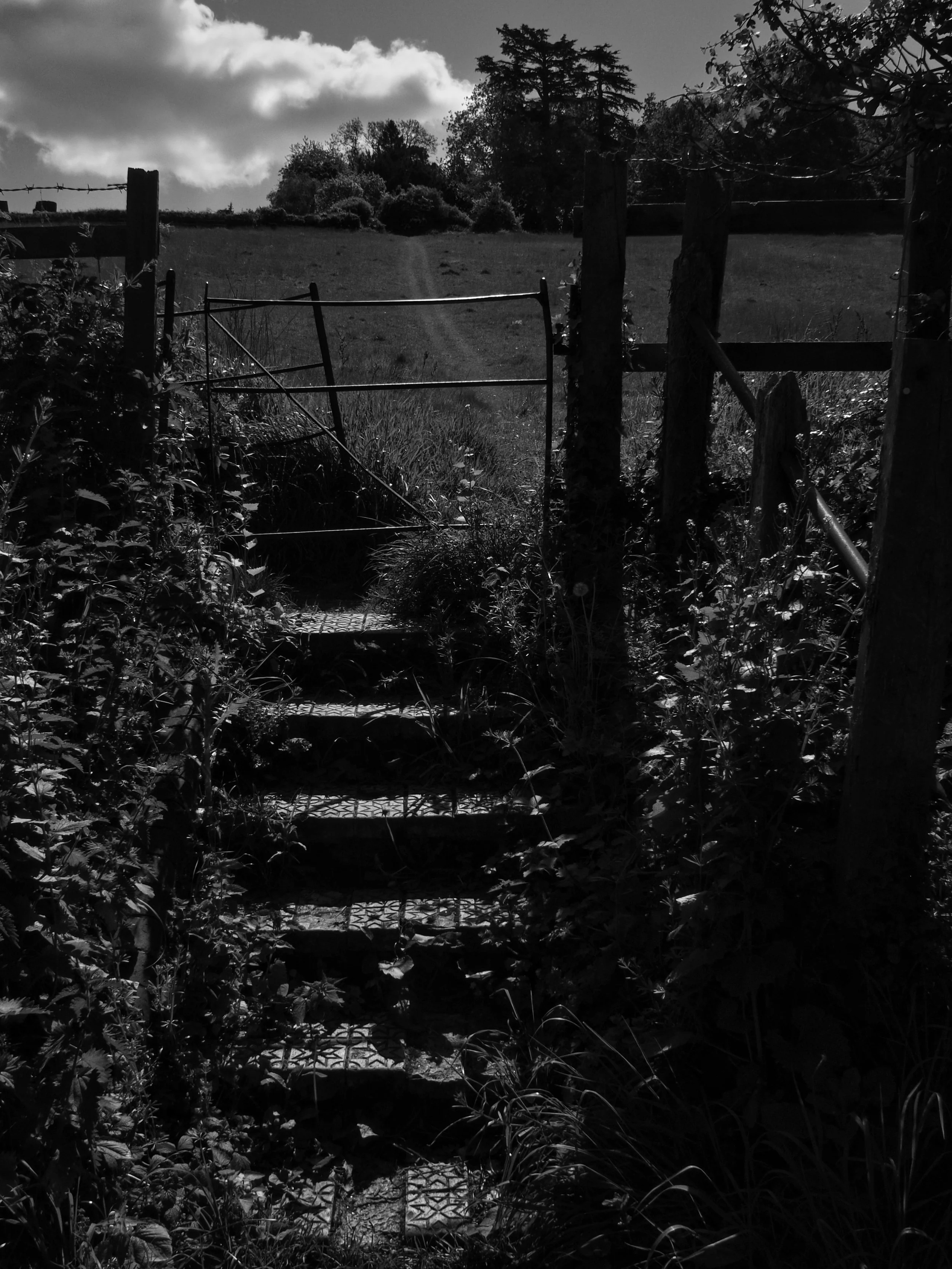
But if they could speak, what history could they tell us. Who has passed through those gates over the years. Farmworkers heading up to the fields in the early morning. Churchgoers in their Sunday best. Children running ahead of their parents. Dog walkers over decades. Everyone who ever walked that hill passed through those gates, and the gates registered none of it — just kept swinging, kept rusting, kept standing.
There's a particular quality to old, working countryside objects that appeals to me deeply. They're not decorative. They were never meant to be looked at. They exist entirely in service of function, and that honesty gives them a kind of dignity that a lot of more obviously beautiful things lack. A perfectly proportioned landscape view can feel composed, arranged, almost too easy. An old kissing gate with forty years of rust on its hinges feels like it means something.
The Light Makes the Difference
The question I'm often asked about walking the same routes repeatedly is whether I get bored of the subjects. The honest answer is no — because the subjects are never quite the same. A gate in flat December light and a gate in morning May sunshine with dappled woodland shadow behind it are genuinely different photographs. Not similar photographs of the same thing. Different photographs.
This is why I keep going back to the same walks. Not because I'm short of imagination, but because I know that the images I took last time don't represent what those places look like today. Every season, every weather condition, every time of day produces a different version of the same landscape. The route stays the same; what it offers keeps changing.
Today it offered gates. Last week it was bluebells. A few months ago it was frost on the fields and long shadows across the grass. The walk doesn't run out of material — you just have to be paying attention when the material presents itself.
Photographing the Ordinary
There's a tendency in photography — reinforced relentlessly by social media — to think that the only images worth making are the epic ones. The dramatic location, the perfect golden hour, the rare event. Everything else gets dismissed as not worth pointing a camera at.
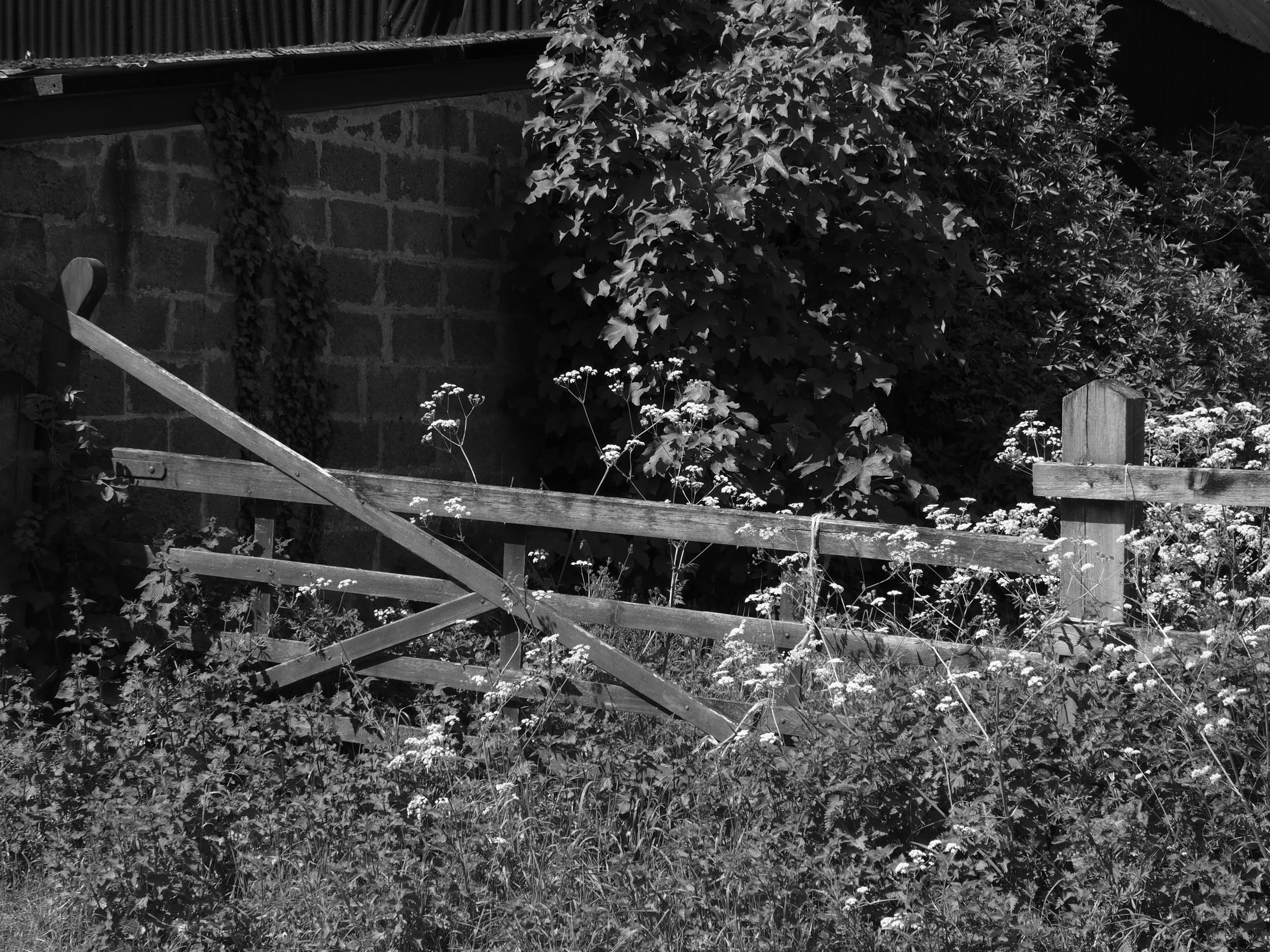
I've never bought into that. Some of my favourite images from this area are of things that most walkers pass without a second glance. A broken gate. An abandoned roller. A rusting hinge. A kissing gate at the top of a muddy path. None of it is conventionally dramatic. All of it, in the right light and with the right attention, is interesting.
The machinery shots from this morning — the close-up of that cast iron wheel, the Twose nameplate half-buried in nettles, the texture of the roller drum itself — those are images made entirely from close attention to something that was sitting ignored at the edge of a field. The gate collapsed into the hedgerow on the wooded track — that's an image made from finally looking at something that had been there all along.
The walk didn't give me anything new today. But it reminded me that new isn't what I'm looking for. I'm looking for what's there, in whatever light it happens to be standing in this particular morning. And today what was there were gates.
They're still there tomorrow. But tomorrow they'll be something else entirely.