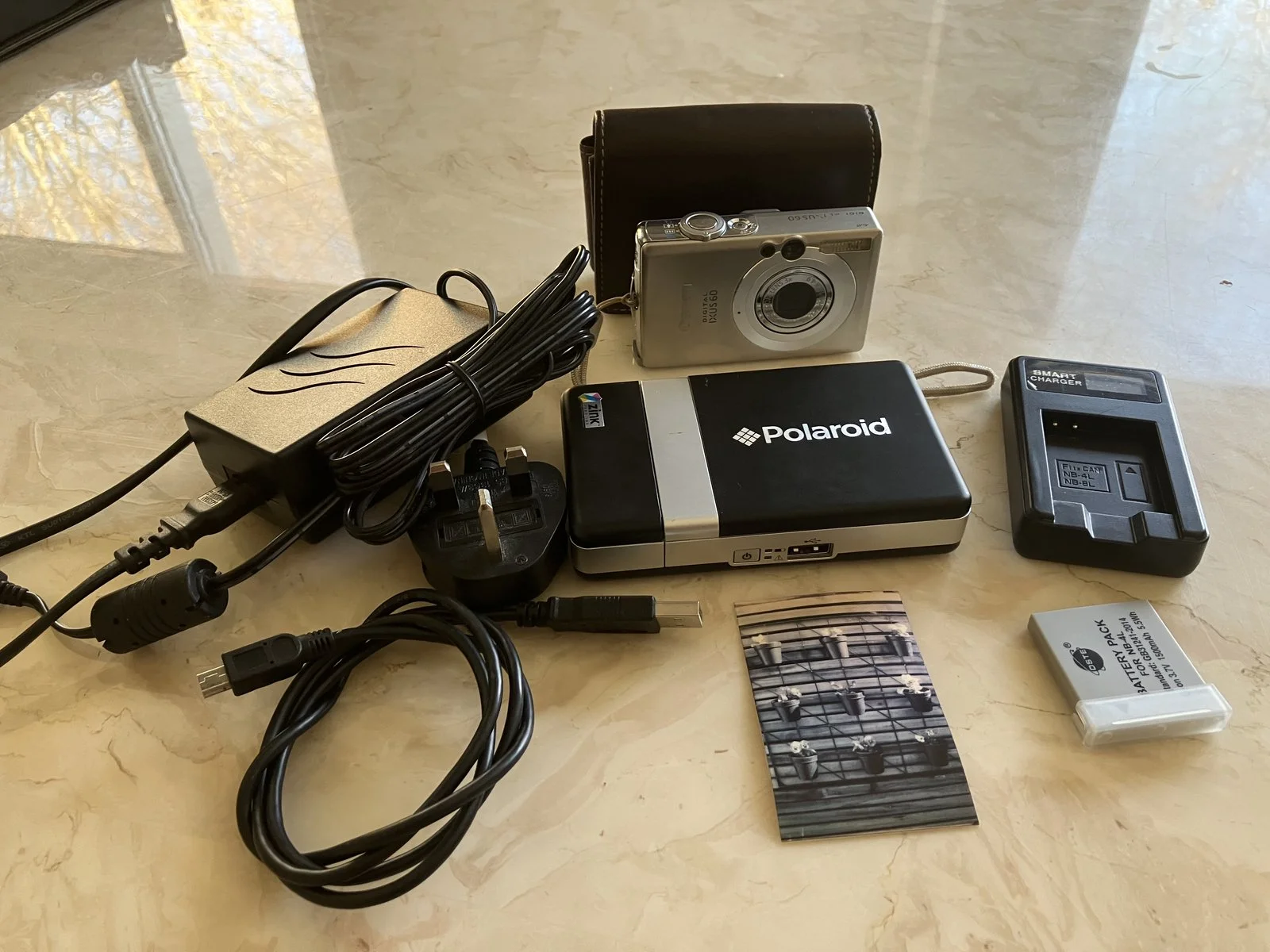
There's something quietly ironic happening in photography right now. At the very moment cameras have never been more technically capable — when a phone in your pocket can produce a pin-sharp, perfectly exposed, computationally processed image without you doing anything at all — people are actively choosing to go backwards. Not to film, though that revival is still ticking along. They're digging out early 2000s point-and-shoot digital cameras - also known as digicams from sock drawers and charity shop shelves, paying over the odds for them on eBay, and shooting with them deliberately. Not out of desperation. Out of choice.
If that sounds strange, it shouldn't. It makes complete sense once you understand what they're reacting against.
When Perfect Became the Problem
For the last decade or so, photography has been locked in an arms race. More megapixels. Better dynamic range. Higher ISO performance. Faster autofocus. Computational this. AI-assisted that. Every new camera, every new phone, every new update pushing the results further towards some idea of technical perfection that nobody actually voted for.
And somewhere along the way, the images started looking the same.
Not just similar — the same. That hyper-sharpened, colour-corrected, shadow-lifted, highlight-recovered look that modern sensors and processing pipelines produce by default. Add in the smartphone's habit of combining multiple exposures into one HDR composite before you've even pressed the button properly, and you end up with images that are technically extraordinary and emotionally inert.
Now throw AI image generation into that mix. Suddenly, technically perfect imagery is not just abundant — it's infinite and essentially free. Anyone can produce a photorealistic landscape, portrait, or scene without owning a camera, without standing anywhere near the location, without any involvement with the physical world at all. When perfection becomes a commodity available to anyone with a text prompt and an internet connection, perfection stops meaning anything. It stops being a differentiator. It becomes wallpaper.
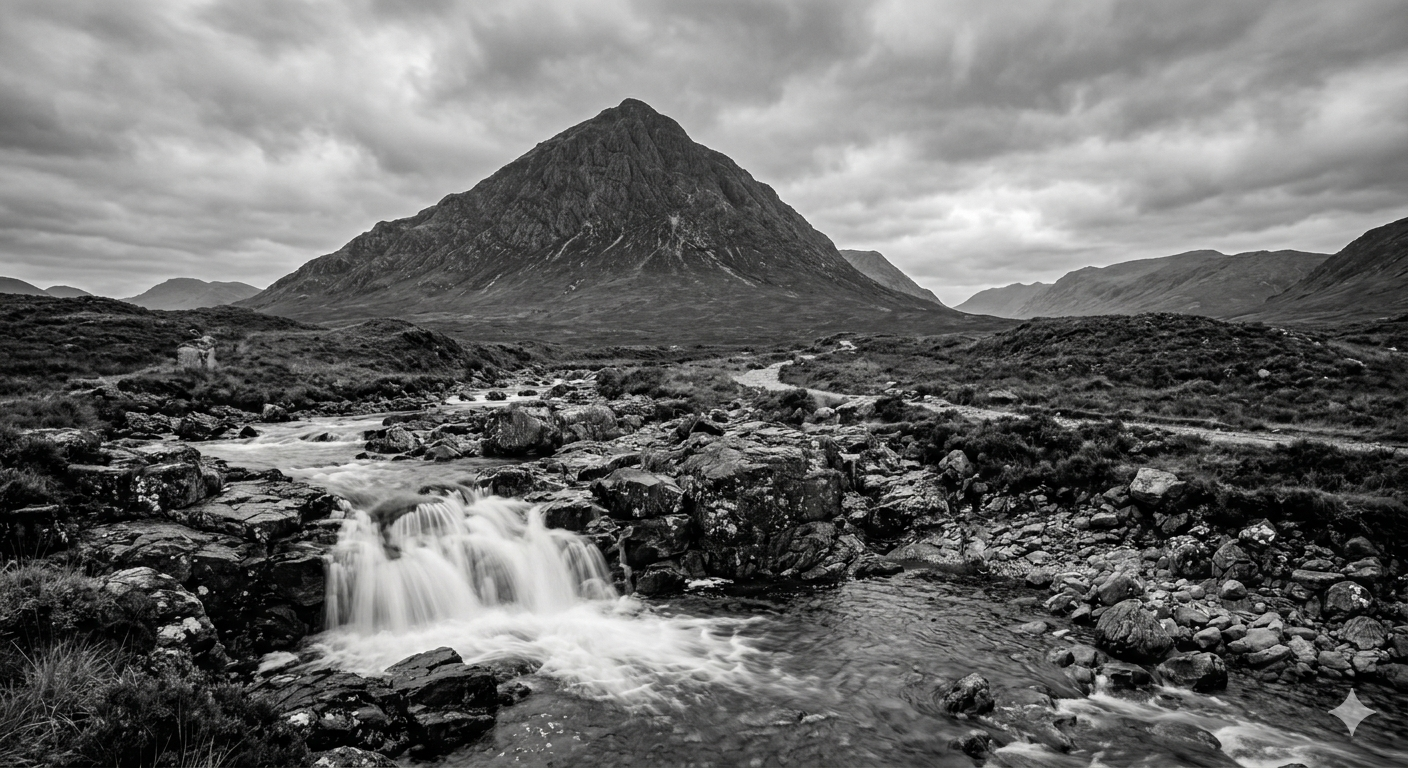
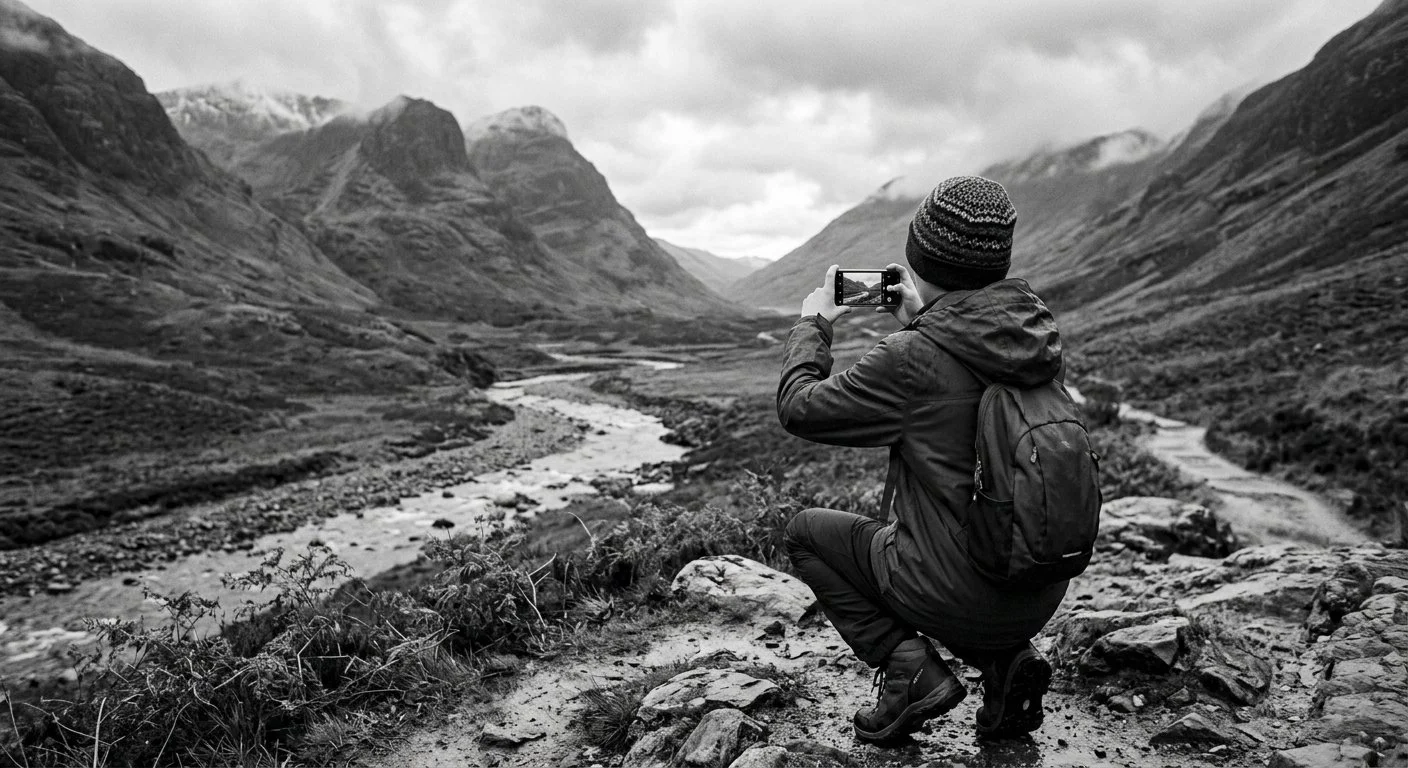
I generated this image using Google's Gemini AI. I've never been to Buachaille Etive Mòr, I’ve only ever seen it on YouTube a few times in photography videos without knowing what it was called, but I recognised the scene and it was convincing enough that I nearly talked myself into believing it. The main mountain is a reasonable likeness. The range behind it doesn't quite match other photographs I found when checking for accuracy, but I put that down to a different angle — because how would I know? I know photography. I know landscapes. I had reason to question it and I still had to look twice. Someone who didn't? They'd never know. That's not a small problem. That's the whole problem.
That's the context. That's what the digicam / CCD / Film revival is pushing back against. - It’s about authenticity.
What's a Digicam, Exactly?
The term gets used loosely, but broadly it refers to the compact digital point-and-shoot cameras that were mainstream from roughly 2000 to 2010. The cameras everyone's parents had. The ones that came out at Christmas and on holidays. Small, often metallic, usually running on AA batteries, with a CCD sensor, a modest fixed zoom lens, and absolutely no pretensions about being anything other than what they were.
They were considered obsolete almost the moment smartphones arrived. Manufacturers stopped making most of them. The market collapsed. Millions of them ended up in drawers, in lofts, in charity shops, gathering dust.
And now they're back. Not because technology has regressed — because taste has.
Search volumes for vintage digital cameras have climbed sharply over recent years. Prices on the secondhand market have risen considerably, in some cases dramatically, as demand outstrips the finite supply of working units. What was once a few pounds in a car boot sale is now serious money if it's the right model in working condition. The cameras that defined the early 2000s domestic photography experience have become genuinely sought-after objects.
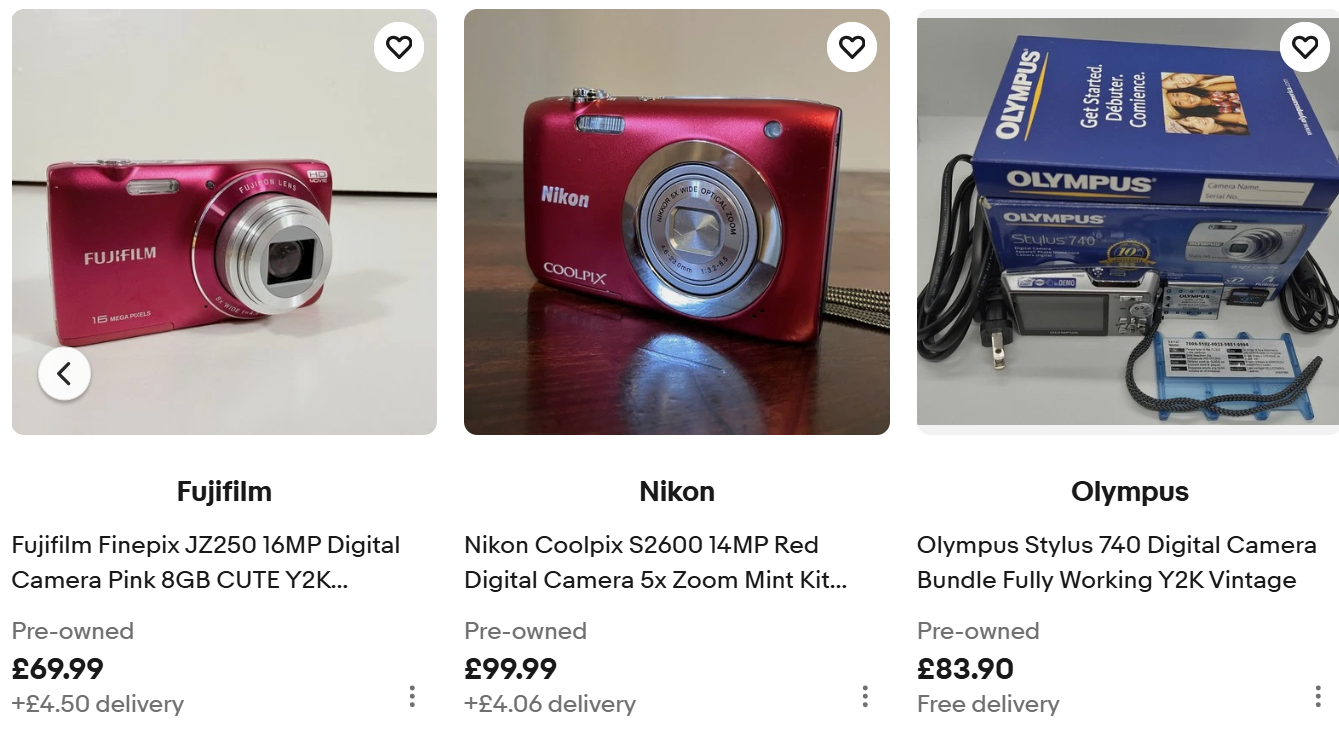
The audience driving much of this is younger — people who either weren't born when these cameras were new, or were too young to use them. For them there's no baggage, no memory of these cameras being considered inferior. There's only the aesthetic. And the aesthetic, it turns out, is exactly what they're looking for.
The CCD Thing
Central to a lot of the digicam conversation is the sensor technology — specifically, CCD sensors, which were standard in digital cameras of that era before CMOS sensors took over almost completely around 2010.
I've written about CCD versus CMOS before, and the film vs CCD vs CMOS comparison I published on here generated more impressions than anything else on this site — which tells you there's genuine curiosity out there about this. People want to understand what the difference actually is, and whether the CCD "look" is real or imagined.
The honest answer is: it's a bit of both, and it depends on what you mean by look.
CCD sensors don't capture the same breadth of tonal information that modern CMOS sensors do. They tend to clip highlights more abruptly and lose shadow detail more quickly. By every objective measure of sensor performance, that's a limitation. But limitations have a way of producing character. The contrast that comes naturally from a CCD sensor — the way it handles light that exceeds its range — produces images with a particular quality. Punchy. Direct. Less of the middle-ground tonal smoothness that modern processing delivers automatically.
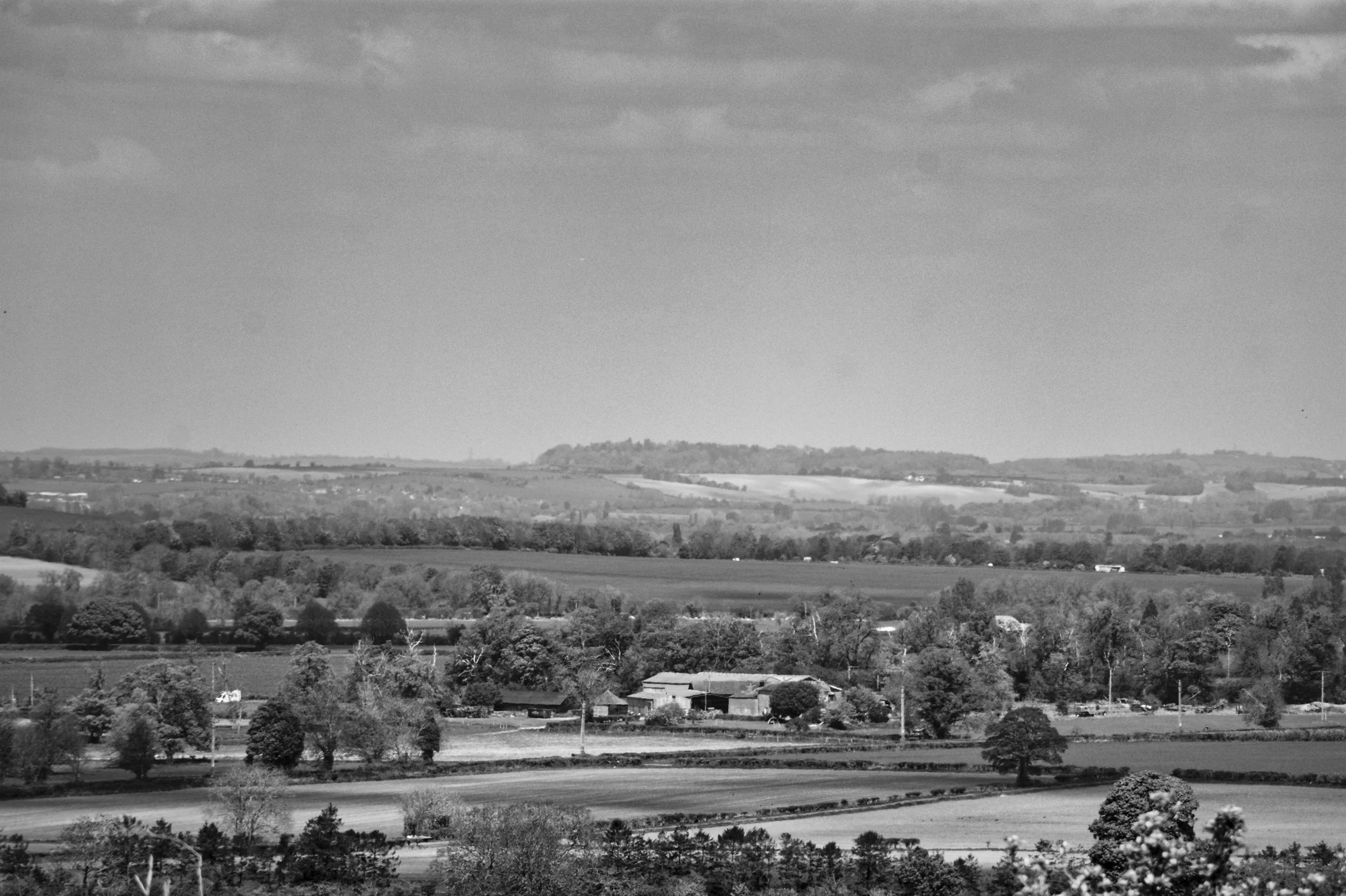
Whether you call that a flaw or a feature depends entirely on what you're trying to achieve. And increasingly, people are calling it a feature. The CCD-shot image looks like it was made at a specific moment by a specific camera responding to real light. It doesn't look processed into existence. That matters right now more than it has in years.
Imperfection as Intention
One of the things worth understanding about this whole movement is that it isn't about sloppiness. It isn't about people not knowing how to use cameras properly and calling the results art. The best work coming out of the digicam revival is deliberate. Intentional. The imperfections are chosen, not stumbled into.
There's a real difference between an image that's technically imperfect because the photographer didn't know what they were doing, and an image that has grain, limited dynamic range, and a slightly soft lens rendering because those qualities serve the feeling the photographer was after. One is a mistake. The other is a decision.
And that distinction sits right at the heart of what authenticity actually means in photography — because authenticity isn't the absence of craft. It's craft applied towards emotional truth rather than technical correctness.
The cameras themselves help in ways that go beyond the sensor. A small point-and-shoot doesn't intimidate. It doesn't announce itself. Pull out a large DSLR with a battery grip and a long lens and watch how people behave around it — they stiffen, they become aware of being photographed, they perform. Pull out something small and slightly vintage-looking and most people don't register it as a serious camera at all. Which means the moments you capture are more likely to be real.
The Nostalgia Factor — But Not Just Nostalgia
It would be easy to dismiss all of this as pure nostalgia. A generation that grew up with these cameras getting sentimental about their childhood. But that doesn't hold up, because a significant part of the digicam audience is too young to be nostalgic for the cameras themselves. They weren't there. They don't have memories attached to Canon PowerShots and Sony Cyber-shots. What they have is a reaction to the present.
They grew up documenting their lives on smartphones. They know better than anyone what that looks like, feels like, produces. And a growing number of them have decided they don't want it. Not exclusively, anyway. They want something that sits differently in the hand, produces results that look different on a screen, and requires them to be present in a way that a phone with automatic everything doesn't.
There's also something in the storage constraint that matters more than it might sound. A digicam with a modest memory card forces you to choose. You can't just take five hundred photos of the same moment hoping one works — you have to decide this is worth it before you press the shutter. That deliberateness changes how you engage with what's in front of you. It makes photography feel like something again rather than just something your phone does automatically.
What the Market Is Telling Us
This isn't just an aesthetic curiosity. The commercial signals are real and they're consistent.
Brands that built their visual identity on studio-perfect photography are quietly moving towards imagery that looks more human. User-generated content — slightly imperfect, shot on whatever the person had to hand, obviously real — consistently outperforms polished professional content across engagement metrics. The clinical stock photo with perfect lighting and a neutral background has been so thoroughly commoditised, partly by AI and partly by the sheer volume of it that already exists, that it has essentially stopped working. Buyers know what it looks like. They scroll past it.
What's working is the image that looks like someone was actually there. That has the quality of a real moment captured by a real person responding to real light. The imperfection isn't a bug being overlooked — it's the signal buyers are looking for. Proof that this wasn't generated, wasn't constructed, wasn't prompted into existence by a machine.
The photographers who understand this aren't offering a budget alternative to studio work. They're offering something studio work can no longer provide.
Where I Sit in All of This
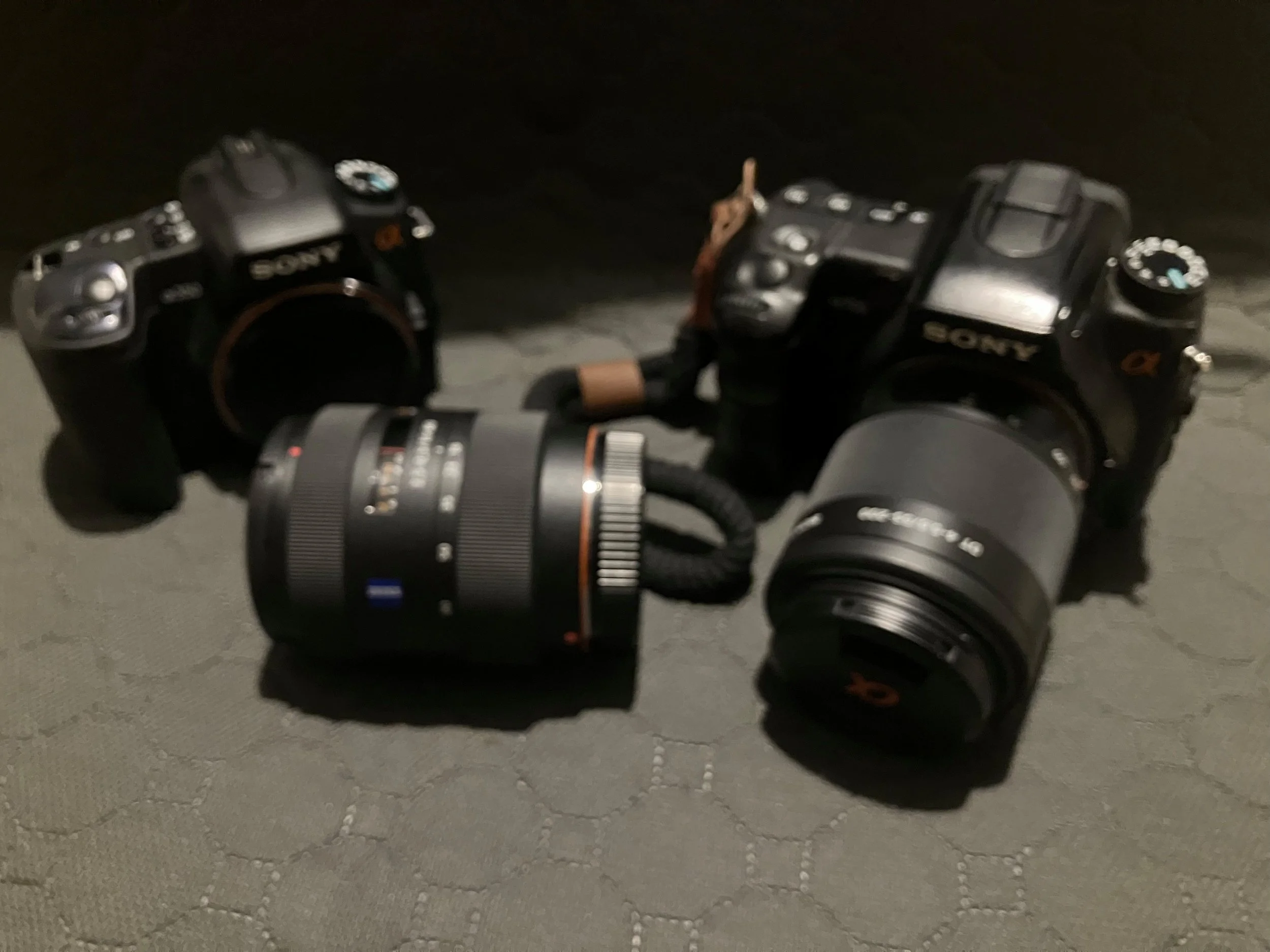
I've been shooting older digital cameras for years — not because I couldn't afford newer gear, but because the results suit what I'm trying to do. The Sony A350 I use regularly is a CCD camera from 2008. The A700 alongside it is from the same era. I shoot JPEG only, straight out of camera, no post-conversion from colour RAW, no heavy processing. What the camera gives me is what goes on the site.
That's not a limitation I've had to make peace with. It's the whole point.
The way a CCD sensor handles a bright sky above the Chiltern Hills, or the contrast between bare winter trees and open fields — that's not something I'm adding in post. It's there because of how the camera sees. And increasingly, people are recognising that quality and seeking it out deliberately, even if they couldn't always put a name to it before.
The irony is that photographers who have spent years chasing the newest gear, the most capable sensor, the cleanest high-ISO performance, are discovering that what audiences actually want to look at is closer to what older cameras produce naturally. Not because audiences don't understand photography — because they understand it better than they're given credit for. They can feel when an image has been processed into something it wasn't. And right now, they're tired of it.
The Practical Problem
There are real obstacles to the digicam revival that don't get talked about enough.
These cameras are a finite resource. There are no new ones being made, although I do believe Canon are re-releasing some of there later model point and shoots. Every one that breaks down, loses its battery contacts, develops a faulty shutter, or has its sensor corrode is one fewer working unit in circulation. Some models that were considered worthless five years ago are now genuinely difficult to find in working condition. Batteries for some are out of production. Memory card formats that were standard in 2003 are now obscure enough that finding compatible cards requires hunting.
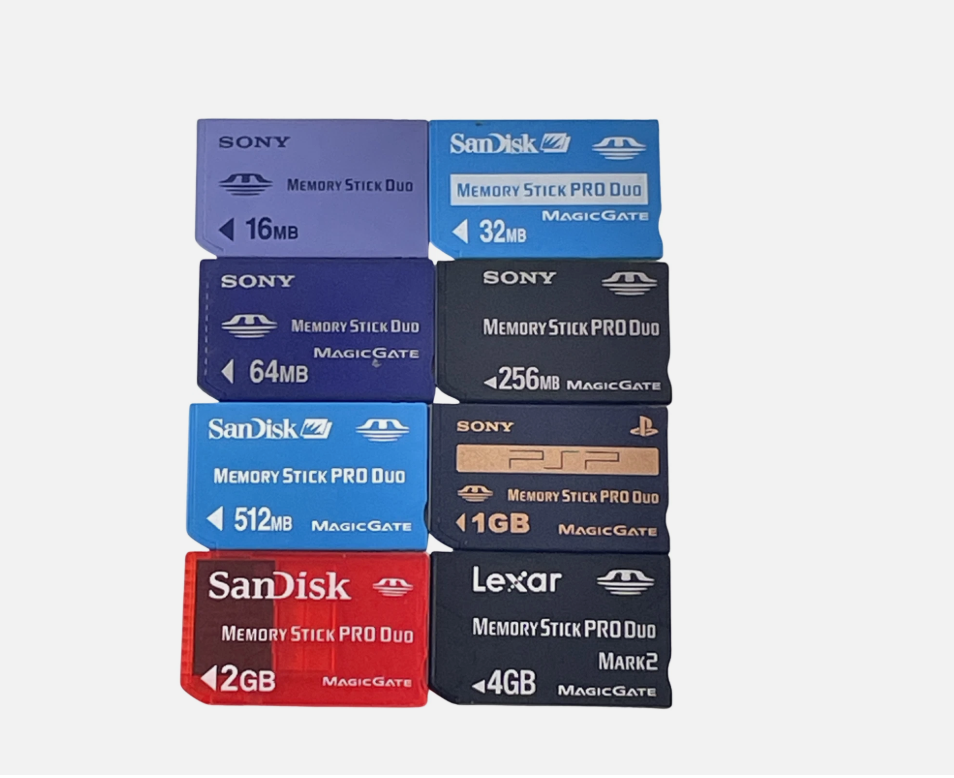
The market has responded to demand with price increases that have already put some of the most desirable models out of casual reach. What you could find for a few pounds a few years ago now commands prices that make you think twice — and the supply isn't increasing to match the demand because it can't. You can't manufacture more of something that stopped being made fifteen years ago.
That said, there's still plenty of working gear out there at sensible prices if you know what you're looking for and you're not chasing the handful of models that social media has decided are iconic. The cameras that did a perfectly good job in 2004 but never developed cult status are still doing a perfectly good job now, and they're nowhere near as expensive.
The Bigger Picture
What the digicam revival is really about — beneath the nostalgia, beneath the CCD discussions, beneath the eBay price charts — is a reckoning with what we actually want photography to do.
For a long time the answer seemed obvious. Better quality. More capability. Higher resolution. Faster, sharper, cleaner. And the industry delivered all of that, over and over, to the point where the ceiling is now so high that most people will never approach it with anything they actually need to photograph.
And now the question has shifted. Not can the camera produce a technically perfect image — that's a given, or close enough to it. But does the image feel like anything? Does it carry the quality of a real moment? Does it look like a person stood somewhere and saw something and responded to it?
Those questions don't get answered by sensor specifications. They get answered by the choices the photographer makes — including the choice of camera — and by whether the result has any of that irreducible human quality that no algorithm has yet managed to replicate convincingly.
That's what's driving people back to old point-and-shoots. Not sentimentality. Not ignorance of what modern cameras can do. A clear-eyed understanding of what they want their images to be — and the recognition that sometimes older, slower, and technically inferior gets you there faster than the best equipment money can buy.
For me, there's something quietly satisfying about all of this. Old technology being picked up, used again, appreciated for what it actually produces rather than what it can't do. These cameras were written off. Obsolete. Heading for landfill or a life gathering dust in a drawer. And now they're making images that resonate in ways the latest hardware sometimes can't. That feels like the right outcome.