If you've read the last couple of blogs on here — the ones about street photography or Urban Observation, what it actually is, and where my own work sits within all of that , I’m not a street photographer — you'll know I've been doing a bit of thinking about genre labels and what they actually mean in practice. That thinking led me to a term I've started using to describe my own approach: urban observation photography.
But what actually is it? And is it just street photography with a different name slapped on it to sound more interesting?
The short answer is no. The longer answer is what this blog is about.
The Simple Version
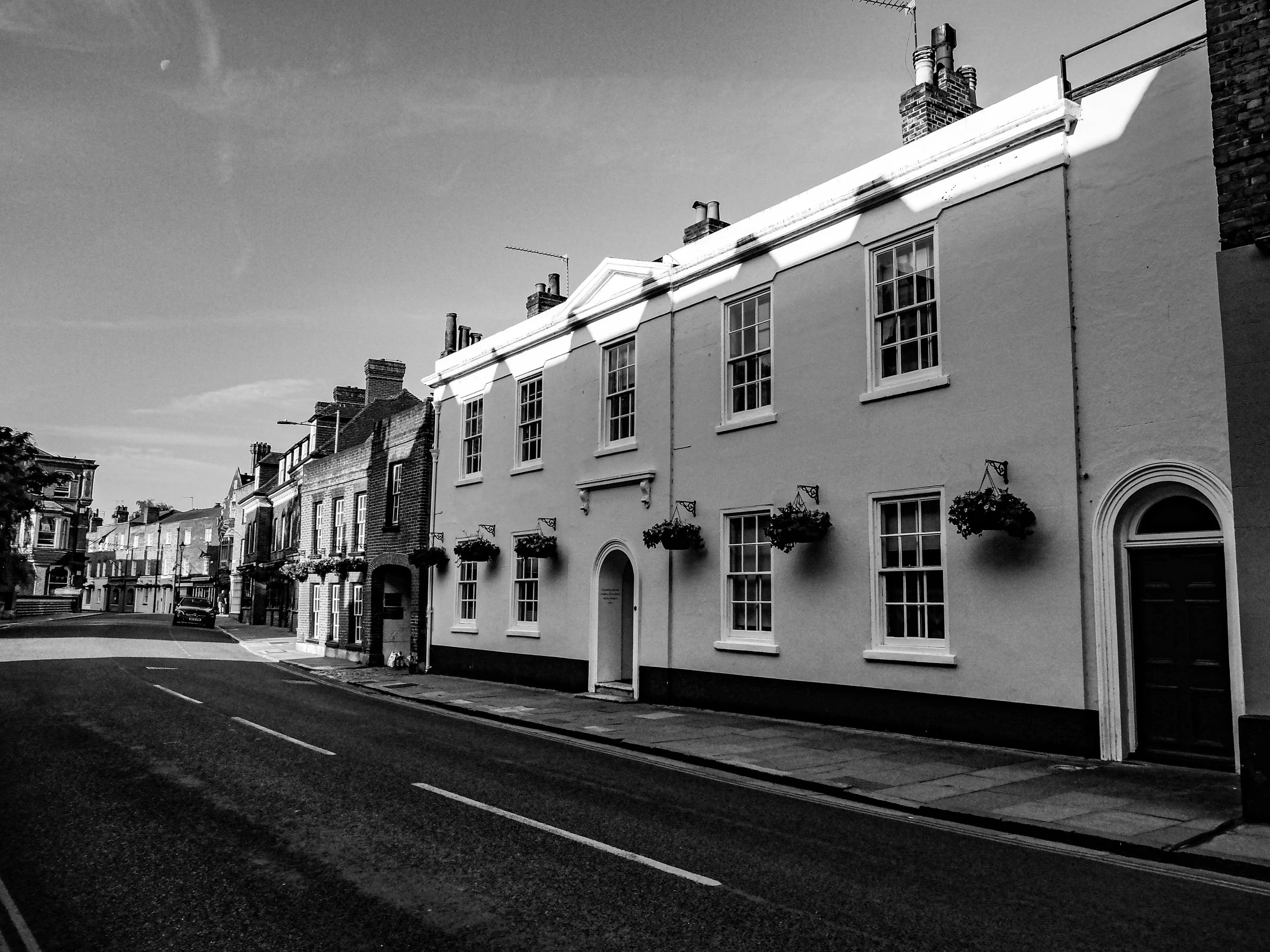
Urban observation photography is the practice of documenting the built environment as it actually is — not hunting for dramatic moments, not chasing strangers through a viewfinder, not manufacturing atmosphere in a darkroom or a Lightroom preset. It's about being somewhere, noticing what's around you, and recording what a place looks like when nothing is staged for the camera.
The city — the town, the village, the backstreet, the canal path — becomes the subject rather than the backdrop. The people, if they appear at all, are part of the scene rather than the point of it.
That's the core of it. Everything else flows from that.
How It Differs From Street Photography
This is where it gets interesting, because the two approaches share some DNA but they're not the same thing.
Street photography — in its traditional, textbook definition — is about capturing candid human moments in public spaces. The decisive moment. The stranger caught mid-stride. The fleeting expression that tells you something about what it means to be alive in a particular place at a particular time. It's reactive, fast, and fundamentally about people.
Urban observation is slower. More patient. Less concerned with the decisive moment and more concerned with the enduring one. Where street photography asks "what is this person doing right now," urban observation asks "what does this place tell us about the people who built it, used it, and left their mark on it."
The distinction shows up practically in how you shoot. A street photographer moves through a space looking for moments to capture. An urban observer tends to stop, look, wait, and let the scene reveal itself. You're not hunting — you're watching.
It also shows up in what's in the frame. Street photography needs a human subject, or at least a human moment. Urban observation doesn't. An empty chair outside a closed café tells you as much about how people use a space as a photograph of someone sitting in it. A door that's been repaired so many times it's become a physical record of a building's whole history doesn't need a person standing in front of it to be worth photographing.
How It Aligns With Street Photography
That said, they're not opposites. Urban observation sits within the broader tradition of documentary photography that street photography also belongs to. Both are concerned with recording the real world as it actually is rather than constructing something artificial. Both favour public spaces, available light, and an honest approach to the subject. Both produce images that are, at their best, a record of what life looked and felt like at a particular moment in time.
The difference is one of emphasis rather than opposition. A street photographer and an urban observer could walk down the same street and come away with completely different images — both valid, both honest, both telling a true story. They're just asking different questions of the same environment.
In practice, the two approaches often overlap. Some of my own images from Malta and Andalusia as well as home here in the UK qualify as street photography by any reasonable definition — people in public spaces, unaware, going about their lives. But the impulse behind making those images wasn't the decisive moment instinct. It was observation. I was there, I saw something, I recorded it. That's urban observation even when a person ends up in the frame.
Where the Term Comes From
Urban observation as a practice is old. The term itself is newer, and it's gaining traction precisely because there's a growing need for it — a way of describing work that doesn't fit into what the internet calls street photography but clearly belongs to the same broad family.
The practice goes back to the earliest days of photography. Eugène Atget spent decades in the late 19th and early 20th century walking the streets of Paris at dawn, documenting the city before it was demolished by modernisation. He wasn't trying to catch strangers in interesting moments. He was recording what the city looked like — its staircases, its shop fronts, its courtyards, its windows. Human presence was felt through what was left behind, not through who was standing there.
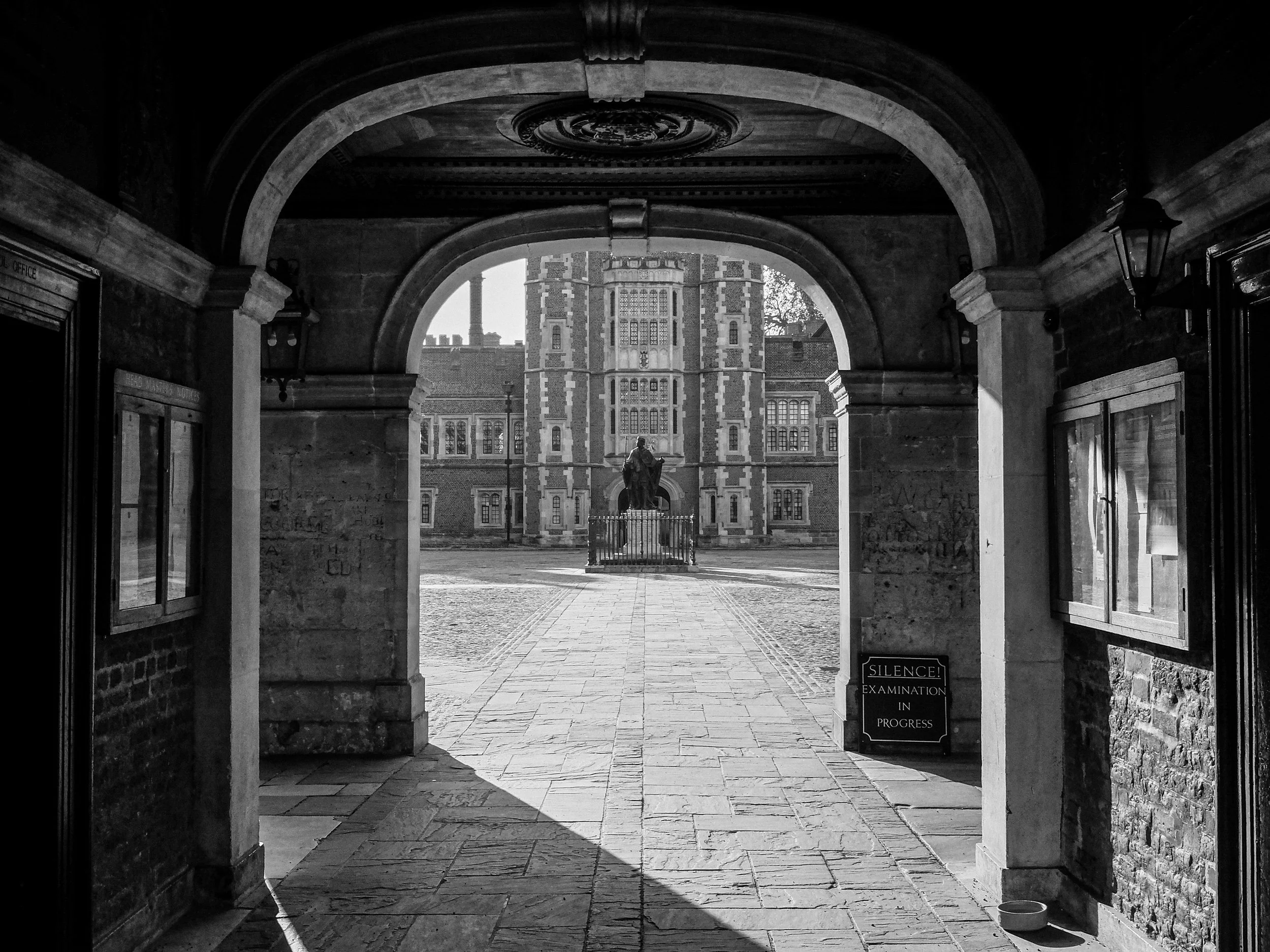
Atget is effectively the godfather of what we'd now call urban observation. His work is proof that a quiet doorway or an empty staircase can hold as much weight as any decisive moment — arguably more, because it endures. The moment passes. The place stays.
Later, photographers like Stephen Shore and the New Topographics movement of the 1970s pushed the idea further, turning their lenses on the ordinary, unglamorous edges of the American landscape — parking lots, strip malls, industrial estates — and treating them with the same seriousness that others reserved for grand vistas or dramatic human stories.
That lineage — from Atget through the New Topographics to the present day — is where urban observation sits. It's a long tradition of treating the built environment as a subject worthy of serious attention.
Why It Matters Now
The reason the term is gaining ground right now has a lot to do with what's happened to street photography in the social media era.
Open any image search for black and white street photography and you'll see it immediately — a very specific, very consistent visual language. Crushed blacks, blown highlights, lone silhouettes in geometrically satisfying positions, dramatic shadows, manufactured atmosphere. It's a look rather than a philosophy, and it's been algorithmically reinforced to the point where it's become almost self-parody.
Photographers whose work is quieter, slower, and more concerned with place than with drama find themselves in an awkward position. Their work doesn't look like what street photography looks like online. It doesn't perform well on platforms that reward impact at thumbnail size. So where does it go?
Urban observation is the answer to that question. It's not a rejection of street photography — it's a separate space, with its own logic, its own lineage, and its own audience. One that values patience over speed, observation over hunting, and the enduring quality of a place over the fleeting drama of a moment.
What It Actually Looks Like in Practice
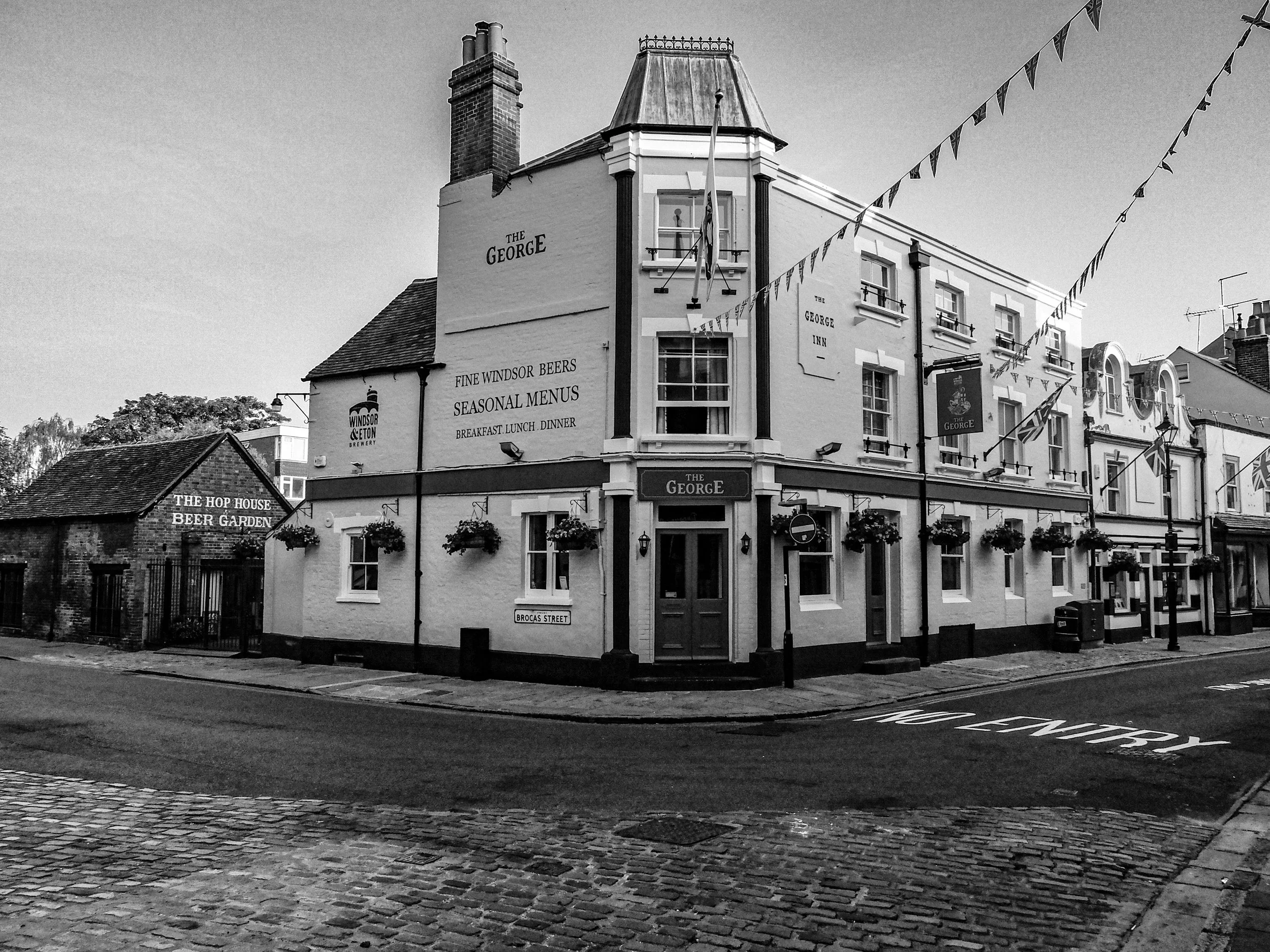
Urban observation doesn't have a fixed visual style in the way that the internet version of street photography does. It can be high contrast or quietly tonal. It can include people or not. It can be shot in a city centre or a market town or a commuter village at six in the morning.
What it has is a consistent approach. You go somewhere. You slow down. You look at what's actually there rather than what you hoped to find. You let the environment tell you what to photograph rather than imposing your agenda on it.
In the UK context — and this is something I'm particularly interested in — urban observation has a distinctive character shaped by the specific quality of British light. The flat, grey overcast sky that most photographers treat as a problem is actually an asset. It removes distracting shadow patterns, evens out the tonal range, and lets the texture and structure of buildings come through cleanly. A flint wall under a grey November sky has a quality that no amount of golden hour drama can replicate.
The early morning is the other great window. Empty streets before the day starts, light still low and directional, the architecture completely exposed without the visual noise of traffic and crowds. This is the approach Atget used in Paris. It works just as well in a quiet English market town.
Is It a Recognised Genre?
Formally, urban observation sits under the broader umbrella of urban photography, urban landscape, or documentary photography depending on who you ask. The specific term is newer and is doing a particular job — distinguishing quiet, observational work from the dominant internet aesthetic of street photography.
In academic and fine art circles, this type of work has always been taken seriously. The New Topographics exhibition of 1975 is a landmark. The tradition of psychogeography — the study of how urban environments affect human psychology — runs through much of the most interesting photography writing of the last fifty years. Major galleries and photography institutions regularly show work that fits this description, even if they don't always use the term.
It's also worth separating urban observation from urban exploration — sometimes called Urbex — which focuses specifically on abandoned or derelict spaces, often with an emphasis on trespass and decay. Urban observation has no interest in the forbidden or the forgotten. It works in plain sight, in functioning spaces, in the ordinary fabric of everyday life. The two approaches couldn't be more different despite the surface similarity in name.
What's changing is that the term itself is becoming useful at a more practical level — as a way for photographers to describe and position their work, and for audiences to find it. That's not a small thing.
Where It Goes From Here
Urban observation is growing precisely because it offers something that the current mainstream of photography culture doesn't. In a landscape saturated with fast-paced, algorithm-driven content, work that slows down and pays attention to place is increasingly valued — by galleries, by publishers, by audiences who are tired of being shown the same visual language on every platform.
The hyper-local angle is particularly interesting. You don't need to be in New York or Tokyo to make compelling urban observation work. The overlooked corners of a commuter town, the post-industrial edges of a market town, the quiet geometry of a village high street at seven in the morning — these are genuinely underrepresented subjects with real photographic potential.
That's what draws me to it. Not the grand statement or the dramatic gesture, but the quiet record of what a place actually looks like when nobody's present. That's the work worth making. It's been worth making for 170 years. It just needed a name.
Urban observation photography is a growing thread on Walking With Pics. The previous blogs — Street Photography or Urban Observation? and I'm Not a Street Photographer (And That's Fine) — are where this conversation started.